
In the ever-changing app store landscape (algorithm changes, tool updates, new store guidelines, …), keeping up with the most important changes can be difficult.
To help you stay up to date with the main developments occurring in the ASO community, we’ve created this blog. Each month, we will provide a recap of the most important ASO and app store updates we have taken note of in a succinct and digestible way.
June 2026
This combined edition covers Google I/O’s AI discovery announcements, Apple Ads inventory changes, new analytics tooling, and several industry moves worth tracking.
App Store updates
App Store Connect Analytics gets a major upgrade
Apple released a revamped version of App Store Connect Analytics, adding more flexible reporting and new performance views.
Teams can now combine multiple filters simultaneously, including country, device, and source type, to get a clearer picture of where installs and engagement come from.
Apple also added new monetization cohorts: download-to-paid conversion, accumulated proceeds, and updated benchmarks.
For growth and ASO teams, this makes App Store Connect meaningfully more useful for acquisition quality and monetization analysis. Review existing dashboards and reporting workflows to take advantage of the new data.
New subscription option: annual commitment, monthly payments
Apple introduced a subscription model that lets developers offer a 12-month commitment paid in monthly installments, creating a middle ground between monthly and annual plans.
For users, it lowers the upfront cost of committing annually. For developers, it may improve retention compared to standard monthly plans.
Subscription apps should consider testing this if annual plans currently face upfront-price resistance.
Key areas to monitor:
- conversion from monthly to committed plans
- retention impact
- ROAS measurement windows
- cash flow timing
The App Store now supports 11 new languages
Apple added support for 11 new localization languages: Bangla, Gujarati, Kannada, Malayalam, Marathi, Odia, Punjabi, Slovenian, Tamil, Telugu, and Urdu.
Most are relevant to India. While India remains heavily Android-dominated, the scale of the market makes this update relevant for apps with iOS traction or Apple Ads activity in the region.
Apps already active in India should reassess their localization roadmap, especially if running paid campaigns where localized pages can improve conversion rates.
Apple Ads: second ad placement expands across markets
Apple’s second ad placement in search results is now appearing across more markets, increasing paid visibility inventory.
For advertisers, budget pacing and campaign monitoring become more important as additional inventory can increase spend, impressions, and installs without proportional conversion gains.
App marketers should:
- monitor daily budgets and spend caps
- review automation rules after the rollout
- track branded search performance
- watch how organic visibility shifts as more ads appear above it
As more competitors can now appear on branded queries, teams should check whether their combined paid and organic strategy still protects high-intent traffic.
Apple opens the Brazilian market to fixed-odds betting apps
As of May 8, apps with fixed-odds betting features can now be distributed on the App Store in Brazil, provided developers hold a valid license from Brazil’s Secretariat of Prizes and Bets (SPA).
For sports betting apps with international reach, this is a meaningful opening. Brazil is one of the largest mobile markets in Latin America, and the timing is relevant ahead of the FIFA World Cup. Apps active in other regulated betting markets should evaluate whether a Brazilian App Store presence is now viable.
Apple adjusts localized pricing for South Korea
As of May 28, Apple is applying price adjustments for South Korea for developers using another storefront as their base for in-app purchase pricing. This is consistent with Apple’s standard practice of recalibrating localized prices in response to tax or foreign exchange rate changes.
If South Korea is a meaningful market for your app, review your pricing tiers to confirm they reflect the adjustment.
Apple reportedly exploring agentic apps on the App Store
Apple is reportedly exploring how agentic apps could be distributed through the App Store. Current signals point to a new generation of apps rather than any change to App Store search mechanics or ASO fundamentals.
No official announcement has been made. WWDC in June may address this, but no action is required yet.
Google Play updates
Google I/O confirms AI as an official app discovery layer
Google I/O was the most significant platform moment for app marketers across both months. Google formally confirmed Ask Play, an AI assistant embedded in the Play Store that answers user queries with app recommendations. Google stated that 95% of user questions are handled comprehensively, though the full range of surfaces where Gemini appears in the Play Store was not disclosed.
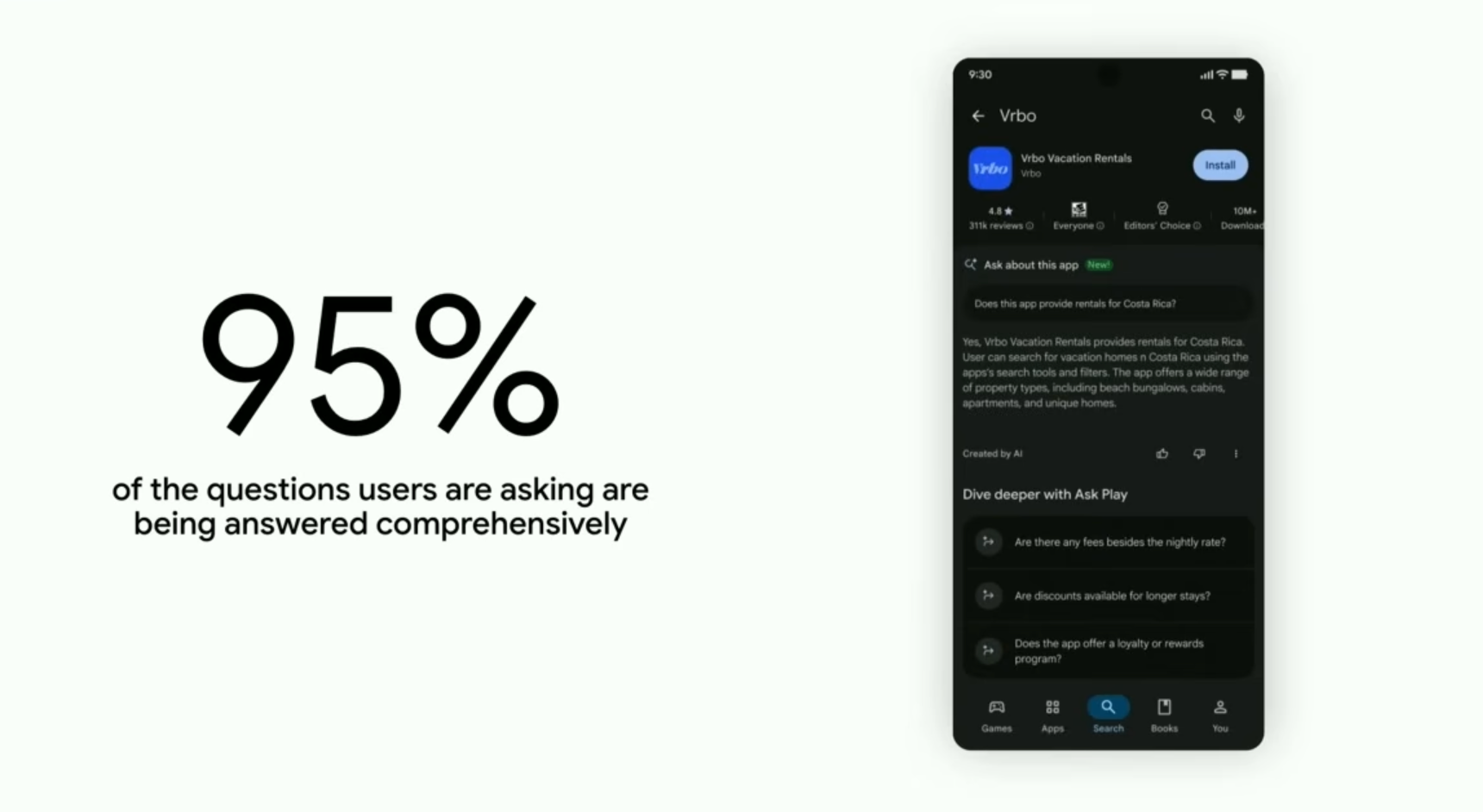
Beyond the Play Store, Google confirmed that the Gemini app itself can now recommend apps and initiate downloads directly in conversation. In its current form, this is triggered when users explicitly ask for app recommendations. Google also announced an upcoming expansion that would allow Gemini to proactively suggest apps when users ask about media or entertainment content, with broader vertical expansion expected as developers integrate AppFunctions into their builds.
For app marketers, the implication is direct: app discovery is no longer contained within the Play Store’s traditional search interface. A user asking Gemini “what should I use to edit videos on Android” is a discovery moment that standard ASO workflows were not designed to capture.
The current rollout is limited to English-language users in markets outside the European Economic Area. Standard ASO remains the right foundation, not least because AI visibility signals appear largely driven by ASO fundamentals. But the direction is clear.
Key areas to monitor:
- whether your app’s metadata communicates specific use cases, not just features
- how your app is described in reviews, editorial copy, and third-party sources that AI systems draw from
- developments around AppFunctions as the ecosystem matures
Google Play search becomes more AI-powered
Alongside the I/O announcements, Google Play rolled out two Gemini-powered search formats now visible to US users.
Guided Search suggests more specific queries when users enter broad searches like “action games.” Ask Play generates AI-powered app recommendations for longer, conversational queries.
In some cases, these AI-generated results appear below ads but above traditional organic results, pushing standard rankings further down the page. Strong keyword rankings still matter, but metadata now needs to communicate use cases, audience, and intent relevance clearly enough for AI-generated recommendations to surface the right apps.
ASO teams should move beyond pure keyword coverage toward semantic coverage: metadata that is specific, clear, and useful for AI systems interpreting user intent.
Google Play developer tooling: a meaningful update cycle
Google announced several Play developer console updates relevant to ASO and performance teams.
Metadata can now be updated via Google Sheet or CSV upload, with an improved automatic translation system. Keyword-level Custom Store Listing recommendations with one-click generation are also available, giving teams a faster starting point for variant testing.
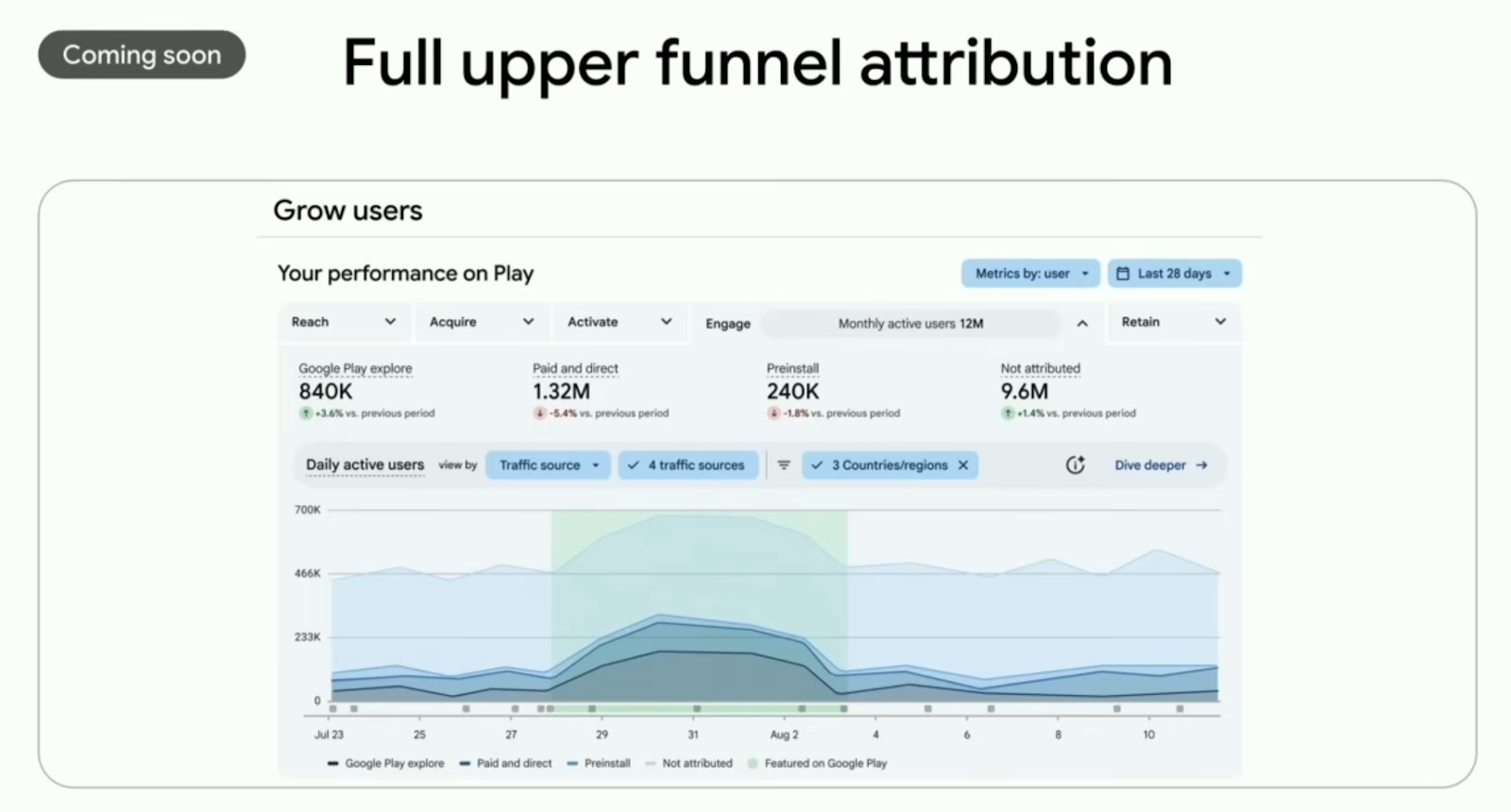
The analytics overhaul is the most substantial change. Google is introducing new reach metrics (impressions), new ROI measurement, and new attribution methods capturing multi-touchpoint user journeys before install. A new reporting API and MCP connector are in the pipeline, making it easier to pull Play performance data into external analytics stacks. Teams should plan to review their current reporting setup once these roll out.
Google Play expands game discovery features
Google Play continues to invest in gaming-specific discovery. Recent additions include game trials for paid games, “buy once, play anywhere” cross-platform pricing, community posts, game subcategories users can follow, and notifications for new releases and events.
The Play Store is becoming a more active discovery and engagement surface for games, not just a download destination. Gaming studios should pay closer attention to category positioning, LiveOps, and community signals inside Google Play as these surfaces mature.
New discovery surfaces to watch
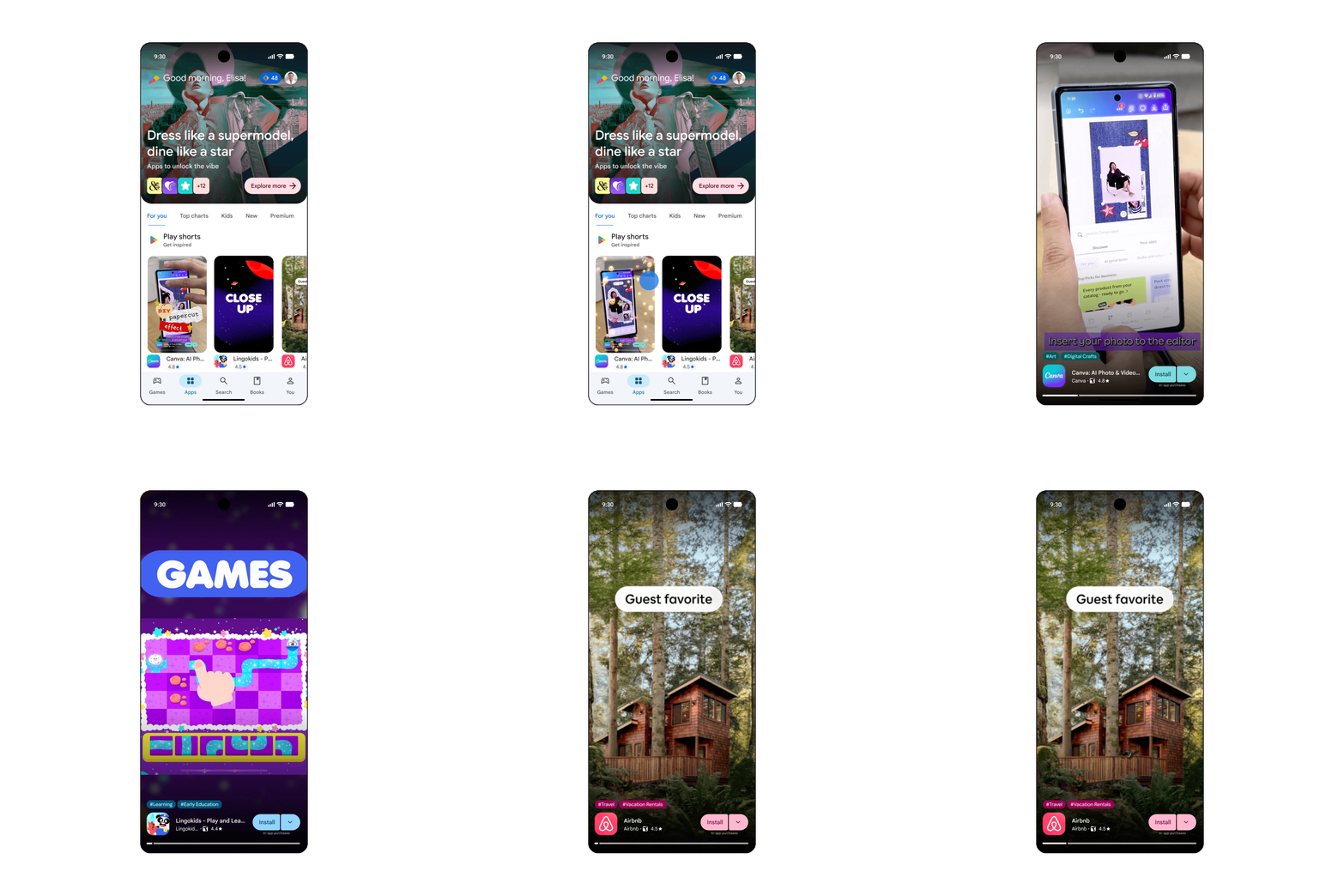
Google highlighted three additional discovery surfaces at I/O. Spotlight is a new featuring type on the Apps tab. Play Shorts, a short-form video format for app discovery, is officially launching in the US in June. YouTab is a dedicated tab focused primarily on surfacing installed apps, powered via the ContextSDK.
For teams focused on organic visibility, category positioning and creative assets are becoming more relevant inputs alongside keyword coverage.
Google Play changes install measurement
Google Play moved from device-based to account-based install counting. This can affect performance reporting for apps where users install across multiple devices.
Some apps may see unusual movements in conversion rate or install metrics as a result. Before drawing conclusions from recent performance changes, check whether the measurement methodology shift is contributing. Adding chart annotations around the change date will help avoid misreading the data.
Google Play revenue share updates
Developers in the Games (LevelUp) and Apps programs may receive an additional discount on Google’s IAP revenue share starting September 30, 2025, across the US, UK, EEA, and Australia. If your app monetizes primarily through IAPs and you are eligible for these programs, it is worth confirming participation ahead of that date.
More Google Play discovery updates
Google Play also introduced or expanded several smaller features: trending searches in selected markets, searchable reviews, and filters for Health Connect-integrated apps.
Searchable reviews are worth watching. They make user language more visible inside the store experience and could influence how users evaluate apps. Teams should continue monitoring review themes for conversion and positioning insights, not only product feedback.
Other ASO updates
No algorithm update was detected on the App Store in April or May. Google Play saw search result re-indexations on May 2 and May 21, recorded as minor fluctuations below the threshold for a full update. No changes to ranking workflows are warranted.
Apple is reportedly asking more developers to provide screen recordings during app review, potentially covering the full user journey including onboarding, account creation, account deletion, and paid features. If this becomes more common, teams should make sure their core flows are easy to review and clearly compliant.
Google Play developers reported issues with the In-App Reviews API, where the SDK may return a success callback even when the review dialog does not appear. If ratings or review volume recently dropped, this is worth checking before assuming a user sentiment issue.
InMobi acquired MobileAction on May 7. MobileAction will continue operating as a dedicated ASO and Apple Ads platform, with an announced focus on AI for its next growth phase. The deal strengthens InMobi’s iOS tooling as Apple Search Ads matures as a performance channel.
Sensor Tower acquired AppMagic on May 12, framing it as an expansion into the SMB segment. AppMagic has been widely used for mobile game market intelligence. Teams relying on AppMagic should monitor product roadmap communication from Sensor Tower in the coming months.
March 2026
Below, we’ve gathered the latest App Store and Google Play updates relevant to ASO, app discovery, and mobile growth teams.
App Store updates
These App Store updates focus on Apple Ads changes and evolving search result dynamics that directly influence app visibility and paid acquisition performance.
Apple Ads expands ads in search results
Apple Ads introduced additional ads in search results, increasing the number of placements available during user queries in the App Store. Early data observations from AppTweak show higher impressions and spend while conversion rates remain stable, indicating increased inventory participation.
- More ads can appear for the same search queries.
- Competition for visibility within search results increases.
- Performance metrics may shift with expanded inventory.
Apple introduces “Maximize Conversions” bid strategy
Apple Ads replaced the CPA cap setting with “Maximize Conversions,” an automated bid strategy that optimizes bids toward a defined CPA goal within campaigns.
- Campaign bidding shifts toward automation around CPA goals.
- Advertisers no longer use manual CPA caps.
- Optimization shifts toward conversion-based automation.
Google Play updates
The latest Google Play updates introduce new app discovery formats and features that reshape how users find and engage with apps on the Play Store.
Google Play introduces Play Shorts
Google Play launched Play Shorts, a short-form video format displayed in the Apps tab to support app discovery through video content rather than store listings.
- Apps can be discovered outside traditional listings.
- Video content becomes a discovery surface.
- Creative formats expand within the store environment.
Google updates billing model and service fees
Google announced changes to its billing model, including adjusted service fees and increased flexibility for handling in-app purchases across supported markets.
- Revenue structures may change across apps.
- Developers gain more flexibility in purchase handling.
- Monetization models may adjust across markets.
Other ASO updates
Additional ASO updates this month cover technical app performance signals, AI integrations, and new store features that may influence app rankings and user perception.
- Google Play displays warnings on store listings for apps exceeding thresholds in the Excessive Partial Wake Lock metric.
- These warnings appear directly on listings and may affect user perception and install behavior.
- Google introduced AppFunctions to enable app interactions with external tools, including AI assistants.
- Google Play added a PC section, cross-platform badges, unified pricing, and game trials for games.
January 2026
This January 2026 ASO update covers the latest App Store and Google Play changes impacting app discovery, Apple Ads performance, and AI-driven search experiences.
App Store updates
These App Store updates focus on Apple Ads search result changes and expanded ad inventory, reshaping how apps compete for visibility and paid acquisition in the App Store.
Expanded search ad inventory is coming
Apple has officially confirmed that additional ads will appear in App Store search results starting in March 2026.
While Apple hasn’t shared an official rollout timeline, early signals from the ASO community suggest a phased launch, potentially starting in the UK in early March, followed by Japan, and then rolling out globally in the second half of the month.
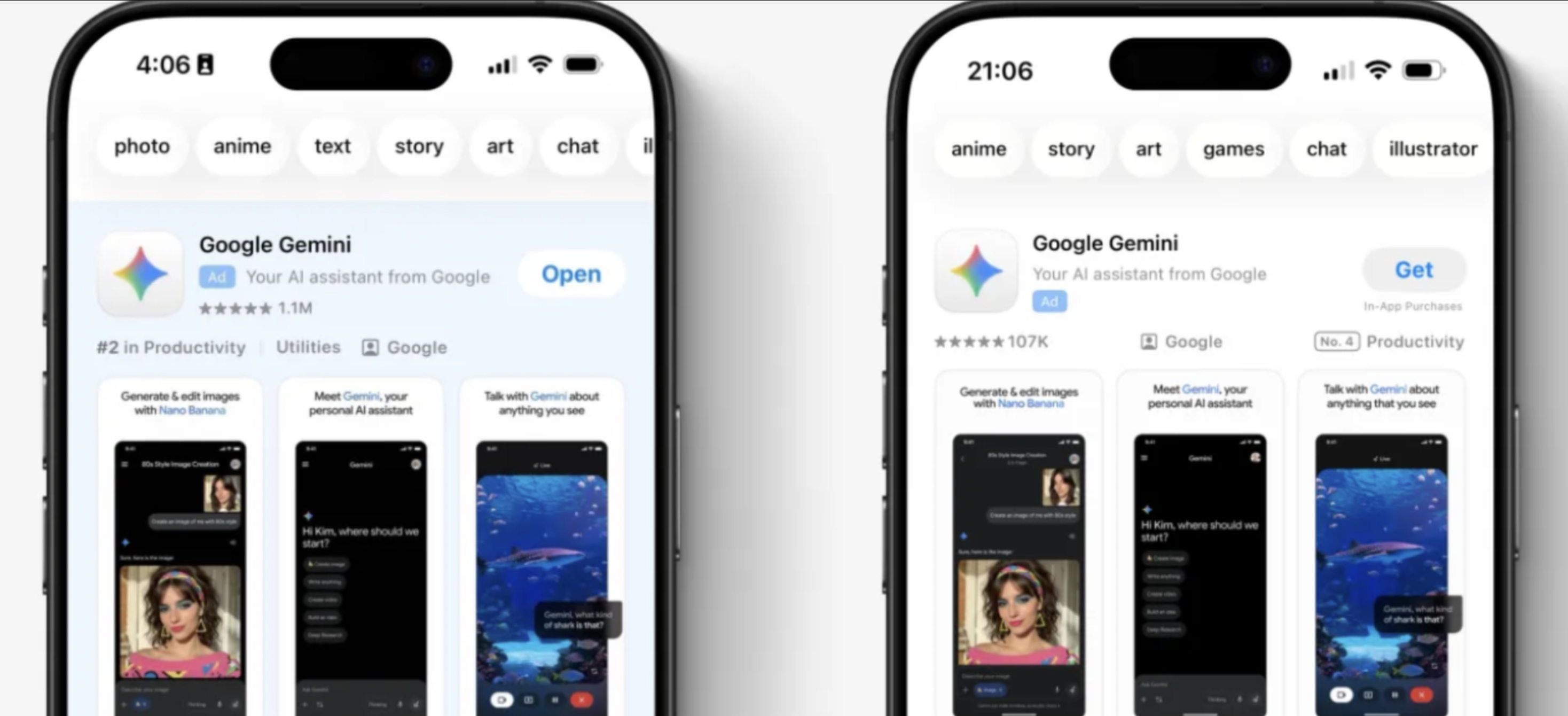
Apple has clarified several key points about how these new ads will work:
-
Ads may appear beyond the top position in search results
-
Advertisers don’t need to modify existing campaigns
-
Ads will automatically be eligible for all available ad positions
-
Ad formats remain unchanged, whether using a default product page, a custom product page (CPP), or an optional deep link
This rollout follows recent App Store UI changes that reduce the visual distinction between sponsored and organic results. Paid placements are likely to blend more closely into organic rankings, increasing competitive pressure on top organic positions.
This change has several concrete implications:
1. A wider gap between the 1st and 2nd organic results
Competition for high-intent keywords is likely to intensify, especially as Apple continues shifting from strict keyword matching toward more intent-based logic.
2. Potential increase in Apple Ads spend
A second ad position will generate additional paid taps, but those taps may not convert as efficiently as the top ad placement, affecting ROAS calculations.
3. More complex campaign optimization
Marketers relying heavily on Impression Share to evaluate bid strength may face ambiguity if multiple ads are competing for visibility on the same query.
App marketers should closely monitor campaign performance throughout Q1 and be ready to recalibrate both ASO priorities and paid search strategies as the rollout progresses.
Google Play updates
The latest Google Play updates introduce AI-powered features like Ask Play, transforming app discovery and requiring new ASO strategies optimized for AI-generated answers.
Ask Play: Gemini enters app discovery
With Play Store version 49.3, Google has introduced Ask Play, a Gemini-powered chatbot embedded directly on app listings.
Ask Play appears directly on app store listings (for installed and non-installed users) and:
-
Suggests common questions users might ask about an app
-
Generates answers using app metadata, user reviews, and inferred context
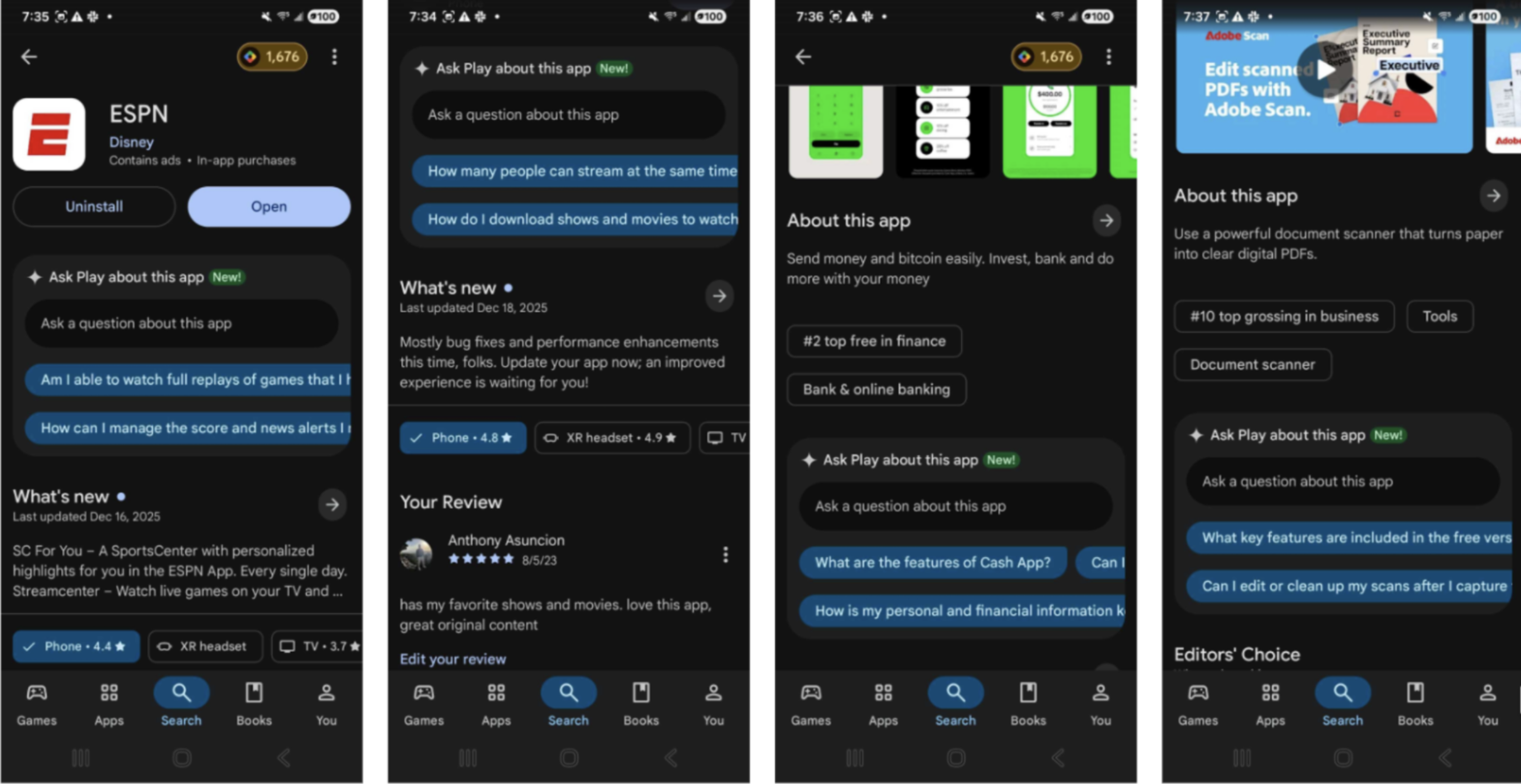
The rollout will be gradual and territory-dependent, and its impact will vary based on Play Store update adoption across users.
How does the introduction of Ask Play impact ASO:
- App pages need to be optimized for AI systems, not just human readability.
- Long descriptions, review content, and consistency across assets matter more.
- Clarity in messaging becomes fundamental as vague messaging increases the risk of incorrect or vague AI-generated answers.
November 2025
This November 2025 ASO update highlights key App Store and Google Play changes affecting app personalization, store listing assets, and technical performance signals.
App Store updates
These App Store updates focus on custom product page expansion, enabling more advanced ASO strategies through personalization and keyword-level targeting.
Create double the number of custom product pages
Apple has doubled the maximum number of custom product pages mobile marketers can create, from 35 to 70 active custom pages!
You will be able to manually assign keywords to each CPP, so they become eligible to appear in App Store search results for those terms—replacing your default product page when triggered.
This expands targeting possibilities dramatically:
- Feature-focused custom product pages
- Seasonal variants
- Persona-based experiences
- Geo-specific content
With this update, Apple is clearly highlighting the importance of bringing personalized experiences to its users! Time to start optimizing your CPPs!
Google Play updates
The latest Google Play updates introduce new store listing assets and app quality signals that influence app visibility, user engagement, and ranking performance.
New app store asset
Earlier this year, Google announced the release of a new Hero content carousel, and it has started rolling out!
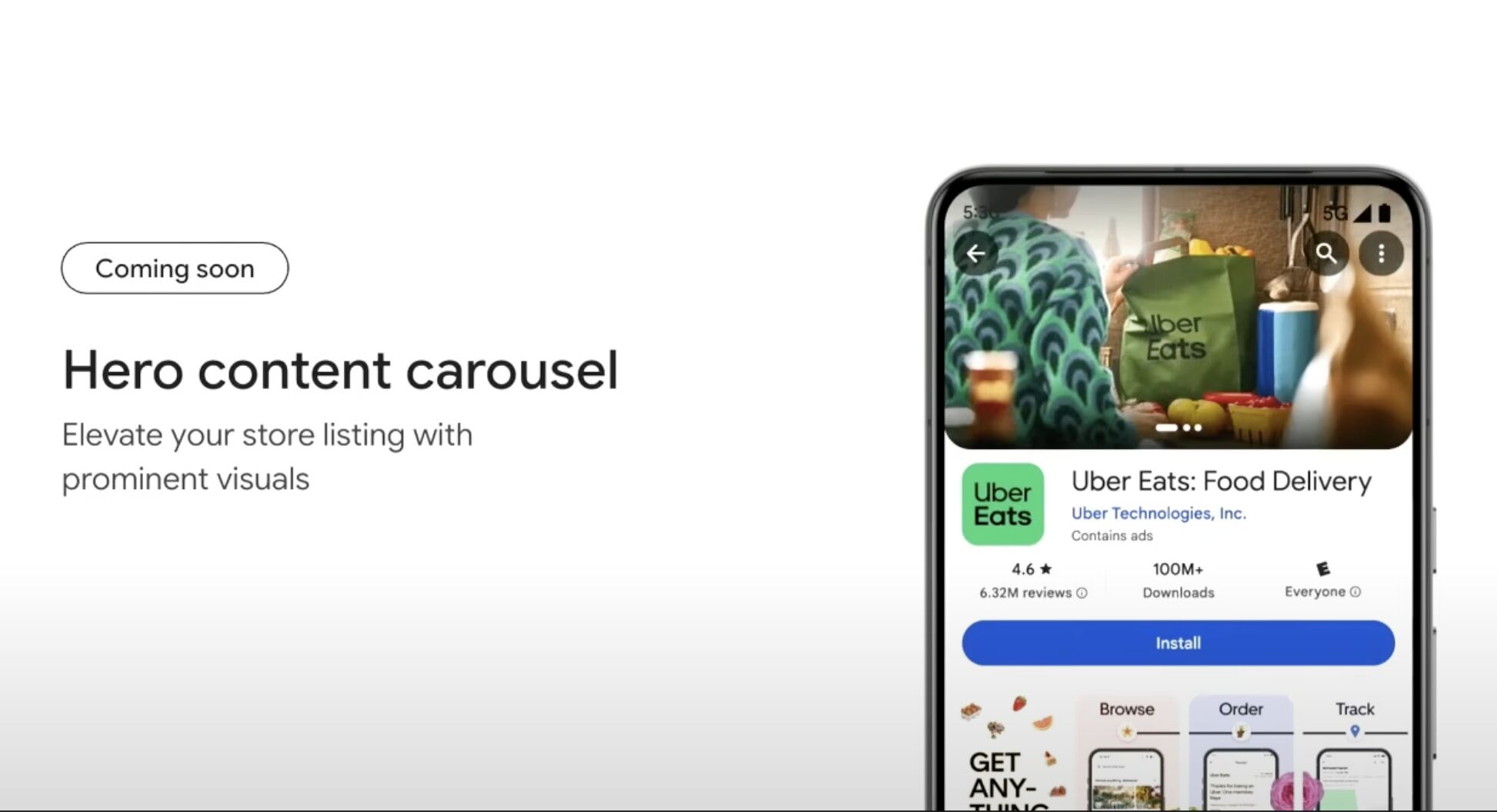
This new store asset:
- Is only shown to users who already have the app installed
- Appears above the regular screenshot gallery
- Pushes the screenshots further down the store page
- Is in limited rollout — not available to all apps yet
The feature is already available to some. Go to the Play Store Console under: Store Presence → Store Listings → Phone immersive header.
YouTube videos on store listings
Google now allows apps that are eligible to publish Promotional Content the option to list multiple YouTube videos on their store listings for apps.
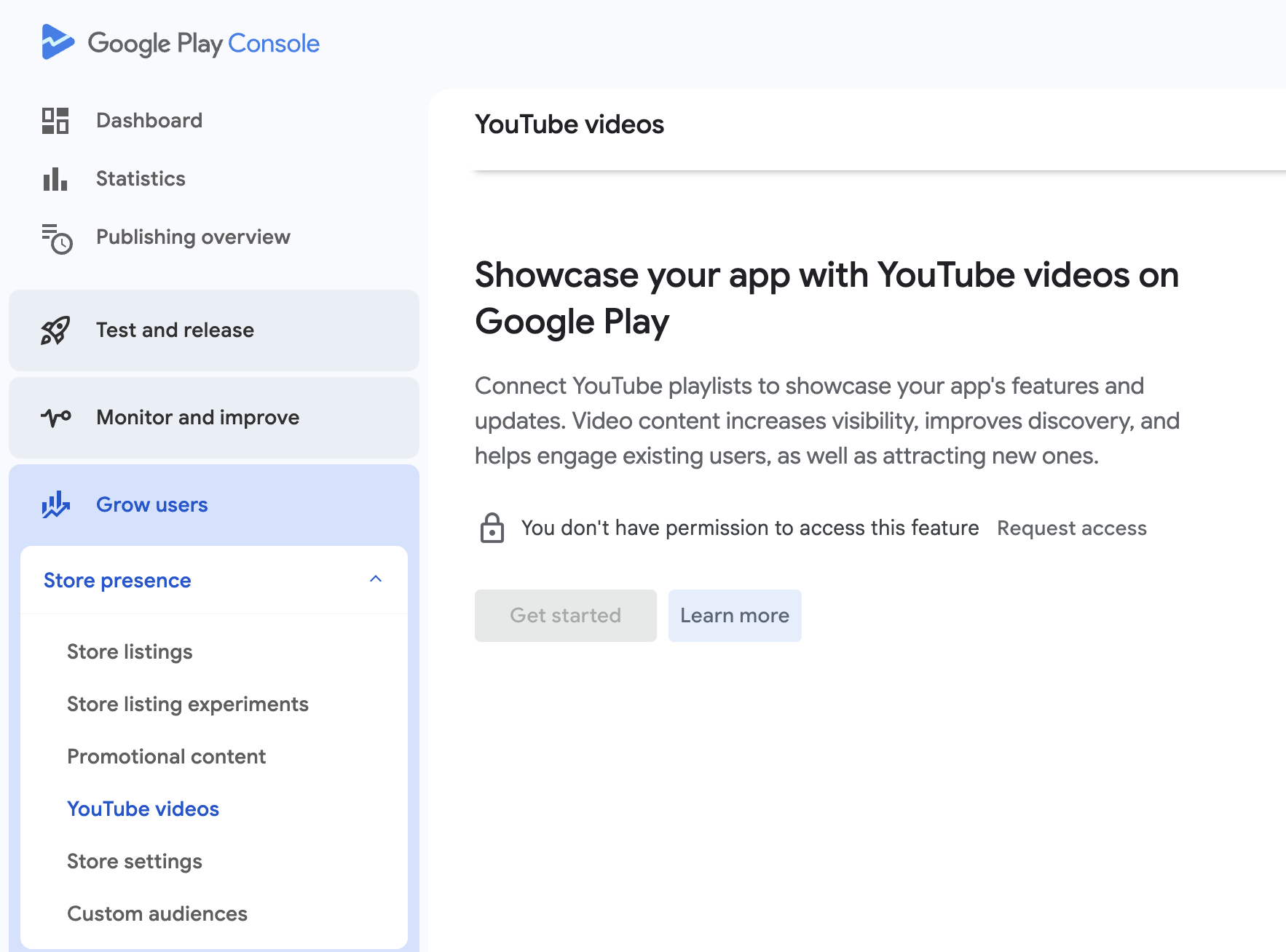
This feature is currently only targeted at users who have already installed your app. New users will therefore not be able to see the extra videos. Installed users will see these videos above promotional content and even before their default screenshots.
New app vital
Google Play is officially adding “excessive partial wake locks” as a core app vital. “Excessive partial wake locks” indicates a battery-drain behavior for which Google set a strict 5% threshold.
If your app exceeds it:
- The Google Play Store may display a warning on your listing
- Starting March 1, 2026, non-compliant apps may be excluded from prominent discovery surfaces (recommendations, curated placements, etc.)
ASO and tech teams should treat battery optimization as a ranking factor from now on.
Conclusion
At AppTweak, we will continue to monitor ASO news and trends and report them here. Make sure to check out this monthly blog to stay up to date on the recent developments in the App Store Optimization landscape. Subscribe to our newsletter to make sure don’t miss out on the latest updates. See you next month!


 Sukanya Sur
More articles in App Market Insights

 Micah Motta
![Average App Conversion Rate per Category [2025]](/img/2023/08/title_website.png?auto=format%2Ccompress&w=716&h=358&fit=crop)
 Oriane Ineza

