ASO Conference 2020: Recap & Learnings
When: May 13th, 2020
Where: Online Conference
What: Exclusive event focusing on expert-level ASO discussions
The third ASO Conference that took place on May 13th, 2020 in Berlin was followed virtually by more than 1,400 people from 68 different countries. The objective of this conference was to continue to share knowledge about ASO despite the challenges that came with COVID-19. There were so many insights from the ASO community that it’s impossible to summarize them all, but in this article, we gathered key takeaways from the 13 talks that you should know about.
1. Impact of Covid-19 on the mobile industry
After the opening remarks, Moritz Daan, co-founder of Phiture, gave a quick overview of the impact of COVID-19 on the Mobile App industry:
- Downloads have increased overall worldwide for both Apple App Store (around March 13th) and Google Play Store.
- Weekend seasonality is not noticeable anymore as weekdays and weekends became one. For example, games are now massively downloaded even during the week.
- The winning categories from the impact of COVID-19 are Business, Health & Fitness, Medical, Education and News, while the losing ones are Travel, Sports, Navigation, Weather, and Books.
- According to Oxford University’s data, the changes noticed in categories are directly correlated to the different order of government response policies. For example, the strong decrease in downloads in the Travel Category in the US followed the stop of national travels.
- Keyword search traffic has changed massively from one day to another with some important keywords vanishing and other keywords becoming very important.
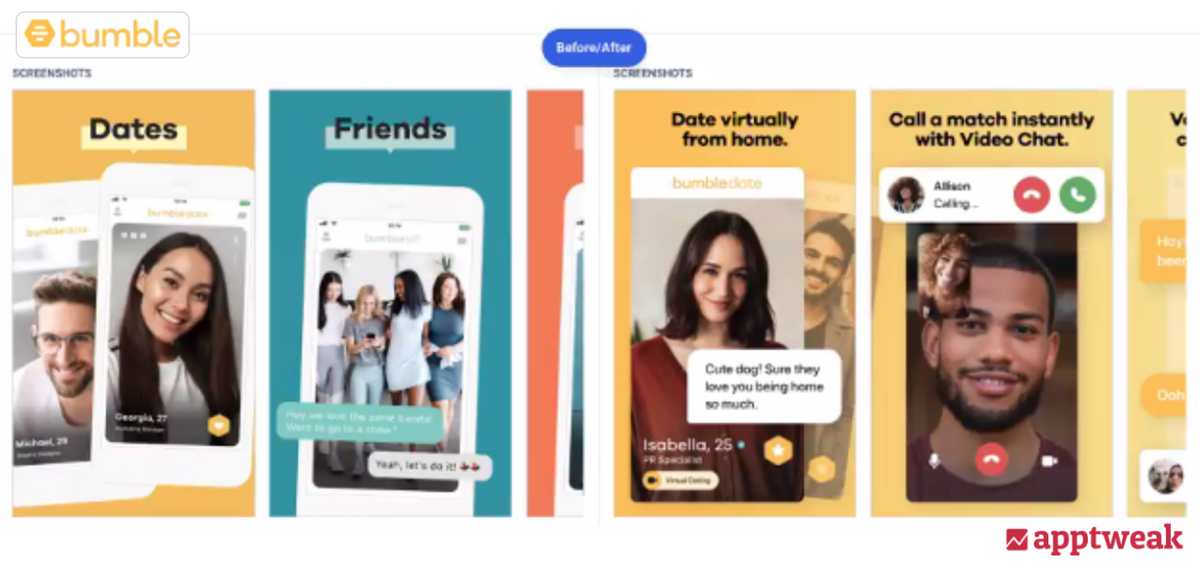
- Apps had to adapt their strategy to the situation as Apple requires social distancing guidelines to be reflected in the artwork and creatives considering COVID-19.

Social distancing guidelines reflected in app creatives.
The opening remarks were a good kick-off to the diverse ASO talks and panels coming later. These talks covered many different important aspects of ASO but many of them discussed the topic of localization, which seems to be the hot topic for ASO in 2020.
2. Building the right dashboards to measure ASO Impact & Success
Nadir Garouche, Senior Growth Manager – Tilting Point
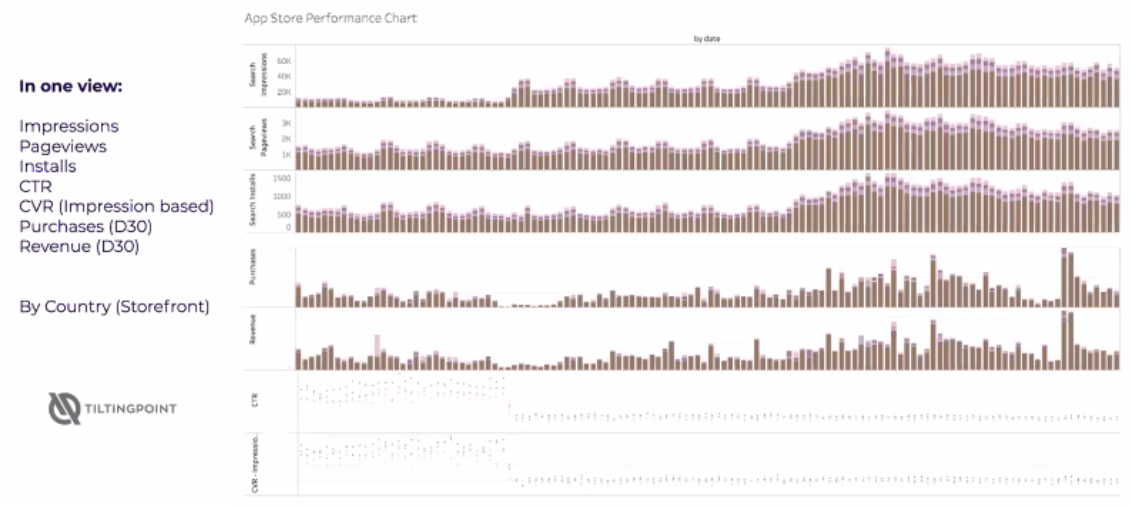
As the success of ASO campaigns depends on internal and external factors, measuring and unifying different KPIs is essential to get a good understanding of the performance of apps. In App Store Connect, Nadir Garouche, Senior Growth Manager at Tilting Point recommends using “App Units” instead of“Installations” as they might be more relevant in your analysis. “App Purchase Date” is a useful filter to create cohorts of users who installed your app at a given date or time frame. But as you’re limited to only two dimensions in App Store Connect, you’ll need to get your data and create your own custom dashboard for in-depth analysis including a chart for each of the main store metrics. To attribute the uplift to keyword optimization, he suggests comparing Search Installs with keyword visibility metrics.

Tilting point’s main dashboard – Aggregating the main store metrics in one view.
On Google Play, retention is extremely important and must be taken into account. Analysing the correlation between retention and traffic can bring valuable insights. Also, crashes can have a negative impact on your visibility but Google Play might take 30 days to reflect it.
Finally, to report performance when running ASA campaigns, Nadir recommends to subtract MMP ASA Installs* from App Store Connect App Units. Another option is to use App Store Connect Sales/by IAP* minus MMP ASA Sales/IAP. By looking at App Store performance charts and Apple Search Ads performance charts side by side, you can spot trends and see how metrics evolve over the same time periods.
*MMP: Mobile Measurement Partner
*In-App Purchases
3. Reaching Coherency between ASO, Performance Marketing and Brand
Natalie Drozd, Marketing Manager – Hily
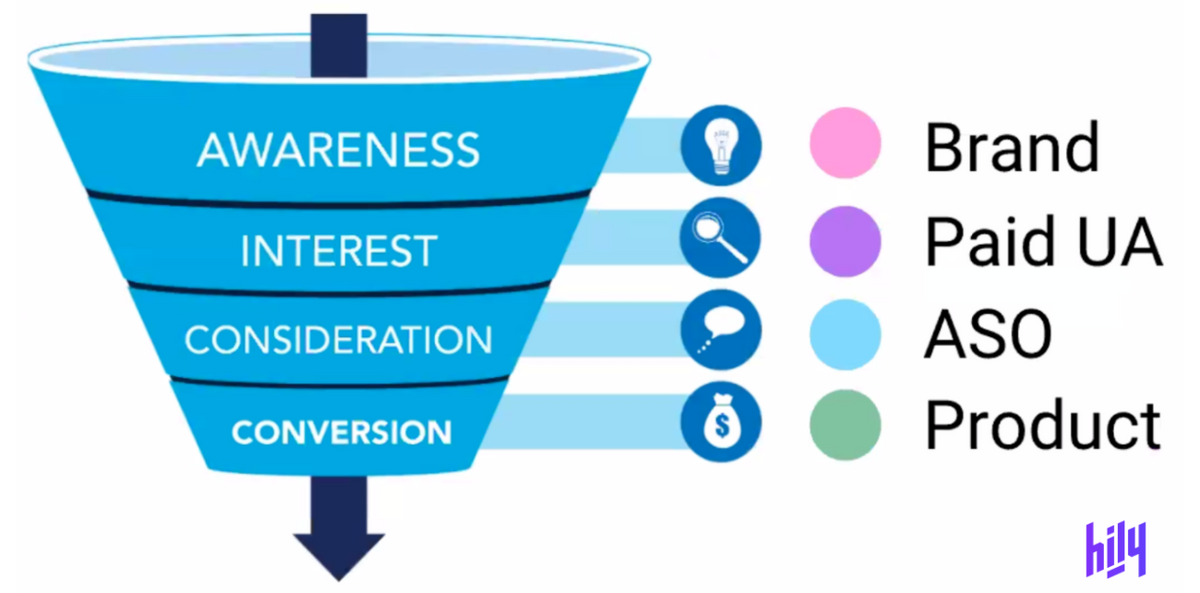
How to combine cross-team knowledge in creating the Product Page that everyone will love? While ASO, Brand and Paid UA teams have the same long term goals, in the short term they may differ. Natalie Drozd, Marketing Manager at Hily explained that in order to solve that, each team must focus on its core responsibilities but overall share information, ask questions and listen to the others. First, the ASO team must embrace a “discoverability-first approach” by choosing relevant and high volume keywords with informative creatives. Secondly, regarding paid and performance marketing, the objective is to lower the price, maximize LTV by adopting a ROI-first approach. And thirdly, for the brand, the approach is centred around mission and values, with the end goal to imprint in people’s mind.
While each of these objectives is well defined, she stresses on the fact that there are overlaps between the teams and collaboration is key. Asking good questions can give rise to new ideas and generate value. For example, the ASO team can learn a lot from the brand and paid teams about the most performing visuals, ads designs, brand positioning and identity.

Framework: combining cross-team knowledge from awareness to conversion.
4. Using an NPS flow to optimize your ratings & reviews
Alex Gorius, Senior Growth Consultant – Phiture
Alice Muir, Growth Consultant – Phiture
Alex Gorius and Alice Muir at Phiture talked about how to best use NPS (Net Promoter Scores) which is a metric used to measure overall experience, or in other words happiness of users, on a scale of 0 to 10. Alice then explained the different benefits of using NPS:
- Minimize churn by better understanding detractors.
- Increase visibility by prompting promoters to refer your app to their entourage.
- Increase App Rating by encouraging promoters to rank your app.
- Improve your app by identifying product problems such as platform or localization issues.
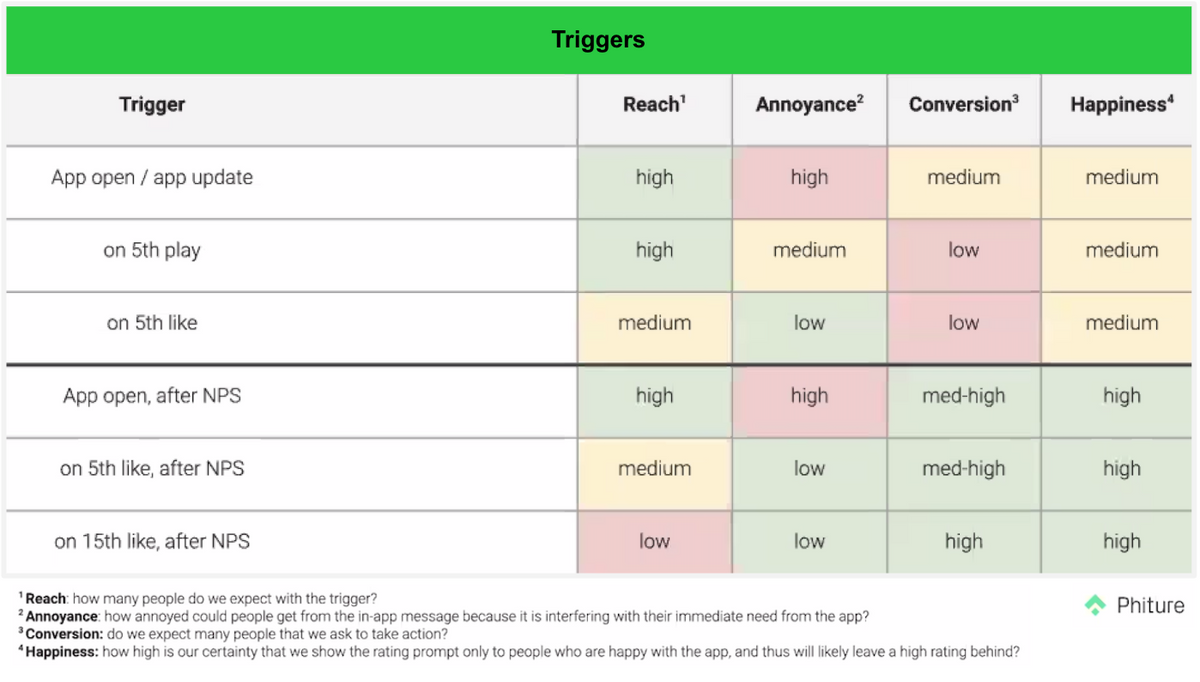
Alex and Alice then highlighted the importance of collecting and gathering data on NPS over time to better understand detractors and leverage promoters. Through a NPS Dashboard built on Google Data Studio, they showed an example of how the data can be broken down and organized to get key insights about potential areas of improvement and better understand how different types of users respond to the app.
Also, they emphasized on the significance of finding the right balance between the different kinds of metrics when building a NPS by showing an example of a real case on Google Play. Finally, Alice reminded us of how Apple is strict when it comes to encouraging ratings and thus, be careful with the NPS design survey for iOS.

Triggers have better results when they occur after NPS and after many likes.
5. Panel: ASO & Brand
Louis Tanguay – App Growth Summit
Alexandra Lamachenka, Growth Manager – SkyScanner
Catherine Sibirko, ASO Expert – Flo Health
Ian Irving, Senior Data Analyst SEO & ASO – BBC
Mathew Parry, ASO Manager – Babbel
Panellists confirmed a very large part of their app installs come from only a few keywords, mostly branded keywords. However, ranking well on your most important generic keywords is still extremely important, as some users are looking for them without a brand in mind. It can be challenging to choose between generic and branded keywords, in particular on iOS where limitations of characters are more restrictive. A good practice is to test and monitor search volumes, rankings and other relevant metrics.
Everything must be aligned across channels but also internally. The ASO team needs to collaborate with product and branding. New features and positioning can influence the app’s title and metadata. During a brand activation campaign, you should also make sure everything is synchronized between channels.
Finally, a question was asked about whether we should attack competitors branded terms? All of them say no because it’s not allowed by the stores, but also because it was not effective when one of them tried some time ago. For well known branded terms, competitors might pay a lot of money but it seems to have a limited impact.
6. ASO In Japan: Understanding how to crack open the Japanese market.
Adzsa Hatano, ASO Expert at Phiture shared tips and insights for a successful keyword optimization and conversion rate optimization for the Japanese Market. As there can be up to 5 different keywords for one word, she highlighted the importance of researching and collecting all types of written versions of a keyword used in Japanese. Based on her experience, Japanese users tend to search with Hiragana on the App stores so keywords in Hiragana tend to have high Search Popularity. But, she recommends using the formal written version of a keyword in the visible assets (title, subtitle, short description, etc) regardless of Search Popularity. She also added an interesting remark that sometimes Japanese users find English keywords to be cool so it does not necessarily make sense to translate every single keyword.
As for creative assets, she emphasized the importance of understanding the seasonal events in Japan and leverage them by adapting and tweaking icons and screenshots accordingly. Also, she shared some small tips that can make the difference in Japan including the use of Kawaii, animism and text bubbles, as well as highlighting social proof and features in the first 3 lines of the long description. Finally, she focused further on screenshots and explained that successful imported apps have localized theirs by catering content and features to Japanese users, used Japanese influencers and models when possible, and followed category trends such as landscape screenshot for dating apps.

Screenshots are stuffed with many elements and highlight social proof.
7. An Open Q&A on the Forces of Organic Uplift
Gabe Kwakyi, Co-founder – Incipia
Marina Corby, Data Analytics Manager – Incipia
The term “organic uplift” is often used in the mobile industry. But what does it mean and how to factor it into your ASO strategy? The organic uplift, also known as “k-factor”, represents the number of organic downloads gained from one marginal paid download. It happens mostly hours or days after a paid download but it can be recognized weeks-to-month later. Gabe Kwakyi and Marina Corby explained that there are different types of organic uplifts, divided into two categories: user-level organic uplift, coming from different kinds of brand searches, and ecosystem organic uplift, coming from non-brand search, top chart rank, app list rank or brand awareness.
To model the relationships between your variables (paid installs, app store features, creatives) and an output (eg: organic installs), different statistical techniques can be used, each with its own interpretability and complexity. The simpler the model, the easier it is to take the output and apply it. Therefore, in order to grab the low hanging fruits, they recommend to start simple and increase gradually the method complexity based on your data. You should determine your business needs, look at the data and gather all the factors you can. To run tests, ideally, no UA campaigns should be conducted so there is no noise in your data that could mislead the results. A good idea might be to go to a market that has a low and stable baseline, as it will help the algorithm to understand what is happening. Finally, new apps on iOS often have a better organic uplift, as they benefit from high visibility during the first 7 days. They closed by emphasizing that Organic uplift pre-COVID-19 is not applicable anymore and that we should all spend some time to figure out what is the new normal.

Incipia describes organic uplift at the User-Level or from Ecosystem.
8. Panel: Synergies between ASO & Apple search Ads
Moderator: David Llewellyn, Marketing Director EMEA – Appsflyer
Panellist: Maryia Filimanchuk, Lead Marketing Manager – Apalon
Panellist: Quoc Anh Luong, Mobile Marketing Manager – OMIO
Panellist: Thomas Petit, Mobile Growth Expert
Many factors must be considered when looking for the best keywords to target, and lots of insights come from Search Ads. Some keywords will have high search traffic, some other high conversion rates or better monetization channels. A good practice is to create different keyword groups to see which ones perform better and where. A winning strategy might be to differentiate and go for low competition keywords.
ASA is not an end in itself, as Apple is not favouriting apps that put a lot of budget on ASA. While Apple will increase rankings on some keywords if download velocity due to ads is high, using ASA specifically is not proven to have an added value compared to other networks. Marketers should find the sweet spot when looking at the relationship between investment and visibility; ASA can help sometimes to bring downloads on some keywords, or it can give you a heads up in new markets. Finally, the golden rule is to target relevant keywords only, those who will give both visibility and retention. Buying traffic for some keywords that are not consistent with the value proposition of the app will not help. Therefore, there should be a synergy between keywords and landing page or screenshots. The best results will be achieved only if ASA and ASO are well integrated, which implies to think broader than just about the keywords.
9. The Apple Search Ads (ASA) Stack: Introducing a cheat-sheet for running ASA.
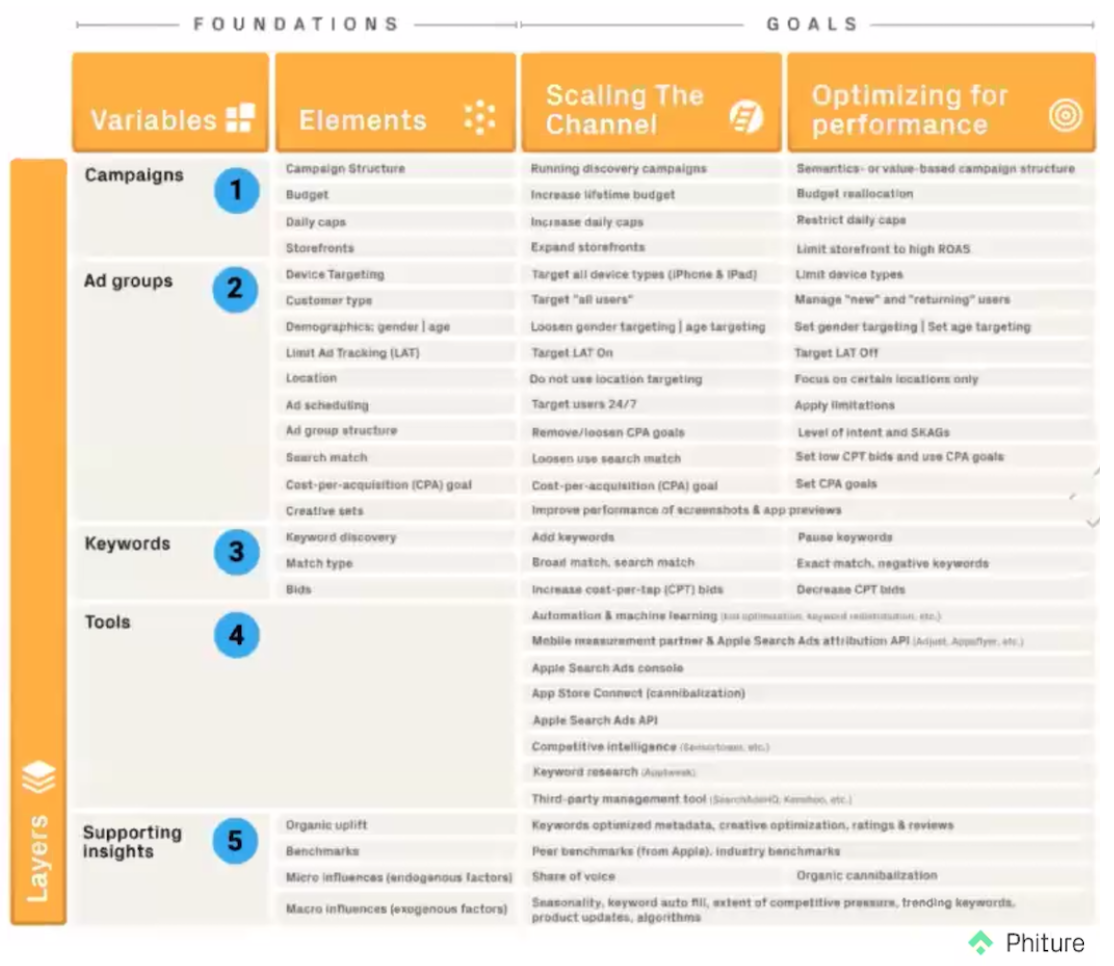
Andrea Raggi, Search Ads Lead at Phiture, highlighted the benefits of Apple Search Ads and provided a cheat-sheet for how to run them effectively. He explained that Search Ads increase visibility, discoverability, and drive downloads as it allows you to advertise your app to 500 million weekly visitors in 60 countries on the Apple App Store. He proceeded by explaining the key terms and sharing a strategic framework with the different layers to consider for developing Apple Search Ads:
- Campaign: aims at properly organizing your account and helping better leverage the different tasks.
- Ad groups: help tailor and develop the strategy. Address a specific audience or optimize performance, which can help with ASO efforts.
- Keywords: can help reach scale, optimize performance and discover new keywords with the search match. It also helps you find some search terms that work better than others and that can be transferred to your ASO efforts.
- Tools: Support strategy through the study of the market, technical improvement and understanding of what the competitors are doing.
- Supporting insights: Enables to grasp the big picture. ASA improve keywords ranking at the organic level.
These 5 supporting layers are the foundation of ASA strategy for which the goals are to help scale the channel and optimize its performance. He finally added that the strategy does not need to cover everything at the same time and recommended to use it to improve the ASO conversion.

The 5 layers of the strategic Apple Search Ads framework, by Phiture.
Note: Release of ASA Stack on May 14th, 2020 to provide ASO Stack community with an overview of all available assets to grow an exhaustive strategy in Apple Search Ads.
10. How we have started our in-house localization team for app store optimization
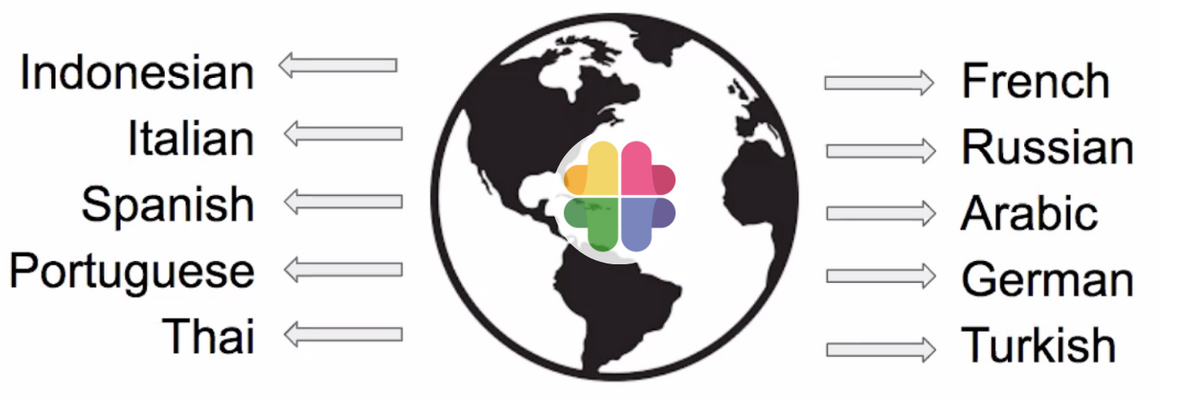
Seyma Cam, Product Partnership Specialist at VLMedia walked us through the process of how they have built an effective localization team in-house to localize their app in 34 languages. She explained that they looked at 2 main elements when deciding which Geo’s to localize in:
- Where their users were and from where the most downloads and reviews/ratings were coming from.
- Where their competitors were localized and an in-depth analysis of their localization strategy in those markets.
Once the markets for localization were chosen, Seyma explained the steps its company undertook to build an in-house localization team:
- Find people that speak English and the foreign language targeted and have experience with mobile applications.
- Have each native employee be in charge of researching the cultural and language trends and be knowledgeable of the best ASO practises in that target market (Keyword Optimization and Creatives).
- Develop a tool to have all the translations in one place including in-app copy, store listing, and marketing.
She stressed the importance of experiments and choosing the right keywords for that specific market based on both research and the different metrics. Also, she explains how localization goes beyond ASO efforts and that the company has also localized promotions, email marketing, paid ads and everything else. Overall, localization allowed her company to increase revenue, retention rate and in-app purchases. It proved to bring positive results in both App Stores as the app, once localized, became more engaging and fun for the users.

Localization had a positive impact on the conversion rate, retention, purchases and many other metrics.
11. Automating localization: Creating a Seamless Flow for 40+ Languages with the weekly release cycle
Ilia Kukharev, Head of ASO – Aviasales
Localization has huge benefits, such as better visibility for your app, monetization with Ads, more chances to get featured worldwide or unexpected boosts. However, as you keep developing your app, translating it in many languages on a regular basis can be extremely time-consuming. Ilia Kukharev, Head of ASO at Aviasales explained that by automating the process, the company managed to reduce the time needed for translations from 15% to just 1% of their work time. How? By using Crowdin, a cloud-based solution that streamlines localization management. You simply have to connect to GitHub, set up a branch and configure it. When new files need to be translated, freelancers or a translation agency will get an email. They need to log in and translate new stings, and you will get a confirmation when it’s done.

Aviasales automated the translations process and reduced their working time for the task by 15.
12. Dealing with False Positive A/B Tests Results in Google Play Experiments
Simon Thillay, Head of ASO – AppTweak
Our own Head of ASO, Simon Thillay, shared how some issues inherent to Google Play Experiments impact the reliability and trustworthiness of test results before presenting a new testing method aimed at improving the reliability of results.
- Lack of control on how users coming from different traffic sources as well as store weekly seasonality create a lot of statistical noise that can affect conversion in each sample of A/B test differently, leading to false-positive results.
- Getting enough downloads in each test sample is key to reaching good enough statistical power.
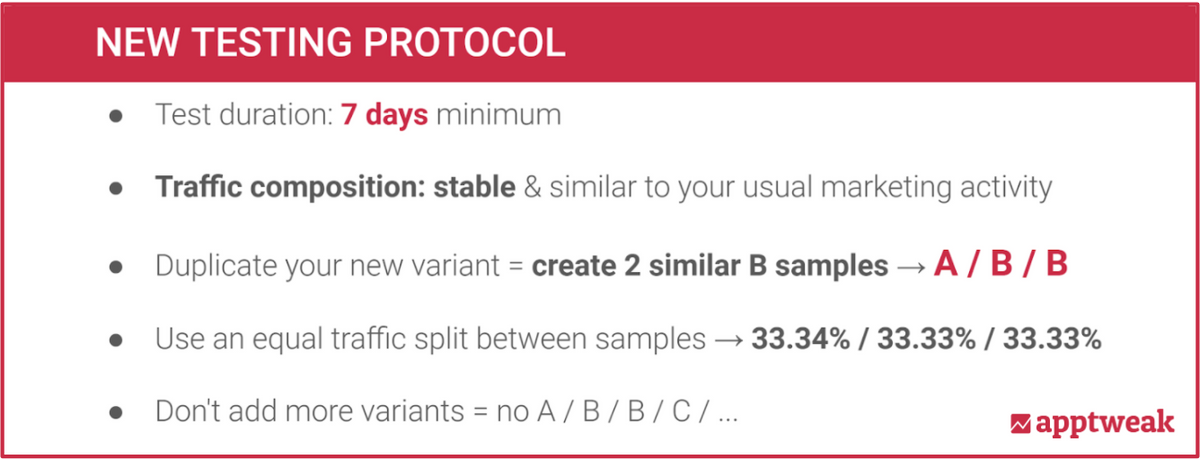
- Duplicating your new variant in your test so you have an A / B / B structure will help you compare if both B samples get similar or different results. Similar results from both B samples are likely to be trustworthy, whereas finding different results in each B sample means you probably were served a false-positive result.

Our recommended rules for the new A / B / B test format – AppTweak
Simon concluded by asking willing members in the audience to reach out to him to share their results, as he will be trying to compile some stats on the benefits from this new method, which will also be detailed longer on our blog very soon.
13. Rating libraries on iOS and Android
Sebastian Gallese, Founder – Haystack Reviews
It is well known that asking for ratings is extremely important. However, when your rating mechanism is hardcoded, it makes it difficult to experiment. Sebastian Gallese, Founder of Haystack Reviews explained that to solve that issue, developers can tap into existing libraries that will allow them to spend less time setting everything up, and more time for experimentation. For example, one might use “skent/Amplify” on Android, “Armchair“ on iOS or “skyost/RateMyApp” with Flutter. Sebastian also pointed out that while a native prompt is not yet available for Android, a test app which does include a native prompt mechanism has been spotted already some time ago, and marketers should prepare for the feature to hit the store soon and identify the best trigger mechanisms in consequence.
We hope you enjoyed the conference as much as we did! If you want to know more about AppTweak, don’t hesitate to check out our other blogs, book a demo or start a free trial!
ASO 컨퍼런스 2020: 요약 및 학습 내용
일시: 2020년 5월 13일
장소: 온라인 컨퍼런스
내용: 전문가 수준의 ASO 토론에 중점을 둔 독점 행사
2020년 5월 13일 베를린에서 개최된 제3회 ASO 컨퍼런스는 68개국에서 1,400명 이상이 가상으로 참여했습니다. 이 컨퍼런스의 목표는 COVID-19로 인한 어려움에도 불구하고 ASO에 대한 지식을 계속 공유하는 것이었습니다. ASO 커뮤니티에서 너무나 많은 인사이트가 나와 모두 요약하는 것은 불가능하지만, 이 글에서는 여러분이 알아야 할 13가지 강연의 핵심 내용을 정리했습니다.
1. 모바일 산업에 대한 코로나19의 영향
개회사를 마친 후, Phiture의 공동 창립자인 Moritz Daan은 모바일 앱 산업에 대한 COVID-19의 영향을 간략하게 설명했습니다.
- Apple App Store(3월 13일경)와 Google Play Store 모두에서 다운로드가 전 세계적으로 전반적으로 증가했습니다.
- 주중과 주말이 하나가 되면서 주말 계절성은 더 이상 눈에 띄지 않습니다. 예를 들어, 이제 게임은 주중에도 대규모로 다운로드됩니다.
- COVID-19의 영향으로 승리한 카테고리는 비즈니스, 건강 및 피트니스, 의료, 교육, 뉴스이며, 패배한 카테고리는 여행, 스포츠, 내비게이션, 날씨, 도서입니다.
- 옥스퍼드 대학의 데이터에 따르면, 카테고리에서 관찰된 변화는 정부 대응 정책의 다른 순서와 직접적으로 연관되어 있습니다. 예를 들어, 미국 여행 카테고리의 다운로드 급감은 국내 여행 중단에 따른 것입니다.
- 키워드 검색 트래픽은 중요한 키워드가 사라지고 다른 키워드가 매우 중요해지면서 하루아침에 크게 변했습니다.
- Apple은 COVID-19를 고려하여 아트워크 및 크리에이티브에 사회적 거리두기 지침을 반영하도록 요구하므로 앱은 상황에 전략을 조정해야 했습니다.
앱 크리에이티브에 반영된 사회적 거리두기 지침.
개회사는 나중에 이어질 다양한 ASO 강연과 패널 토론의 좋은 시작이었습니다. 이 강연들은 ASO의 많은 중요한 측면을 다루었지만, 그 중 많은 부분이 현지화 주제를 논의했으며, 이는 2020년 ASO의 뜨거운 주제인 것으로 보입니다.
2. ASO 영향력 및 성공 측정을 위한 올바른 대시보드 구축
Nadir Garouche, Tilting Point 선임 그로스 매니저
ASO 캠페인의 성공은 내부 및 외부 요인에 따라 달라지므로, 앱의 성과를 잘 이해하기 위해서는 다양한 KPI를 측정하고 통합하는 것이 필수적입니다. App Store Connect에서 Tilting Point의 선임 그로스 매니저인 Nadir Garouche는 분석에 더 적합할 수 있으므로 “설치” 대신 “앱 단위”를 사용할 것을 권장합니다. “앱 구매 날짜”는 특정 날짜 또는 기간에 앱을 설치한 사용자 코호트를 생성하는 데 유용한 필터입니다. 그러나 App Store Connect에서는 두 가지 차원으로만 제한되므로, 데이터를 가져와 주요 스토어 지표 각각에 대한 차트를 포함하는 심층 분석을 위한 자체 커스텀 대시보드를 만들어야 합니다. 키워드 최적화로 인한 상승 효과를 측정하려면 검색 설치를 키워드 가시성 지표와 비교할 것을 제안합니다.
Tilting Point의 주요 대시보드 – 주요 스토어 지표를 한 화면에 통합합니다.
Google Play에서는 유지율이 매우 중요하며 고려해야 합니다. 유지율과 트래픽 간의 상관관계를 분석하면 귀중한 인사이트를 얻을 수 있습니다. 또한, 충돌은 가시성에 부정적인 영향을 미칠 수 있지만, Google Play에 반영되는 데 30일이 걸릴 수 있습니다.
마지막으로, ASA 캠페인 실행 시 성과를 보고하기 위해 Nadir는 App Store Connect 앱 단위에서 MMP ASA 설치*를 빼는 것을 권장합니다. 다른 옵션은 App Store Connect 판매/IAP*에서 MMP ASA 판매/IAP를 빼는 것입니다. App Store 성과 차트와 Apple Search Ads 성과 차트를 나란히 보면 추세를 파악하고 동일한 기간 동안 지표가 어떻게 변화하는지 확인할 수 있습니다.
*MMP: 모바일 측정 파트너
*인앱 구매
3. ASO, 성과 마케팅 및 브랜드 간의 일관성 확보
Natalie Drozd, Hily 마케팅 매니저
모두가 좋아할 제품 페이지를 만들기 위해 팀 간 지식을 어떻게 결합할 수 있을까요? ASO, 브랜드 및 유료 UA 팀은 장기적인 목표는 같지만, 단기적으로는 다를 수 있습니다. Hily의 마케팅 매니저인 Natalie Drozd는 이를 해결하기 위해 각 팀이 핵심 책임에 집중하되, 전반적으로 정보를 공유하고 질문하며 다른 팀의 의견을 경청해야 한다고 설명했습니다. 첫째, ASO 팀은 유익한 크리에이티브와 함께 관련성 높고 볼륨이 큰 키워드를 선택하여 “
이러한 각 목표는 잘 정의되어 있지만, 그녀는 팀 간에 중복되는 부분이 있으며 협업이 핵심이라고 강조합니다. 좋은 질문을 하는 것은 새로운 아이디어를 불러일으키고 가치를 창출할 수 있습니다. 예를 들어, ASO 팀은 브랜드 및 유료 팀으로부터 가장 성과가 좋은 시각 자료, 광고 디자인, 브랜드 포지셔닝 및 정체성에 대해 많은 것을 배울 수 있습니다.
프레임워크: 인지도에서 전환까지 팀 간 지식 결합.
4. NPS 흐름을 사용하여 평점 및 리뷰 최적화
Alex Gorius, Phiture 선임 그로스 컨설턴트
Alice Muir, Phiture 그로스 컨설턴트
Phiture의 Alex Gorius와 Alice Muir는 전반적인 경험, 즉 사용자 만족도를 0에서 10까지의 척도로 측정하는 데 사용되는 지표인 NPS(순 추천 지수)를 가장 잘 활용하는 방법에 대해 이야기했습니다. Alice는 NPS 사용의 다양한 이점을 설명했습니다.
- 이탈자를 더 잘 이해하여 이탈을 최소화합니다.
- 추천자에게 앱을 주변에 추천하도록 유도하여 가시성을 높입니다.
- 추천자에게 앱을 평가하도록 장려하여 앱 평점을 높입니다.
- 플랫폼 또는 현지화 문제와 같은 제품 문제를 식별하여 앱을 개선합니다.
Alex와 Alice는 이탈자를 더 잘 이해하고 추천자를 활용하기 위해 NPS 데이터를 수집하고 축적하는 것의 중요성을 강조했습니다. Google Data Studio에 구축된 NPS 대시보드를 통해 그들은 데이터를 분류하고 구성하여 잠재적인 개선 영역에 대한 핵심 인사이트를 얻고 다양한 유형의 사용자가 앱에 어떻게 반응하는지 더 잘 이해하는 방법을 보여주는 예를 제시했습니다.
또한, 그들은 Google Play의 실제 사례를 보여주면서 NPS를 구축할 때 다양한 종류의 지표 간에 올바른 균형을 찾는 것의 중요성을 강조했습니다. 마지막으로, Alice는 Apple이 평점 유도에 대해 엄격하다는 점을 상기시키며 iOS용 NPS 설문조사 디자인에 주의할 것을 당부했습니다.
트리거는 NPS 이후 및 많은 좋아요 이후에 발생할 때 더 나은 결과를 가져옵니다.
5. 패널: ASO 및 브랜드
Louis Tanguay – App Growth Summit
Alexandra Lamachenka, Growth Manager – SkyScanner
Catherine Sibirko, ASO Expert – Flo Health
Ian Irving, Senior Data Analyst SEO & ASO – BBC
Mathew Parry, ASO Manager – Babbel
패널리스트들은 앱 설치의 상당 부분이 몇몇 키워드, 주로 브랜드 키워드에서 비롯된다는 점을 확인했습니다. 그러나 가장 중요한 일반 키워드에서 좋은 순위를 차지하는 것은 여전히 매우 중요합니다. 일부 사용자는 브랜드를 염두에 두지 않고 해당 키워드를 검색하기 때문입니다. 특히 문자 제한이 더 엄격한 iOS에서는 일반 키워드와 브랜드 키워드 중에서 선택하는 것이 어려울 수 있습니다. 검색량, 순위 및 기타 관련 지표를 테스트하고 모니터링하는 것이 좋은 방법입니다.
모든 것이 채널뿐만 아니라 내부적으로도 일치해야 합니다.
마지막으로, 경쟁 앱의 브랜드 용어를 공격해야 하는지에 대한 질문이 있었습니다. 모든 패널리스트는 스토어에서 허용되지 않을 뿐만 아니라, 과거에 시도했을 때 효과가 없었기 때문에 안 된다고 답했습니다. 잘 알려진 브랜드 용어의 경우 경쟁 앱이 많은 돈을 지불할 수 있지만, 영향은 제한적인 것으로 보입니다.
6. 일본 ASO: 일본 시장을 공략하는 방법 이해
Phiture의 ASO 전문가인 Adzsa Hatano는 일본 시장에서 성공적인 키워드 최적화 및 전환율 최적화를 위한 팁과 인사이트를 공유했습니다. 하나의 단어에 대해 최대 5가지 다른 키워드가 있을 수 있으므로, 그녀는 일본에서 사용되는 키워드의 모든 유형의 서면 버전을 조사하고 수집하는 것의 중요성을 강조했습니다. 그녀의 경험에 따르면, 일본 사용자는 앱 스토어에서 히라가나로 검색하는 경향이 있으므로 히라가나 키워드는 높은 검색 인기도를 가지는 경향이 있습니다. 그러나 그녀는 검색 인기도와 관계없이
크리에이티브 자산에 관해서는 일본의 계절별 이벤트를 이해하고 그에 따라 아이콘과 스크린샷을 조정하여 활용하는 것의 중요성을 강조했습니다. 또한, 그녀는 카와이, 애니미즘 및 텍스트 버블 사용, 그리고 긴 설명의 처음 3줄에 사회적 증거 및 기능 강조를 포함하여 일본에서 차이를 만들 수 있는 몇 가지 작은 팁을 공유했습니다. 마지막으로, 그녀는 스크린샷에 더 집중하여 성공적으로 수입된 앱들이 일본 사용자에게 콘텐츠와 기능을 맞춤화하여 현지화했으며, 가능한 경우 일본 인플루언서 및 모델을 사용하고, 데이팅 앱의 가로 스크린샷과 같은 카테고리 트렌드를 따랐다고 설명했습니다.
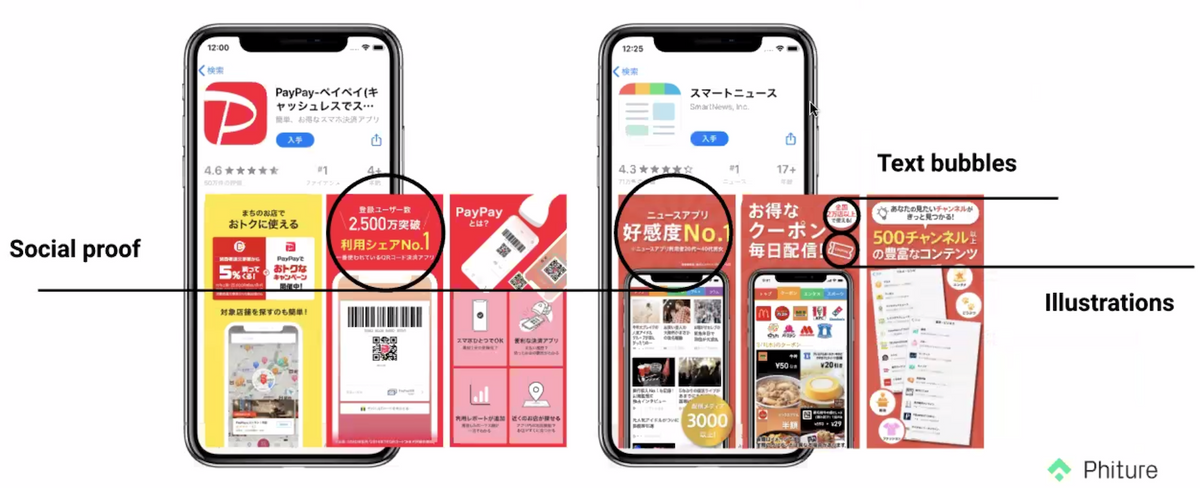
스크린샷은 많은 요소로 채워져 있으며 사회적 증거를 강조합니다.
7. 유기적 상승의 힘에 대한 공개 Q&A
Gabe Kwakyi, Incipia 공동 창립자
Marina Corby, Incipia 데이터 분석 매니저
“유기적 상승”이라는 용어는 모바일 산업에서 자주 사용됩니다. 하지만 그것이 무엇을 의미하며 ASO 전략에 어떻게 반영해야 할까요? “k-요소”라고도 알려진 유기적 상승은 유료 다운로드 1회당 얻는 유기적 다운로드 수를 나타냅니다. 이는 주로 유료 다운로드 후 몇 시간 또는 며칠 후에 발생하지만, 몇 주에서 몇 달 후에 인식될 수도 있습니다. Gabe Kwakyi와 Marina Corby는 다양한 유형의 유기적 상승이 있으며, 이는 두 가지 범주로 나뉜다: 사용자 수준 유기적 상승은 다양한 종류의 브랜드 검색에서 비롯되며, 생태계 유기적 상승은 비브랜드 검색, 상위 차트 순위, 앱 목록 순위 또는 브랜드 인지도에서 비롯됩니다.
변수(유료 설치, 앱 스토어 기능, 크리에이티브)와 출력(예: 유기적 설치) 간의 관계를 모델링하기 위해 다양한 통계 기법을 사용할 수 있으며, 각 기법은 고유한 해석 가능성과 복잡성을 가집니다. 모델이 간단할수록 출력을 가져와 적용하기가 더 쉽습니다. 따라서 쉽게 얻을 수 있는 성과를 얻기 위해서는 간단하게 시작하고 데이터에 따라 방법의 복잡성을 점진적으로 늘릴 것을 권장합니다. 비즈니스 요구 사항을 결정하고 데이터를 살펴보고 가능한 모든 요소를 수집해야 합니다. 테스트를 실행하려면 이상적으로는 UA 캠페인을 수행하지 않아야 결과에 오해를 줄 수 있는 데이터의 노이즈가 없습니다. 낮고 안정적인 기준선을 가진 시장으로 가는 것이 좋은 아이디어일 수 있습니다. 이는 알고리즘이 무엇이 일어나고 있는지 이해하는 데 도움이 될 것입니다. 마지막으로, iOS의 새로운 앱은 처음 7일 동안 높은 가시성을 얻으므로 종종 더 나은 유기적 상승을 가집니다. 그들은 COVID-19 이전의 유기적 상승은 더 이상 적용되지 않으며, 우리 모두 새로운 정상 상태가 무엇인지 파악하는 데 시간을 할애해야 한다고 강조하며 마무리했습니다.
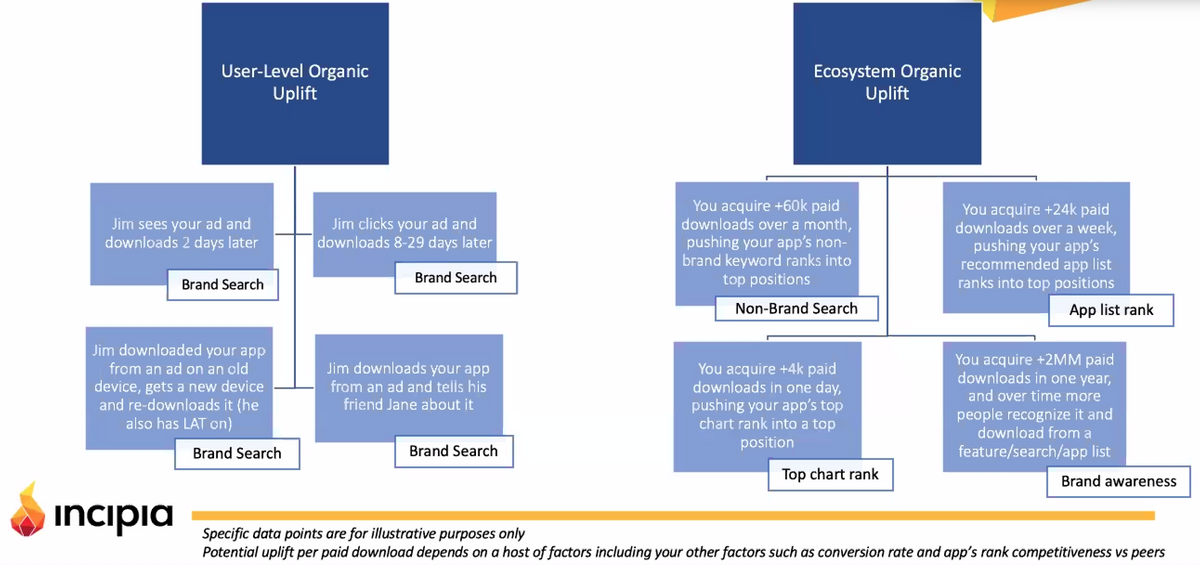
Incipia는 사용자 수준 또는 생태계에서 발생하는 유기적 상승을 설명합니다.
8. 패널: ASO 및 Apple Search Ads 간의 시너지 효과
사회자: David Llewellyn, AppsFlyer EMEA 마케팅 이사
패널리스트: Maryia Filimanchuk, Apalon 마케팅 리드 매니저
패널리스트: Quoc Anh Luong, OMIO 모바일 마케팅 매니저
패널리스트: Thomas Petit, 모바일 성장 전문가
타겟팅할 최적의 키워드를 찾을 때 많은 요소를 고려해야 하며, Search Ads에서 많은 인사이트를 얻을 수 있습니다. 일부 키워드는 높은 검색 트래픽을 가질 것이고, 다른 키워드는 높은 전환율 또는 더 나은 수익화 채널을 가질 것입니다. 좋은 방법은 어떤 키워드가 더 잘 작동하고 어디에서 작동하는지 확인하기 위해 다른 키워드 그룹을 만드는 것입니다. 성공적인 전략은 차별화하고 경쟁이 낮은 키워드를 선택하는 것일 수 있습니다.
ASA는 그 자체로 목적이 아닙니다. Apple은 ASA에 많은 예산을 투입하는 앱을 선호하지 않습니다. Apple은 광고로 인한 다운로드 속도가 높으면 일부 키워드의 순위를 높일 것이지만, ASA를 특별히 사용하는 것이 다른 네트워크에 비해 추가적인 가치를 제공한다는 것은 입증되지 않았습니다. 마케터는 투자 및 가시성 간의 관계를 볼 때 최적의 지점을 찾아야 합니다. ASA는 때때로 일부 키워드에서 다운로드를 가져오는 데 도움이 되거나, 새로운 시장에서 선두를 차지하는 데 도움이 될 수 있습니다. 마지막으로, 황금률은 가시성과 유지율을 모두 제공할 관련 키워드만 타겟팅하는 것입니다. 앱의 가치 제안과 일치하지 않는 일부 키워드에 대한 트래픽을 구매하는 것은 도움이 되지 않을 것입니다. 따라서
9. Apple Search Ads(ASA) 스택: ASA 실행을 위한 치트 시트 소개
Phiture의 Search Ads 리드인 Andrea Raggi는 Apple Search Ads의 이점을 강조하고 효과적으로 실행하는 방법에 대한 치트 시트를 제공했습니다. 그는 Search Ads가 가시성, 발견 가능성을 높이고 다운로드를 유도한다고 설명했습니다. 이는 Apple App Store에서 60개국에서 주간 5억 명의 방문자에게 앱을 광고할 수 있기 때문입니다. 그는 주요 용어를 설명하고 Apple Search Ads 개발을 위해 고려해야 할 다양한 계층을 포함하는 전략적 프레임워크를 공유했습니다.
- 캠페인: 계정을 적절하게 구성하고 다양한 작업을 더 잘 활용하는 것을 목표로 합니다.
- Ad 그룹: 전략을 맞춤화하고 개발하는 데 도움이 됩니다. 특정 잠재 고객을 대상으로 하거나 성과를 최적화하여 ASO 노력에 도움이 될 수 있습니다.
- 키워드: 검색 일치를 통해 규모를 확장하고 성과를 최적화하며 새로운 키워드를 발견하는 데 도움이 될 수 있습니다. 또한 다른 키워드보다 더 잘 작동하는 검색어를 찾아 ASO 노력에 적용할 수 있습니다.
- 도구: 시장 연구, 기술 개선 및 경쟁 앱의 활동 이해를 통해 전략을 지원합니다.
- 지원 인사이트: 큰 그림을 파악할 수 있도록 합니다. ASA는 유기적 수준에서 키워드 순위를 개선합니다.
이 5가지 지원 계층은 채널을 확장하고 성과를 최적화하는 것을 목표로 하는 ASA 전략의 기반입니다. 그는 마지막으로 전략이 모든 것을 동시에 다룰 필요는 없으며 ASO 전환을 개선하는 데 활용할 것을 권장했습니다.
Phiture의 전략적 Apple Search Ads 프레임워크의 5가지 계층.
참고: 2020년 5월 14일 ASA 스택 출시. ASO 스택 커뮤니티에 Apple Search Ads에서 포괄적인 전략을 성장시키기 위한 모든 사용 가능한 자산에 대한 개요를 제공합니다.
10. 앱 스토어 최적화를 위한 사내 현지화 팀을 시작한 방법
VLMedia의 제품 파트너십 전문가인 Seyma Cam은 앱을 34개 언어로 현지화하기 위해 효과적인 사내 현지화 팀을 구축한 과정을 설명했습니다. 그녀는 현지화할 지역을 결정할 때 두 가지 주요 요소를 고려했다고 설명했습니다.
- 사용자가 어디에 있었는지, 그리고 가장 많은 다운로드와 리뷰/평점이 어디에서 왔는지.
- 경쟁 앱이 어디에 현지화되어 있었는지, 그리고 해당 시장에서 그들의 현지화 전략에 대한 심층 분석.
현지화 시장이 선택된 후, Seyma는 회사가 사내 현지화 팀을 구축하기 위해 취한 단계를 설명했습니다.
- 영어와 대상 외국어를 구사하며 모바일 애플리케이션 경험이 있는 사람을 찾습니다.
- 각 현지 직원이 문화 및 언어 트렌드를 연구하고 해당 대상 시장에서 최고의 ASO 관행(키워드 최적화 및 크리에이티브)에 대한 지식을 갖도록 합니다.
- 인앱 카피, 스토어 리스팅 및 마케팅을 포함한 모든 번역을 한 곳에 모을 수 있는 도구를 개발합니다.
그녀는 실험과 연구 및 다양한 지표를 기반으로 해당 특정 시장에 적합한 키워드를 선택하는 것의 중요성을 강조했습니다. 또한, 그녀는 현지화가 ASO 노력 이상으로 확장되며 회사가 프로모션, 이메일 마케팅, 유료 광고 및 기타 모든 것을 현지화했다고 설명했습니다. 전반적으로 현지화는 그녀의 회사가 수익, 유지율 및 인앱 구매를 증가시키는 데 도움이 되었습니다. 현지화된 앱이 사용자에게 더 매력적이고 재미있게 되면서 두 앱 스토어 모두에서 긍정적인 결과를 가져왔습니다.
현지화는 전환율, 유지율, 구매 및 기타 여러 지표에 긍정적인 영향을 미쳤습니다.
11. 현지화 자동화: 주간 릴리스 주기로 40개 이상의 언어에 대한 원활한 흐름 생성
Ilia Kukharev, Aviasales ASO 책임자
현지화는 앱의 가시성 향상, 광고를 통한 수익 창출, 전 세계적으로 추천될 가능성 증가 또는 예상치 못한 부스트와 같은 엄청난 이점을 제공합니다. 그러나 앱을 계속 개발하면서 많은 언어로 정기적으로 번역하는 것은 엄청난 시간이 소요될 수 있습니다. Aviasales의 ASO 책임자인 Ilia Kukharev는 프로세스를 자동화함으로써 회사가 번역에 필요한 시간을 작업 시간의 15%에서 1%로 줄일 수 있었다고 설명했습니다. 어떻게? 현지화 관리를 간소화하는 클라우드 기반 솔루션인 Crowdin을 사용하여. GitHub에 연결하고, 브랜치를 설정하고, 구성하기만 하면 됩니다. 새로운 파일을 번역해야 할 때 프리랜서 또는 번역 에이전시가 이메일을 받게 됩니다. 그들은 로그인하여 새로운 문자열을 번역해야 하며, 완료되면 확인을 받게 됩니다.
Aviasales는 번역 프로세스를 자동화하여 해당 작업에 소요되는 작업 시간을 15% 단축했습니다.
12. Google Play 실험에서 잘못된 양성 A/B 테스트 결과 처리
Simon Thillay, AppTweak ASO 책임자
저희 ASO 책임자인 Simon Thillay는 Google Play 실험에 내재된 일부 문제가 테스트 결과의 신뢰성과 타당성에 어떻게 영향을 미치는지 공유한 후, 결과의 신뢰성을 향상시키는 것을 목표로 하는 새로운 테스트 방법을 제시했습니다.
- 다른 트래픽 소스에서 오는 사용자에 대한 통제 부족과 스토어의 주간 계절성은 많은 통계적 노이즈를 생성하여 A/B 테스트의 각 샘플에서 전환에 다르게 영향을 미쳐 잘못된 양성 결과를 초래할 수 있습니다.
- 각 테스트 샘플에서 충분한 다운로드를 얻는 것이 충분한 통계적 검정력을 달성하는 데 중요합니다.
- 테스트에서 새 변형을 복제하여 A/B/B 구조를 가지면 두 B 샘플이 유사하거나 다른 결과를 얻는지 비교하는 데 도움이 됩니다. 두 B 샘플에서 유사한 결과가 나오면 신뢰할 수 있을 가능성이 높지만, 각 B 샘플에서 다른 결과가 나오면 잘못된 양성 결과가 나왔을 가능성이 높습니다.
새로운 A/B/B 테스트 형식에 대한 권장 규칙 – AppTweak
Simon은 이 새로운 방법의 이점에 대한 통계를 수집하려고 노력할 것이며, 이는 곧 저희 블로그에 더 자세히 설명될 것이므로, 기꺼이 결과를 공유할 의향이 있는 청중에게 연락해 달라고 요청하며 마무리했습니다.
13. iOS 및 Android의 평점 라이브러리
Sebastian Gallese, Haystack Reviews 설립자
평점 요청이 매우 중요하다는 것은 잘 알려져 있습니다. 하지만 평점 메커니즘이 하드코딩되어 있으면 실험하기가 어렵습니다. Haystack Reviews의 설립자인 Sebastian Gallese는 이 문제를 해결하기 위해 개발자들이 기존 라이브러리를 활용하여 설정에 드는 시간을 줄이고 실험에 더 많은 시간을 할애할 수 있다고 설명했습니다. 예를 들어, Android에서는 “skent/Amplify”를, iOS에서는 “Armchair“를, Flutter에서는 “skyost/RateMyApp”을 사용할 수 있습니다. Sebastian은 또한 Android용 네이티브 프롬프트는 아직 제공되지 않지만, 네이티브 프롬프트 메커니즘을 포함하는 테스트 앱이 이미 얼마 전 발견되었으며, 마케터들은 이 기능이 곧 스토어에 출시될 것에 대비하여 최적의 트리거 메커니즘을 식별해야 한다고 지적했습니다.
저희만큼 컨퍼런스를 즐기셨기를 바랍니다! AppTweak에 대해 더 자세히 알고 싶으시다면, 주저하지 마시고 다른 블로그를 확인하시거나, 데모를 예약하시거나, 무료 체험을 시작해 보십시오!
Simon Thillay