ASOが存在してきた限り、仕事はキーワードを勝ち取ることでした。ボリュームのある用語を選び、タイトルと短い説明文に入れ、ランキングを上げ、コンバージョンを測る。そのループは今も回っていますが、もはやそれがすべてではありません。
Google Playは、Ask Play highlightsという機能を通じて、一部の検索では一覧表示する前に回答するようになりました。そこで名前が挙がるアプリは、その下に表示されるアプリランキングのアプリと同じではありません。これがASO担当者にとって何を意味するのか、そしてAsk Play highlightsでアプリをおすすめしてもらうために何ができるのかをご紹介します。
Ask Play highlightsとは?
Ask Play highlightsは、Google Playが通常の検索結果の上に表示する、AIが作成したおすすめブロックです。アプリ名を挙げ、そのアプリについて1文の説明(文)を書き、固定のキーワードに一致させるのではなく、検索の言い回しによって異なる形で表示されます。
GoogleはこれをI/O 2026で発表しました。Play Storeの検索を、より会話に近いものへ変えていく大きな流れの一部です。
Ask Play highlightsでどのアプリが選ばれるのかを実際に形作っている要因、そしてどのように説明されるのかを確認するために、カテゴリ検索をまとめて実施しました。そこで見えてきたパターンはランキングではなく、言い回しでした。検索の言い回しによって、Ask Play highlightsの結果は変わります。
重要なポイント
- Ask Play highlightsは、キーワード一致ではなく言い回しによってアプリを選び、説明します。 同じ意図でも、言い方を2通りにするだけで、表示されるアプリや、同じアプリの説明のされ方が変わることがあります。
- どのおすすめにもソースは表示されず、Google自身の免責事項でも、この機能は誤る可能性があるとされています。 内容を検証したり修正したりはできず、影響を与えられるのはAIが参照する素材だけです。
- テスト結果から、Ask Play highlightsの主なソースは説明文(長文)である可能性が高く、レビューや自社サイトも入力として使われている可能性があります。
- この表示枠では、アプリ評価だけでは順序を安定して予測できません。 4.5が4.8を上回ることもあります。
- キーワードをターゲットにするのと同じ方法で、Ask Play highlightsをターゲットにすることはできません。 できることは、説明文(長文)・レビュー・ウェブサイトが、アプリを十分に明確に説明している状態にすることです。
アプリを検索したときにAsk Play highlightsが何をおすすめするか(当社テスト)
同じ根本的なニーズに対して、言い回しの異なるリクエストがAsk Play highlightsでどう変化するかをテストしました。まず、eSIMアプリのニーズをいくつかの言い方で表現してテストしました。
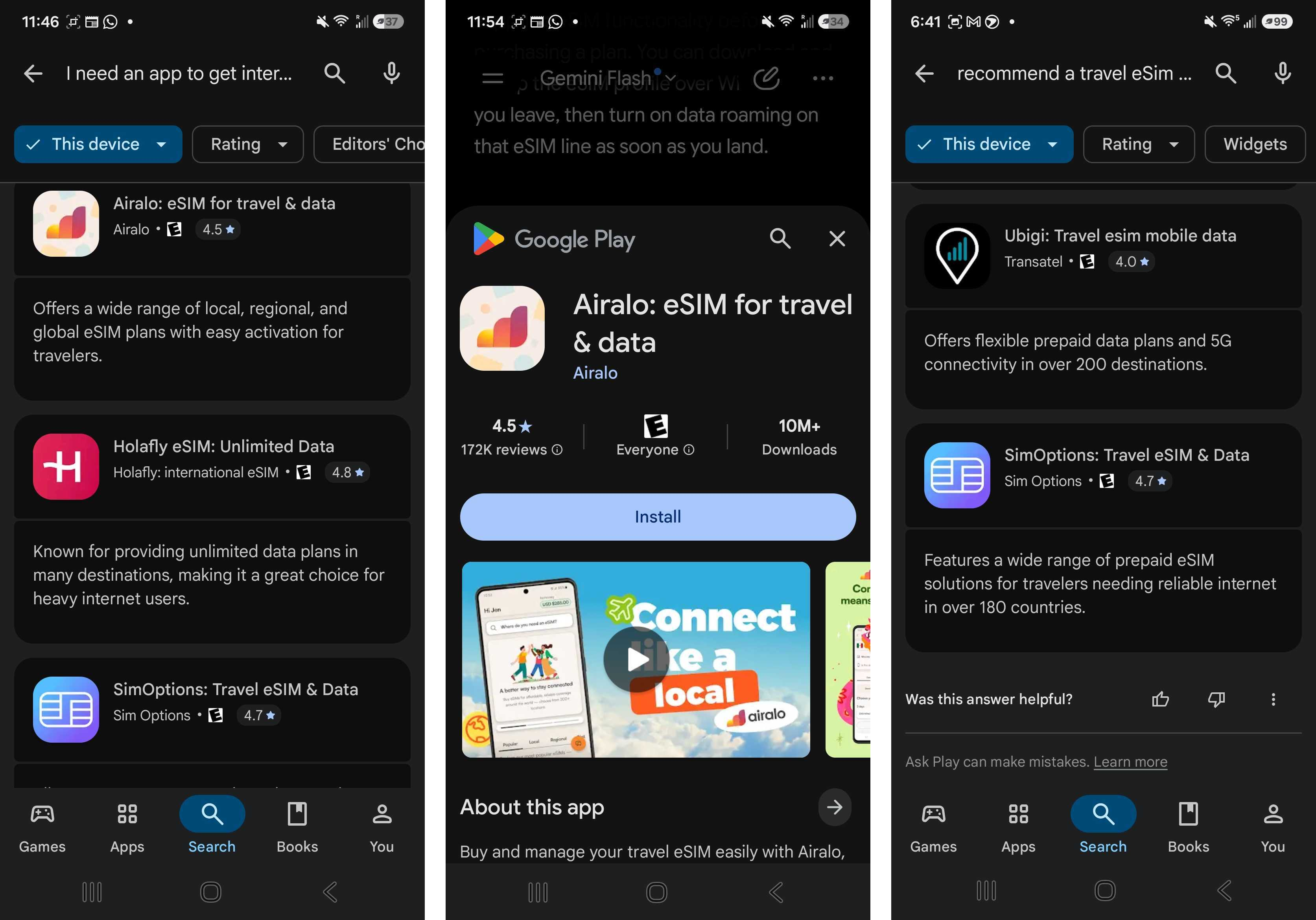
| テストした言い回し | おすすめされたアプリ | 生成された説明(文) |
| 「旅行中に信頼できるモバイルデータを使うのに最適なアプリは?」 | Airalo、Holafly、Saily | 「200以上の国向けに、ローカル・地域・グローバルのeSIMプランを幅広く提供する巨大なマーケットプレイス」 |
| 「海外で接続を維持するための旅行用eSIMアプリをおすすめして」 | Airalo、Global YO、Ubigi | 「200以上の国で利用できるeSIMデータプランのグローバルなマーケットプレイスを提供し、ローミング料金を回避できるよう支援」 |
| 「海外でインターネットを使うためのアプリが必要」 | Airalo、Holafly、SimOptions | 「旅行者向けに、簡単な有効化で使えるローカル・地域・グローバルのeSIMプランを幅広く提供」 |
Ask Play highlightsでは毎回、Airaloが最上位のおすすめアプリでした。しかし、生成される1文の説明(文)は言い回しごとに変わりました。同じアプリ、同じ順位でも、同じ掲載情報を元に3通りの書きぶりになったのです。
次に、生理管理(period tracking)に関連する検索を、異なる言い回しでテストしました。
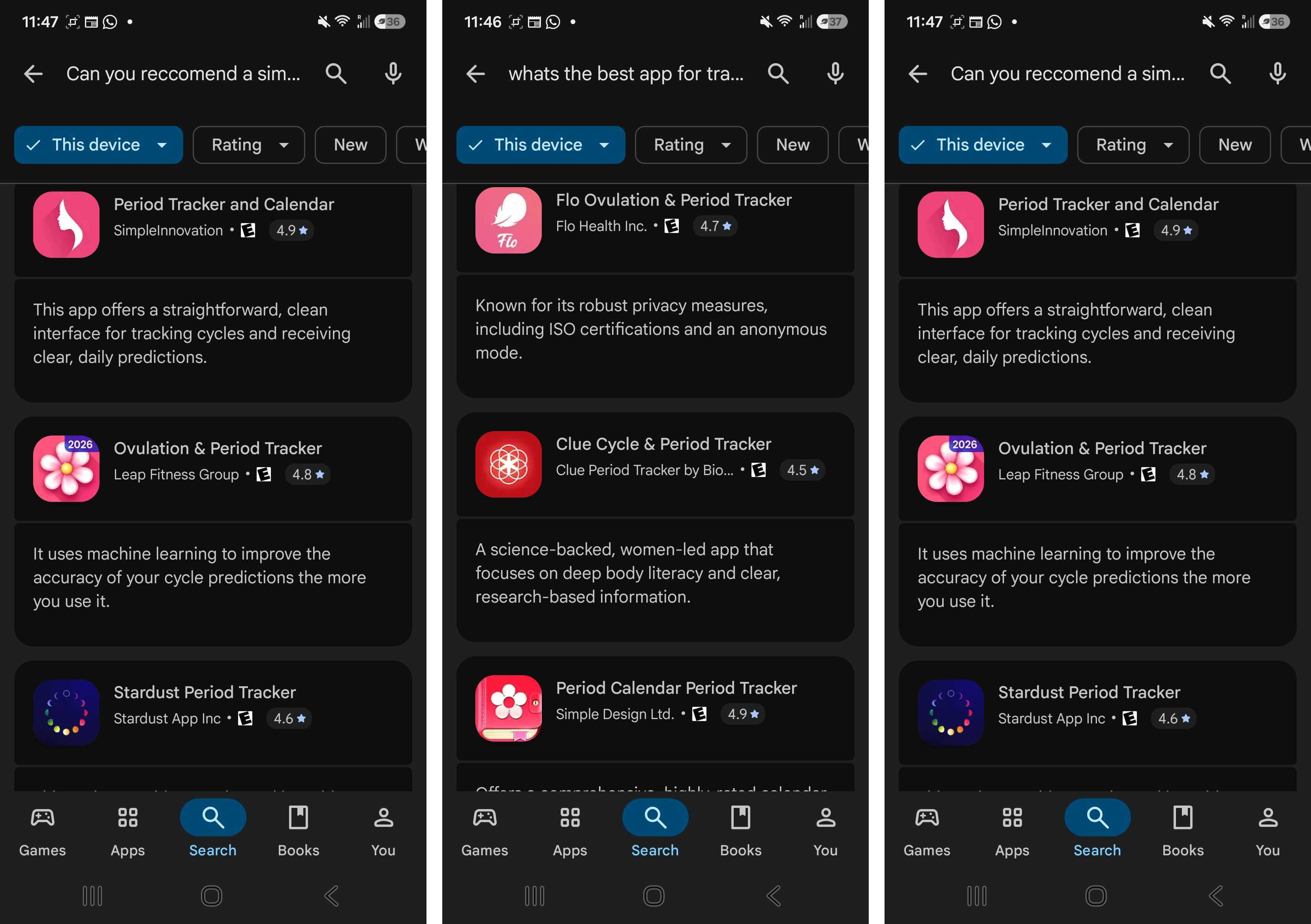
| テストした言い回し | おすすめされたアプリ | 生成された説明(文) |
| 「生理を記録するのに最適なアプリは?」 | Flo、Clue、Period Calendar | 「ISO認証や匿名モードなど、強固なプライバシー対策で知られる」 |
| 「シンプルな生理管理アプリをおすすめしてくれますか」 | Period Tracker and Calendar、Ovulation & Period Tracker、Stardust | 「周期を追跡し、明確な日次予測を受け取れる、分かりやすくクリーンなインターフェースを提供」 |
生理管理アプリでは、検索の言い回しによって動いたのは説明(文)以上でした。 リスト全体が動きました。同じ根本ニーズに対する2つの検索で、重複ゼロの6つのアプリが返ってきました。
2つ目の言い回しは、特に注意深く見る価値があります。「simple(シンプル)」という1語を足しただけで、まったく別のアプリ群が引き込まれ、プライバシーではなくインターフェースの分かりやすさを軸にした説明(文)が生成されました。モデルは「period tracker」に一致させているのではなく、記述されたニーズ全体に一致させています。
Ask Playがどのようにおすすめを生成するか
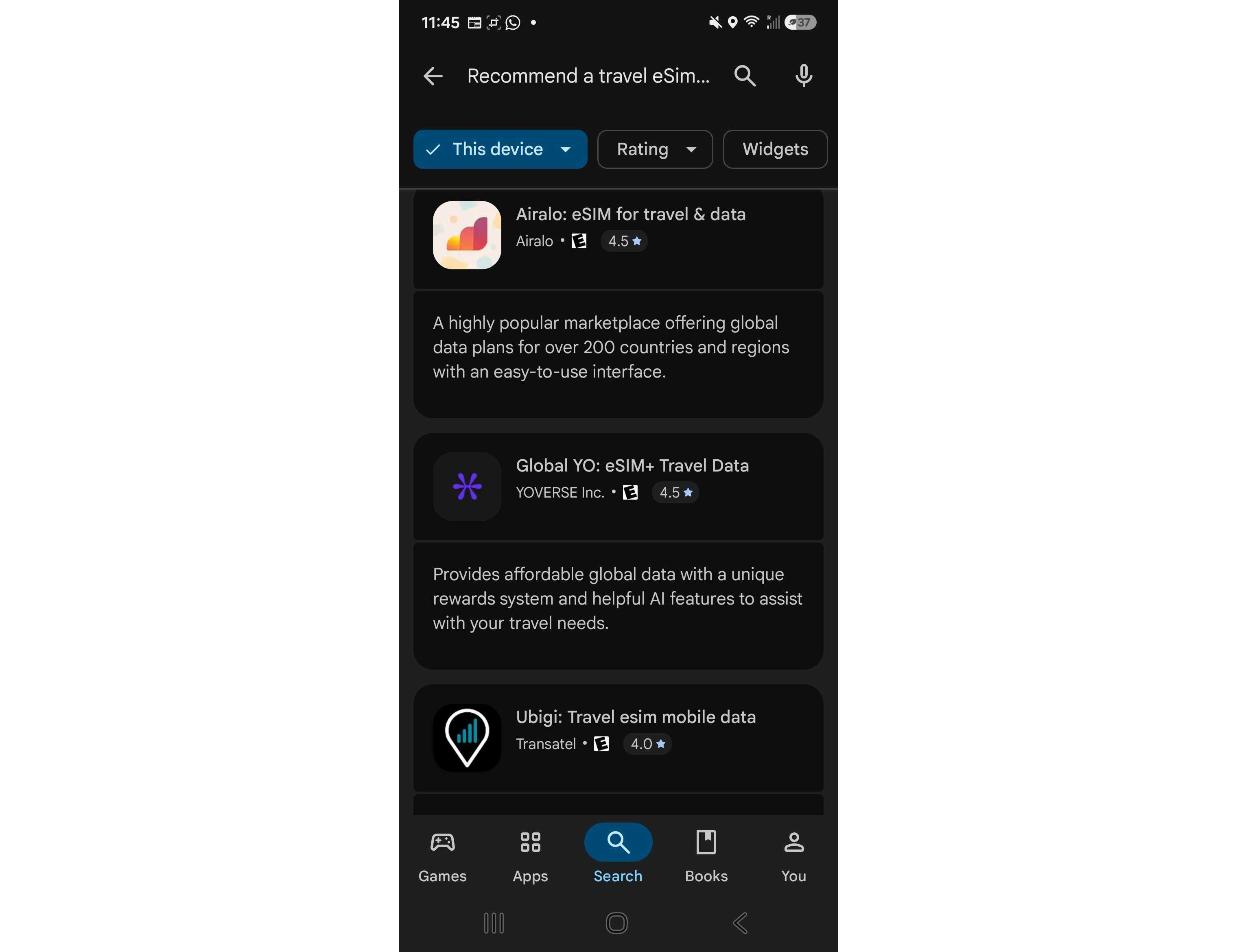
Ask Play highlightsは、おすすめや説明(文)がどこから来たのかを表示しません。おすすめして説明するどのアプリにもソースや引用は付いていません。さらにランキングのすぐ下には、Google自身の免責事項として「Ask Playは間違いを犯す可能性があります」と表示されます。
1つ明確に除外できるのは評価です。eSIMと生理管理の例全体で、順序は評価順に並んでいませんでした。3つのeSIM検索すべてで、Airalo(4.5)が一貫してHolafly(4.8)を上回り、生理管理のセットでも4.9、4.8、4.6が混在していて明確な階層はありませんでした。
では、これらの回答を作るために何を読み取っているのでしょうか?モデルの中身は見えないため、以下はGoogleが公開した方法ではなく、当社のテストと観察から示唆される内容です。
観察結果として、掲載情報が主な入力であり、とりわけ説明文(長文)が重要です。テストでは、1行の説明(文)は掲載情報内の「このアプリについて」のテキストから組み立てられていました。同じソースコピーでも毎回異なる文が生成されるため、説明(文)をコピーするのではなく書き換えています。
また、掲載情報を超えてウェブサイトまで参照しているようにも見えます。Ask Play highlights自体は何も引用しませんが、兄弟的な表示枠では引用します。「このアプリについて質問する」Q&Aでは回答のソースが表示され、当社テストではPlay Storeの掲載情報だけでなく、デベロッパー自身のウェブサイトも含まれていました。両機能は同じ基盤システム上で動いているため、一方がウェブサイトをソース素材として扱うなら、もう一方もそうである可能性が高いと言えます。これは推論であり、直接確認できたわけではありません。
レビューも入力になっている可能性が高いです。Googleはレビューをインデックス化し、そこからAIサマリーを生成するため、「素晴らしいアプリ」よりも、具体的なユースケースを挙げるレビューのほうがモデルにとって材料になります。
レビューがAI入力としてどう効くかについては、AI Visibility Playbookでさらに詳しく解説しています。
一方で、順序そのものは特定できません。Ask Play highlightsが何を読み取っているか、そして評価順に並べていないことは分かりますが、なぜあるアプリが別のアプリより上に来るのかは分かりません。
Ask Play highlightsがアプリについて述べる内容に影響を与える方法
従来のASOはキーワードに最適化します。用語を選び、そこで順位を取り、見つけてもらう。Ask Play highlightsはそのモデルを崩します。クエリに対して掲載情報を一致させるのではなく、回答を合成しているのです。
アプリマーケターにとって、これはこの表示枠における「ランキング」の意味を変えます。特定の1つの言い回しをターゲットにして、網羅できると期待することはできません。実務上の問いはこうなります。アプリが何をするのかを人が尋ねる言い方の幅に対して、過去に順位を取ってきた“そのままのキーワード”だけでなく、掲載情報がAIに十分な材料を与えられているかどうかです。
これはキーワード単位のASOを置き換えるものではありません。アプリストアの掲載情報は、あなたについて何が語られるかに対して、今も最も直接的に効くレバーです。
Ask Play highlightsでアプリがおすすめされる可能性を高めるために、今すぐ取り組めることは3つあります。
1. ターゲットキーワードだけでなく、尋ねられ方の幅をカバーする
生理管理のテストでは、たった1語で結果セット全体が変わりました。単一の完全一致フレーズではカバーできません。あなたの掲載情報は、対象ユーザー、ユースケース、得られる成果を十分に明確に述べ、どんな言い回しでもモデルがそのニーズとアプリを接続(する)できるようにする必要があります。
具体的には、機能リストではなく平易な言葉で、説明文(長文)に「誰のためのアプリか」「どんな場面で使うか」「ユーザーが何を得られるか」を書くことを意味します。
AI検索に向けてアプリの説明文(長文)を最適化する方法を詳しく見る。
2. レビューが回答の材料になるため、形作る価値がある
レビューは、Ask Playが参照しているように見える入力の1つであり、あなたが直接影響を与えられるものでもあります。Googleはレビュー内容をインデックス化し、そこからAIサマリーを生成するため、具体的なユースケースを挙げるレビュー(「日本に2週間旅行したときに使った。プランを切り替えなくても動いた」)は、「最高のアプリ!」よりもモデルにとって材料になります。一般的な評価を促すのではなく、価値の高い体験直後に具体的なフィードバックを促すことで、そうした言語がより表に出てきます。
3. 掲載情報とウェブサイトで同じストーリーを伝える
モデルがPlayページを超えてサイトまで参照するなら、両者の矛盾はリスクになります。ウェブページとGoogle Playの説明文(長文)を並べて見直し、それぞれ単体で同じ質問に回答してください。アプリは何のためか、誰のためか、機能名は何か、料金はいくらか、直近で何をリリースしたか。回答が違いますか?それなら差分を埋めましょう。
結論
キーワードで順位を取るのと同じやり方で、Ask Play highlightsに入り込むことはできません。同じ意図でも、言い回しが2通り違うだけで別のアプリが引き込まれ、同じアプリでも毎回違う説明(文)になり、AIはいずれにもソースを表示しません。
できることは、掲載情報・レビュー・ウェブサイトが、実際に人が尋ねるであろうさまざまな言い方に対して、十分な材料を提供できている状態にすることです。
この表示枠はまだ初期段階で、展開も一様ではありません。多くのチームがまだ注目していない今のうちから目を向けているチームは、ダウンロード数に影響するようになる前に、その挙動を理解できる立場にあります。
よくある質問
Ask Playは、Google Play検索結果のAIセクションと同じものですか?
はい。Ask Play highlightsは、Google Playの通常の検索結果の上に表示される、AIが作成したおすすめブロックにGoogleが付けた名称です。これは、Google I/O 2026の発表全体で言及されている機能、およびこの記事で扱う動作と同じものです。
Ask Play highlightsでアプリをおすすめしてもらうにはどうすればよいですか?
キーワードランキングをターゲットにするのと同じ方法で、Ask Play highlightsを直接ターゲットにする方法はありません。AIが読み取る素材を形作ることしかできません。 Ask Play highlightsはアプリの入力情報からおすすめを合成するため、それらの入力情報を明確かつ一貫性のあるものにすることが重要です。Ask Play highlightsがアプリについて述べる内容に影響を与える方法には、以下のものがあります。機能リストではなく平易な言葉で、そのアプリが誰のためのものか、どのような場面で使用されるか、どのような成果をもたらすかを記載した「説明文(長文)」を書くこと。Googleはレビューをインデックス化し、そこからAIサマリーを生成するため、具体的なユースケースを説明するレビューを促すこと。そして、Ask Play highlightsは両方を読み取っていると思われるため、Google Playの掲載情報とウェブサイトで同じストーリーを伝えるようにすることです。
アプリの評価はAsk Play highlightsのランキングに影響しますか?
いいえ、アプリの評価がAsk Play highlightsに表示されるアプリの順位を確実に決定することはありません。 AppTweakのテストでは、すべてのeSIM検索において、星4.5のアプリが星4.8の競合アプリを常に上回っていました。また、生理管理アプリの結果では、4.9、4.8、4.6の評価が混在しており、明確な階層は見られませんでした。評価だけでは、どのアプリが最初に名前を挙げられるかを説明できません。おすすめが依拠しているのは、アプリストアの掲載情報の内容、特に「説明文(長文)」、そしてレビューや、おそらくウェブサイトであると思われます。正確な順位付けのロジックは、AppTweakのテストからは特定できず、Googleも公開していません。
Ask Play highlightsは、おすすめの根拠を表示しますか?
いいえ、Ask Play highlightsは、おすすめするアプリや作成する説明文のソースや引用を表示しません。 Googleは「Ask Playは間違いを犯す可能性があります」という免責事項を表示していますが、ユーザーはおすすめが何に基づいているかを確認できず、後から修正することもできません。唯一の手段は、AIが読み取る入力情報です。関連する1つの画面では異なります。掲載情報ページの「このアプリについて質問する」Q&Aでは、AppTweakのテストにおいてデベロッパー自身のウェブサイトを含むソースが表示されます。これは、おすすめブロックには引用されなくても、同じシステムがサイトを読み取っていることを示唆しています。
Ask Play highlightsがアプリをどのように説明しているか、どのくらいの頻度で確認すべきですか?
一度だけではありません。説明文は言い回しによって変化し、同じ言い回しであっても時間の経過とともに変化する可能性があるため、一度の確認に頼るのではなく、掲載情報の更新後や、その後の数日間にわたって再度確認してください。


人工知能(AI), 高度なASOの他の記事

 Pierre-Antoine Roy