In Apple Ads, high-intent brand searches signal strong demand, but visibility alone isn’t guaranteed. Even when users search specifically for your app, competitor ads can still appear alongside your listing, capturing a meaningful share of installs. This means that without a paid brand presence, your app risks losing out to alternatives.
Brand protection is not just an efficiency play, but a safeguard for your market presence. This article breaks down how to evaluate and optimize brand campaigns in Apple Ads, emphasizing that a robust measurement approach should include incrementality testing, Cost per Protected Install (CPPI), and post-install metrics. You’ll also learn practical strategies for adjusting bids and budgets to defend your brand efficiently while still unlocking growth opportunities.
Key takeaways
- Organic rankings help build trust, but paid ads in search results ensure visibility across all placements.
- Incrementality testing helps evaluate the value of brand campaigns.
- Cost per Protected Install (CPPI) offers a clearer metric to assess brand protection efficiency.
- Bid adjustments offer more flexibility than turning campaigns off; brand optimization isn’t an on/off switch.
- Post-install performance can change how you view the ROI of brand protection.
Understanding brand optimization in the App Store
Before diving into measurement frameworks, it’s important to clarify what brand optimization actually means in the context of Apple Ads.
What brand optimization means in the context of Apple Ads
Brand optimization refers to managing branded keyword campaigns strategically in Apple Ads, not just for visibility, but to protect conversion paths, test campaign efficiency, and maintain share of voice. AppTweak recommends running brand campaigns as a best practice to protect high-intent traffic and stay competitive.
Why organic rankings alone aren’t enough
A common assumption we see clients make is: “We rank #1 organically, so we’re covered!”
Here’s the reality:
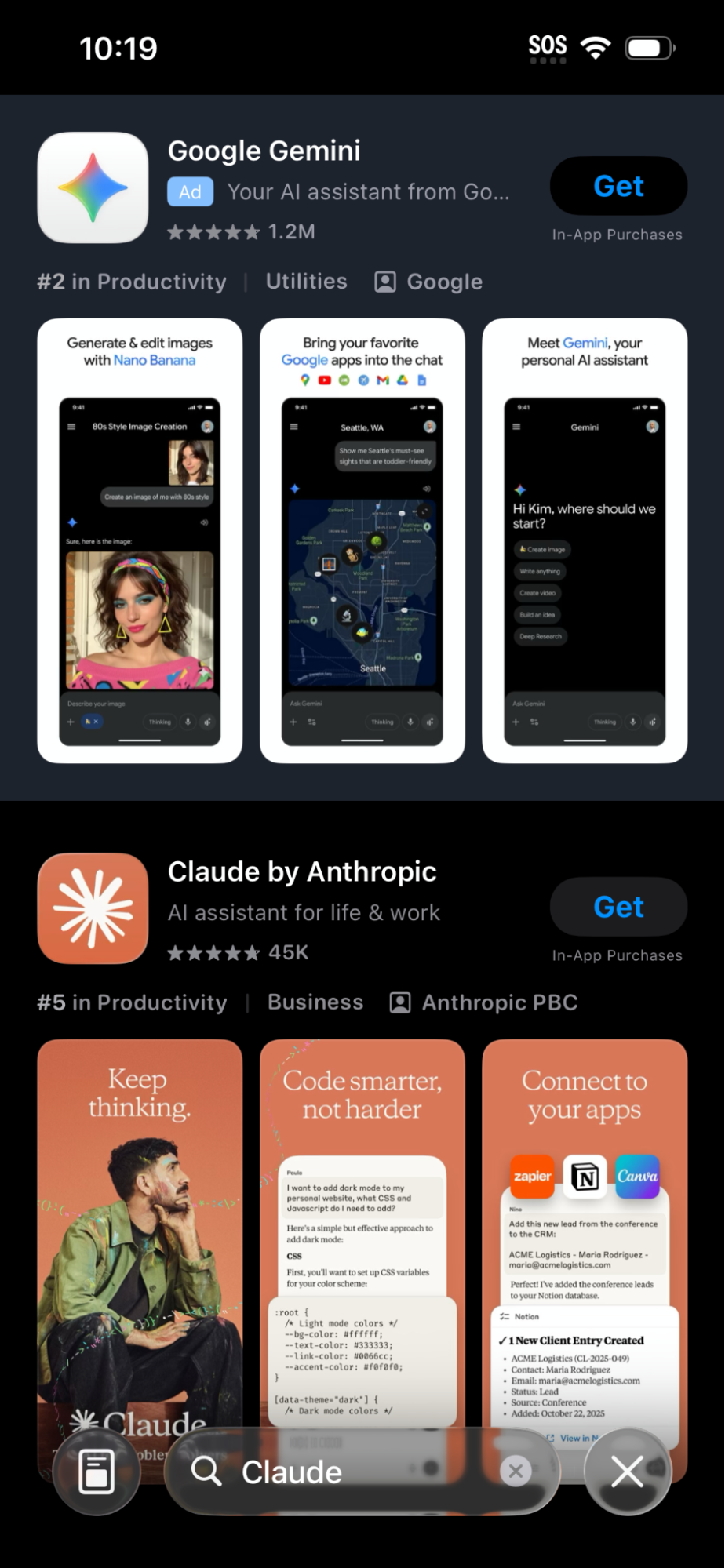
- Paid ads appear above organic results in the App Store.
- Competitor ads can surface on brand searches, giving users alternatives at the exact moment of intent.
This can lead to fewer brand impressions, potential drop in installs, and a gradual shift in user attention to alternatives.
Many big brands assume their organic position guarantees user conversion. But even on branded searches, competitors often secure a noticeable share of installs. Even when a user searches for your brand, App Store ad placements are determined by auction dynamics and keyword relevance, not just organic ranking. If competitors are actively bidding on your branded terms and maintain strong ad relevance, they can still capture visibility and divert high-intent traffic.
Brand campaigns aren’t about paying “just in case” scenarios; they’re about:
- Understanding what you’re protecting
- Measuring what’s incremental
- Optimizing spend based on real business value
The goal of brand campaigns isn’t to always win every auction, but to maintain visibility efficiently where it matters most.
How to measure the value of brand protection efforts
Brand protection performance shouldn’t be evaluated through a single metric. To understand whether it’s truly adding value, you need to assess it from three angles: incrementality on branded searches, efficiency through cost per protected install (CPPI), and post-install impact. Together, these dimensions provide a clearer, measurement-led view of how brand campaigns contribute to overall acquisition performance.
Understand incrementality on brand searches
It’s common for established brands to question whether brand campaigns drive true incremental installs. This skepticism is valid, especially when they already lead in organic rankings. But instead of asking, “Is this 100% incremental?”, a more strategic question is: “What’s the risk of not actively protecting our brand visibility?”
In highly competitive categories, not showing up with a paid ad on your brand search could lead to lost traffic, reduced install share, and decreased visibility, even among loyal users.
A good way to evaluate incrementality is to temporarily pause brand campaigns and monitor whether there is a decline in both Apple Ads installs and total Apple Ads search downloads during the pause period. If both decrease, without a corresponding drop in overall search demand or seasonality, it suggests that brand campaigns are driving incremental lift rather than simply capturing existing organic traffic.
Note that pausing brand campaigns temporarily removes paid coverage, which may impact visibility during the test period.
Expert Tip
Tools like AppTweak’s Incrementality Analysis help teams analyze Apple Ads data alongside organic visibility and search trends, making it easier to understand how brand campaigns influence overall App Store presence.Utilize Cost per Protected Install (CPPI)
CPI is often used to measure campaign efficiency, but it doesn’t always reflect the true value of a brand campaign. That’s where Cost Per Protected Install (CPPI) comes in.
What is CPPI?
CPPI reflects how much you’re paying to protect an install that might otherwise be lost to a competitor.
CPPI = CPI + Brand defense efficiency
By incorporating defense efficiency into CPI, CPPI allows you to compare brand defense performance with other ad campaigns targeting keywords for which your app does not rank #1 organically.
Even with a low CPI, you may be overpaying if a high percentage of your installs are vulnerable to competitor ads. CPPI reframes brand spend as a strategic defense measure, rather than a redundant cost.
Evaluate post-install value
Brand users often convert better, retain longer, and monetize more effectively than non-brand users. So, rather than evaluating Cost Per Protected Install (CPPI), you can extend the same logic to down-funnel events, calculating Cost per Protected Subscription, Cost per Protected Purchase, or any protected MMP-tracked conversion. This reframes brand spend not just as install defense, but as protection of high-value outcomes that drive long-term revenue.
You can also evaluate:
- Compare post-install conversion rates between brand and non-brand cohorts (e.g., subscription start rate, purchase rate, D7/D30 retention) to quantify quality differences.
- Analyze LTV by cohort to determine whether brand-acquired users generate higher lifetime value, even if incremental installs are lower.
- Measure impact by reviewing whether brand campaigns stabilize total post-install event volume or reduce volatility during competitive pressure.
Example: How The Economist optimized brand protection in Apple Ads
For subscription-driven apps like The Economist, brand optimization in Apple Ads isn’t just about defending installs; it’s about maintaining visibility while ensuring that paid coverage supports long-term business outcomes.
Rather than treating brand campaigns as an on/off decision, The Economist used automation and custom product pages to fine-tune branded and high-intent keyword coverage based on real-time performance signals. Automated bid rules helped maintain strong impression share where visibility mattered most, while avoiding unnecessary spend once coverage was secured.
This approach delivered clear, measurable results:
- Maintained 90% impression share on high-intent and branded keywords
- Increased app downloads by 44% within one month
Beyond performance lift, automation also changed how brand campaigns were managed day to day. By monitoring CPA, impression share, and budget saturation in parallel, the team reduced reliance on manual bid adjustments and made more data-driven bidding and keyword decisions. The setup also enabled faster rollout of new custom product pages and provided clearer visibility into how Apple Ads and ASO efforts worked together to support subscription growth.
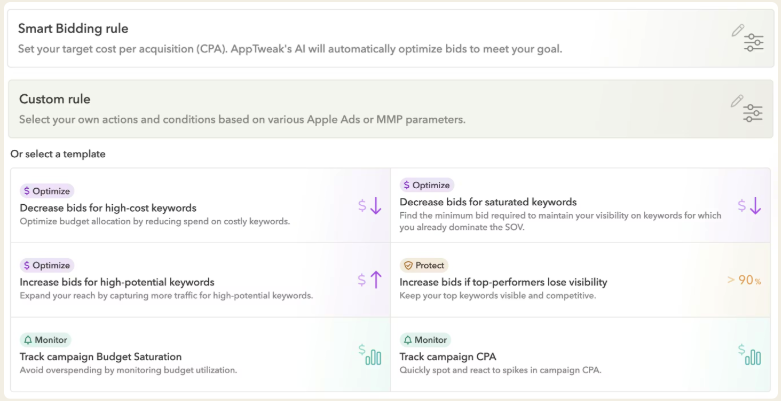
Taken together, this example reinforces a core principle of brand optimization: protecting visibility efficiently, measuring impact beyond installs, and using automation to align brand spend with downstream value.
Here’s how to approach brand optimization more strategically
Here’s what we’ve learned at AppTweak after helping our clients optimize their Apple Ads brand campaigns.
Lower bids instead of turning campaigns off
Brand protection doesn’t have to mean full-budget bidding. For brands unsure about incrementality, lowering bids and not turning brand protection off can:
- Maintain visibility
- Control costs
- Preserve flexibility
Maintaining visibility helps protect market share and ensures users complete their intended journey. This approach acknowledges the nuance in brand campaign value. Optimization is a dial, not a switch.
Reallocate budget to higher-impact opportunities
Use CPPI to assess whether your brand campaigns are cost-effective compared to non-brand campaigns:
- Identify:
- Brand keywords with high CPPI despite low competitive pressure
- Underfunded generic or competitor opportunities
- When brand spend exceeds what’s needed to maintain visibility, reallocate budget toward:
- Discovery keywords
- Category growth
- Market expansion
The goal is to maximize impact without compromising brand protection.
Gather advanced insights: Monitoring competitive pressure
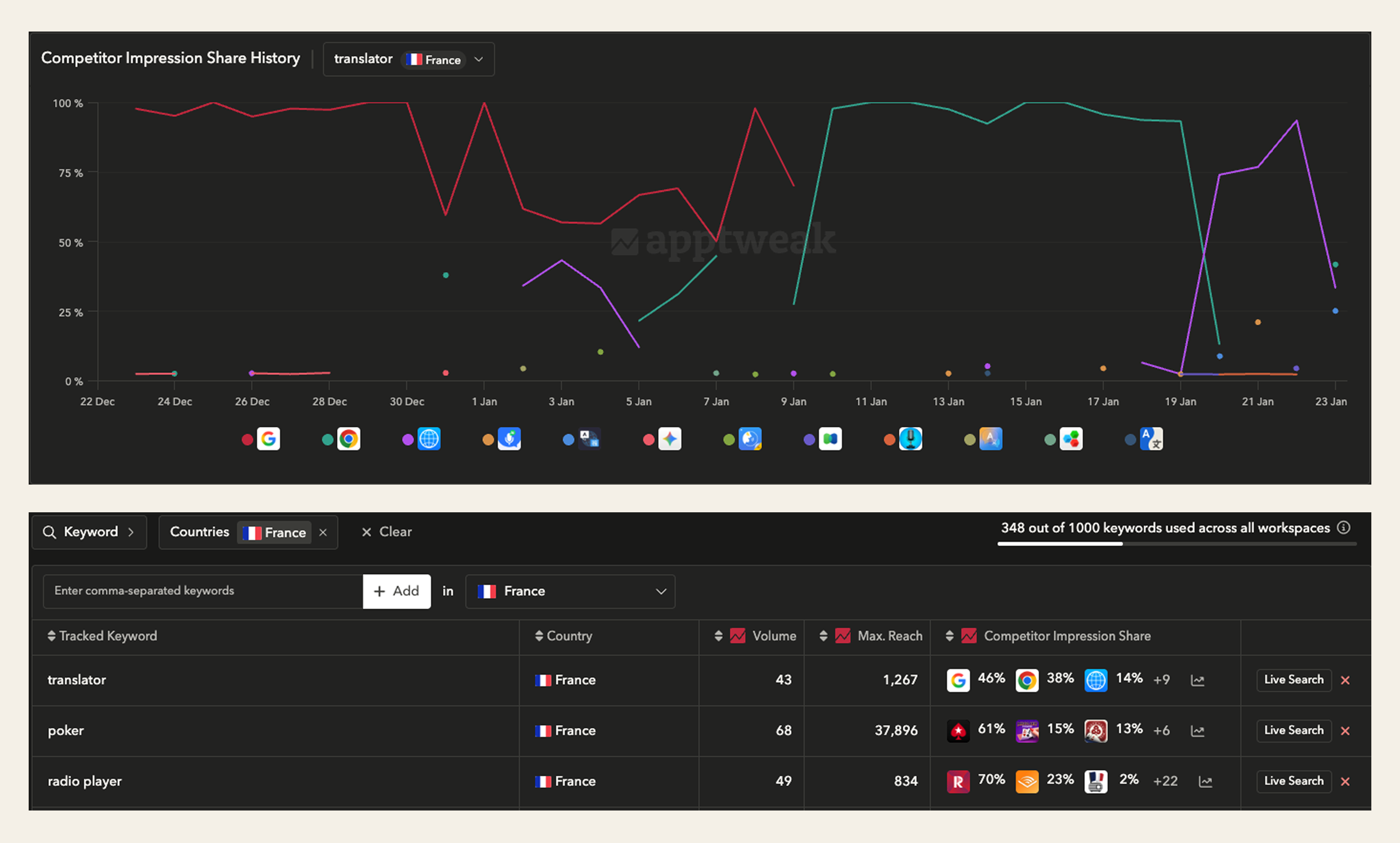
Brand campaigns also offer valuable competitive intelligence. With tools like AppTweak’s Competitor Impression Share Tracker, you can:
- Track competitors bidding on your brand terms
- Measure changes in share of voice and impression stability over time
- Track changes across market and competitor trends over time
Conclusion: Brand protection benefits from a measurement-led approach
Brand campaigns aren’t about spending defensively “just in case”, but about clearly defining what you’re protecting, measuring true incrementality, and optimizing investment based on tangible business impact.
With the right framework in place, brand protection becomes a strategic lever for not only safeguarding visibility, but also for long-term acquisition growth and competitive advantage.
FAQs
Here are some frequently asked question on Apple Ads brand protection:
What is brand protection in Apple Ads?
Brand protection in Apple Ads refers to running campaigns on keywords related to your app’s brand name to maintain visibility when users search for your app on the App Store.
When users search for branded terms, ads can appear above organic results in search results placements. Running campaigns on your own branded keywords can help ensure that users searching for your app see your ad alongside your organic listing.
Brand campaigns are designed to complement organic visibility rather than replace it. Many app marketers use them to support their presence on branded searches, monitor performance, and analyze how paid campaigns contribute to overall app discovery.
A structured brand campaign strategy often includes monitoring keyword performance, analyzing incremental value, and evaluating results across the broader user acquisition funnel.
Why is brand protection important even if my app ranks #1 organically?
Ranking highly in organic search results on the App Store does not always guarantee that your app will appear at the very top of the page, as Apple Ads placements appear above organic results.
Running campaigns on branded keywords allows app marketers to maintain a presence in these paid placements when users search for their app by name. This can help ensure that users searching for your brand encounter your app in both paid and organic placements.
Many teams use brand campaigns as part of a broader user acquisition strategy to support visibility for high-intent searches and better understand how paid and organic traffic work together in the App Store.
Which tools can help measure and optimize brand campaigns in Apple Ads?
Apple Ads management and app store intelligence tools can help marketers analyze performance, monitor keyword visibility, and optimize brand campaigns.
These platforms often combine paid campaign data with organic App Store insights to provide a more complete view of app discovery performance.
For example, AppTweak provides tools that help teams:
- Analyze the relationship between paid and organic search performance
- Monitor branded keyword visibility and share of voice
- Evaluate the impact of Apple Ads campaigns on the overall App Store presence
By combining Apple Ads data with App Store Optimization insights, marketers can gain a more comprehensive understanding of how brand campaigns contribute to app discovery and user acquisition.
How do mobile marketing teams use AppTweak to manage brand campaigns?
Mobile growth teams use AppTweak to analyze branded keyword performance, monitor market activity, and evaluate the impact of Apple Ads campaigns on overall app visibility.
The platform connects organic and paid App Store data in a unified analysis environment, helping teams better understand how users discover apps through search.
This unified view helps teams:
- Monitor branded keyword visibility and share of voice
- Track how branded keywords perform in Apple Ads campaigns
- Analyze how Apple Ads campaigns contribute to overall App Store downloads
- Optimize bids and budgets based on acquisition cost and downstream performance
By combining App Store Optimization insights with Apple Ads intelligence, AppTweak helps teams evaluate brand campaign performance and identify new opportunities to grow app visibility in App Store search.


More articles in Apple Ads

 Micah Motta

 Georgia Shepherd

 Sukanya Sur