PlayTime is Google Play’s exclusive event for EMEA app developers to highlight new strategic Google Play features, share updates, underscore strategic priorities and hint at the Google Play team’s roadmap. For app and game publishers, it’s an opportunity to connect with Google, understand the direction of the Play Store, and get a preview of powerful growth tools only available to larger apps.
Here is a short recap of some of what I learned at Playtime 2025, which I had the chance to attend this year as Google hosted the event in AppTweak’s home city of Brussels.
- Google Play is doubling down on user engagement over discovery, with most updates focused on helping installed apps stay visible across Play surfaces.
- Spaces are expanding globally after early pilots drove a 30% boost in user search activity; expect new themed spaces like comics, short-form drama, and sports in more markets.
- The EngageSDK gives eligible apps new visibility placements—“continue watching” nudges, recommendation clusters, and hero spotlights across the Play Store.
- The You tab is becoming central to Google Play’s engagement strategy—now featuring Play Points, quests, and activity streaks to re-engage gamers and app users alike.
- Sidekick, an AI-powered in-game overlay, will use Gemini to analyze live gameplay and offer real-time tips—Google’s biggest AI step yet for games.
- Play Console updates are coming soon, including an impression metric and support for .mp4 creatives—both set to make ASO measurement and experimentation more powerful.
Apps on Play: Google’s focus on user engagement to favor content apps
During the morning’s keynote session, Google Play team members reflected on the success of year 1 for Spaces, a semi-permanent type of collections focused on popular entertainment forms in different locations, such as cricket in India, comics in Japan, or short-form drama in South Korea.
Having seen promising engagement boosts thanks to spaces (including a 30% increase in search activity with users engaging with a space), Google Play is set to release more spaces in more markets in the next 12 months, including comics and short form drama in the US, but also new types of spaces including more temporary ones like a WNBA playoff space in September.
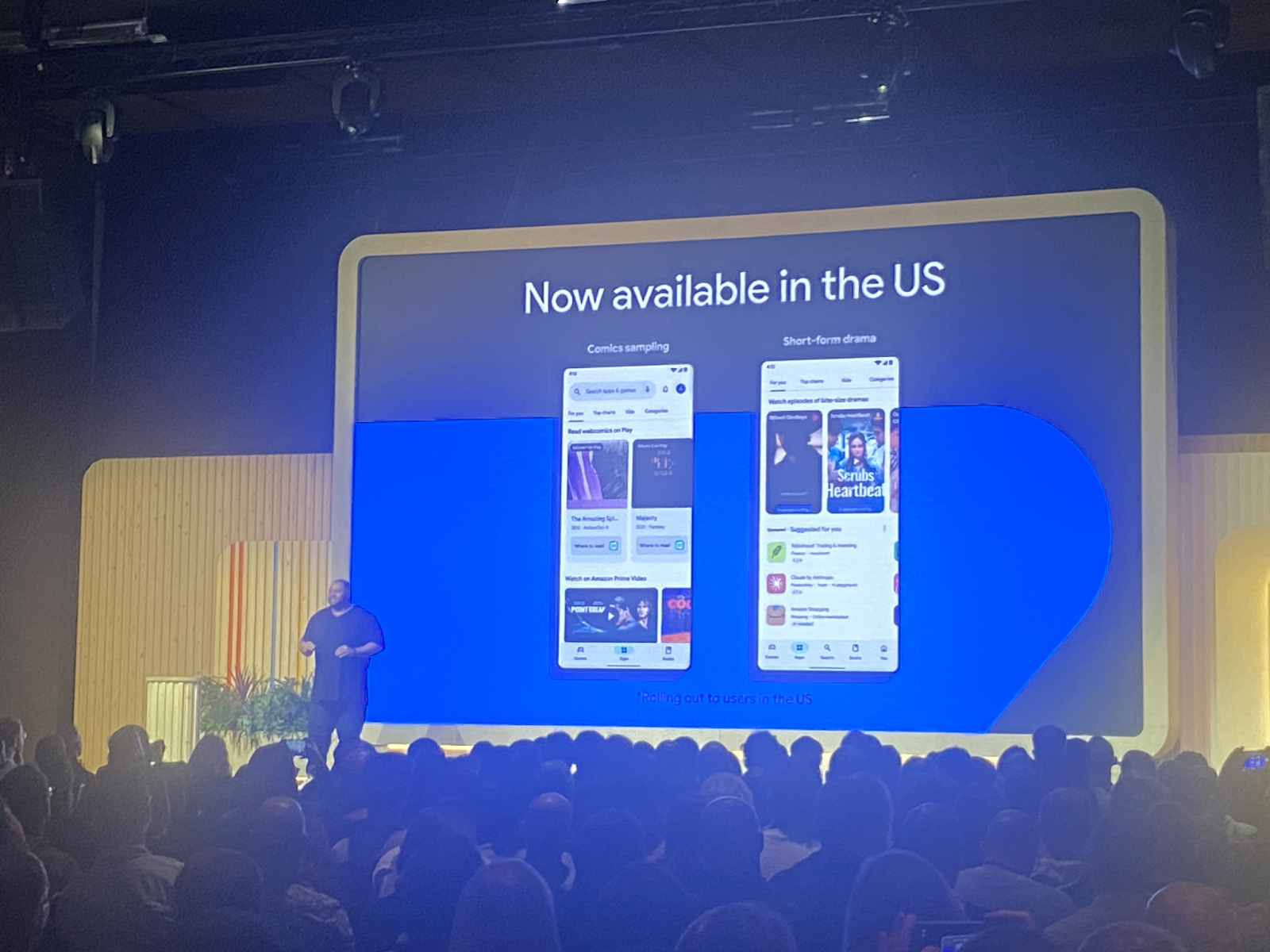
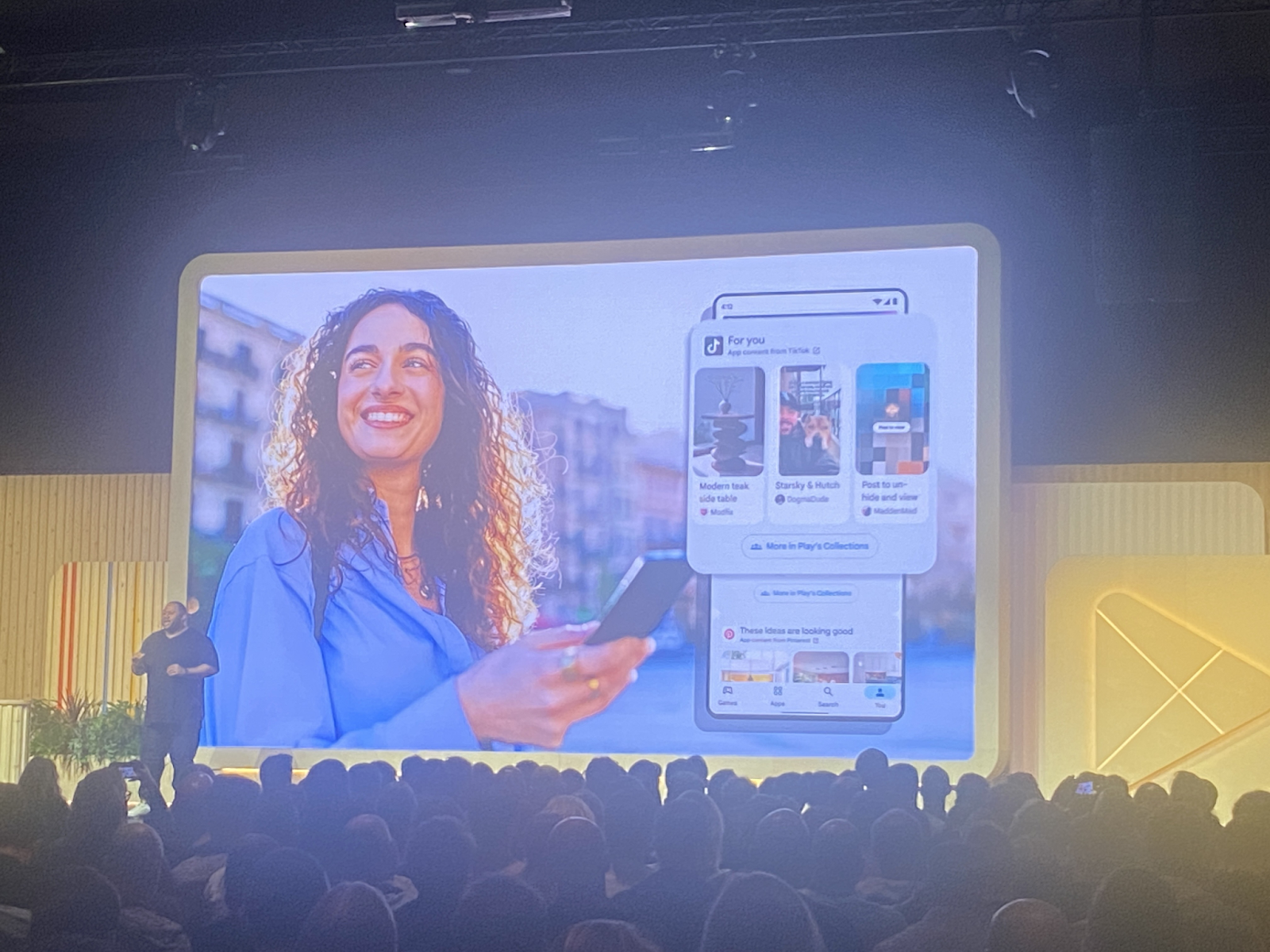
In addition to spaces, Google Play also continues to invest in its EngageSDK, which can be onboarded in apps listed under certain categories (Media & Entertainment, Books & Reference, Comics & Manga, Music & Audio, Shopping, Food & Drink, Social, Travel and Events).
Apps integrating the SDK may receive more visibility across different surfaces (including collections on users’ home screens and dedicated placements in the Apps Home and You tab on the Play Store) with 3 experience types in mind:
- Journey continuation nudges (such as “continue shopping” or “continue watching”)
- Recommendation clusters highlighting topics or items that match favorites of app users based on in-app behaviors
- Spotlights highlighting app hero content, most likely powered by Promotional Contents ran in the Play Console
The Google Play team also highlighted the release of You tab last September as a new section of the Play Store where apps get additional chances to gain visibility with relevant audiences, thanks not only to the EngageSDK but also Promotional Contents in general.
With such focus on user engagement, my personal takeaways from Google’s announcements were first how the Google Play team appears to be focusing on spotlighting installed apps over new app discovery, and second how many of the new features appear to be designed with content apps in mind, potentially hinting at less visibility opportunities for more functional apps in the Play Store.
Games on Play: A community-driven future with the first major AI for apps feature
While I felt announcements related to apps were limited and mostly continuing last year’s Playtime announcements, I found Google used this year’s event to make several significant announcements for games on Google Play.
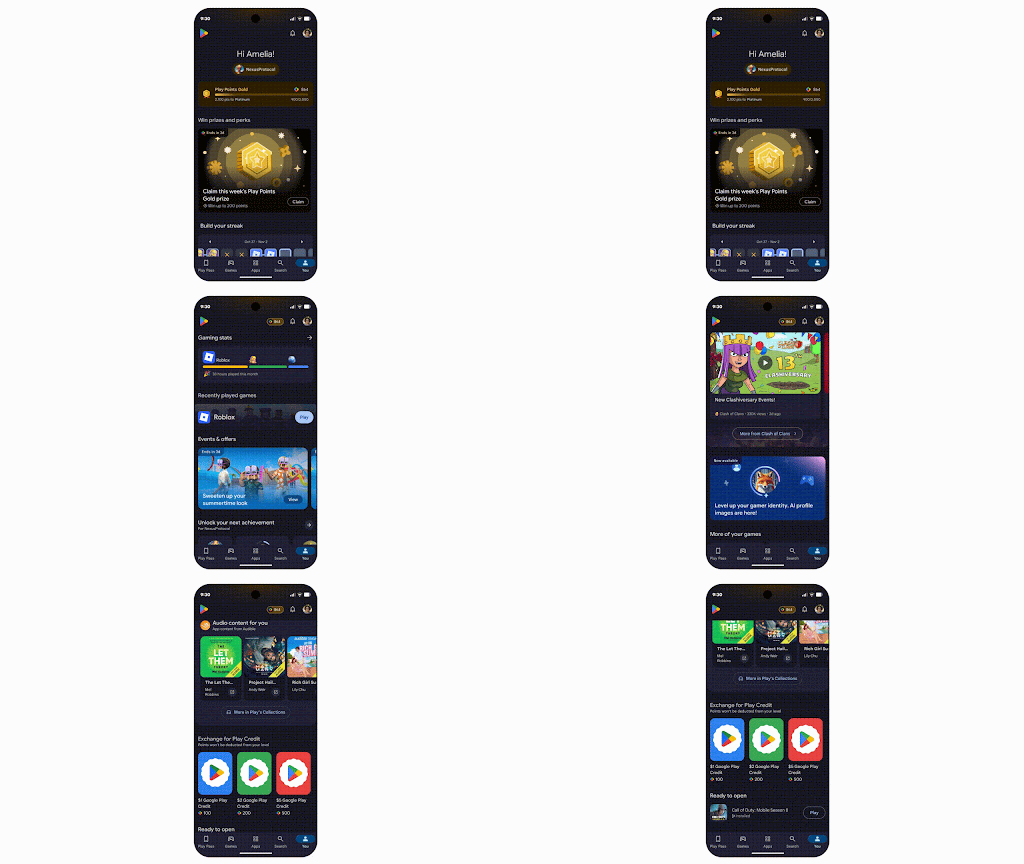
First of all, the introduction of You tab in the Play Store seems to be much more targeted at gamers, with a dynamic profile and content showing:
- Play points earned by the user (with a tap opening an overview of available purchases with points across installed games)
- Active promotional contents & leagues for installed games
- A gaming streak to visualise recent game activity (with an incentive to extend the streak to earn play points)
- Achievements & quests available in installed games
While multiple new features related to Play Games Services look similar to Apple’s approach to player engagement in the new Games app on iOS, Google Play’s approach already seems quite advanced due to the integration with the Play points loyalty program, as well as the announcement of a brand new AI-feature: Sidekick.
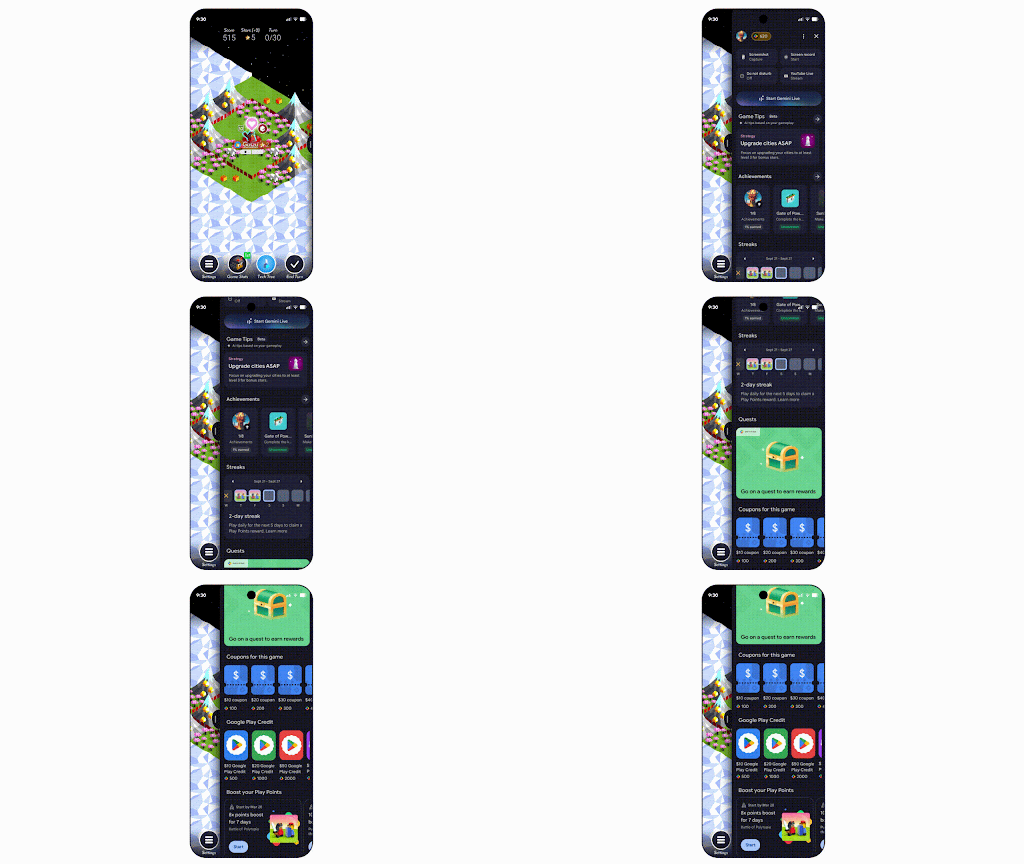
Unveiled at the end of Q3, Sidekick is an in-game overlay powered by Google Play which aims to reduce in-game friction in moments where stuck players would previously exit a game temporarily to look for help or complete other actions that can help them get unstuck.
The overlay allows players to visualize rich content such as achievements, quests and Play points coupons without leaving the game, as well as AI-generated tips, and even grant live screen vision to Gemini and prompt it for advice on how to navigate the on-screen game situation.
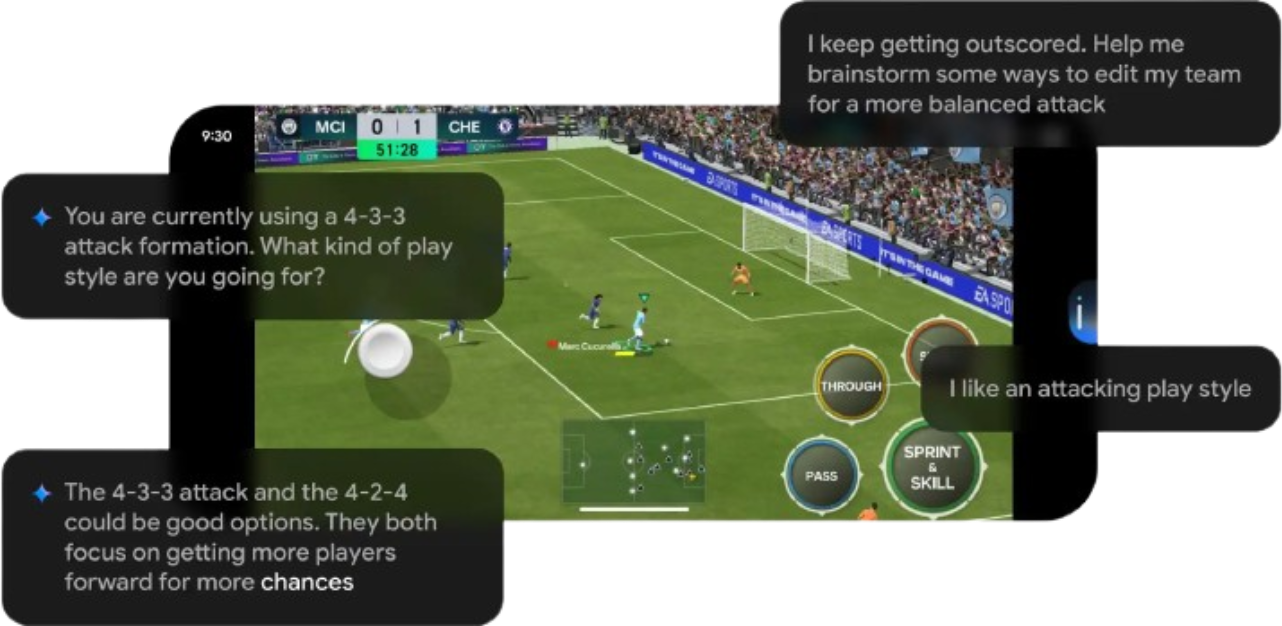
More generally, Sidekick comes as a top feature to enable within Play Games Services, adding to Leagues, achievements, quests and Play Points coupons, which are all useful features to boost player engagement.
Games willing to onboard all these features are also invited by Google to join their LevelUp program, which establishes a series of quality requirements and feature integrations games should deliver in 2026 in exchange for previously cited benefits as well as extra visibility throughout different Google Play surfaces (including the Play Store and extra featuring opportunities for Promotional Contents).
Google Play Console: ongoing improvements to help marketers measure impact better
Last but not least, expert sessions hosted by Google throughout the day on various topics including the Google Play Console gave me the opportunity to hear about recent and upcoming changes that will benefit ASO practitioners:
- After releasing the “app opens” metric earlier this year, the Google Play Console team is planning to release an impression metric that will help marketers understand conversion rates in the Play Store for instances where downloads do not come from a Store Listing Visit. Unfortunately the team could not detail the exact measurement method for impressions and whether the metric would count search result appearances that lead to a store listing visit before an app download, nevertheless this metric will likely be highly anticipated by ASO practitioners.
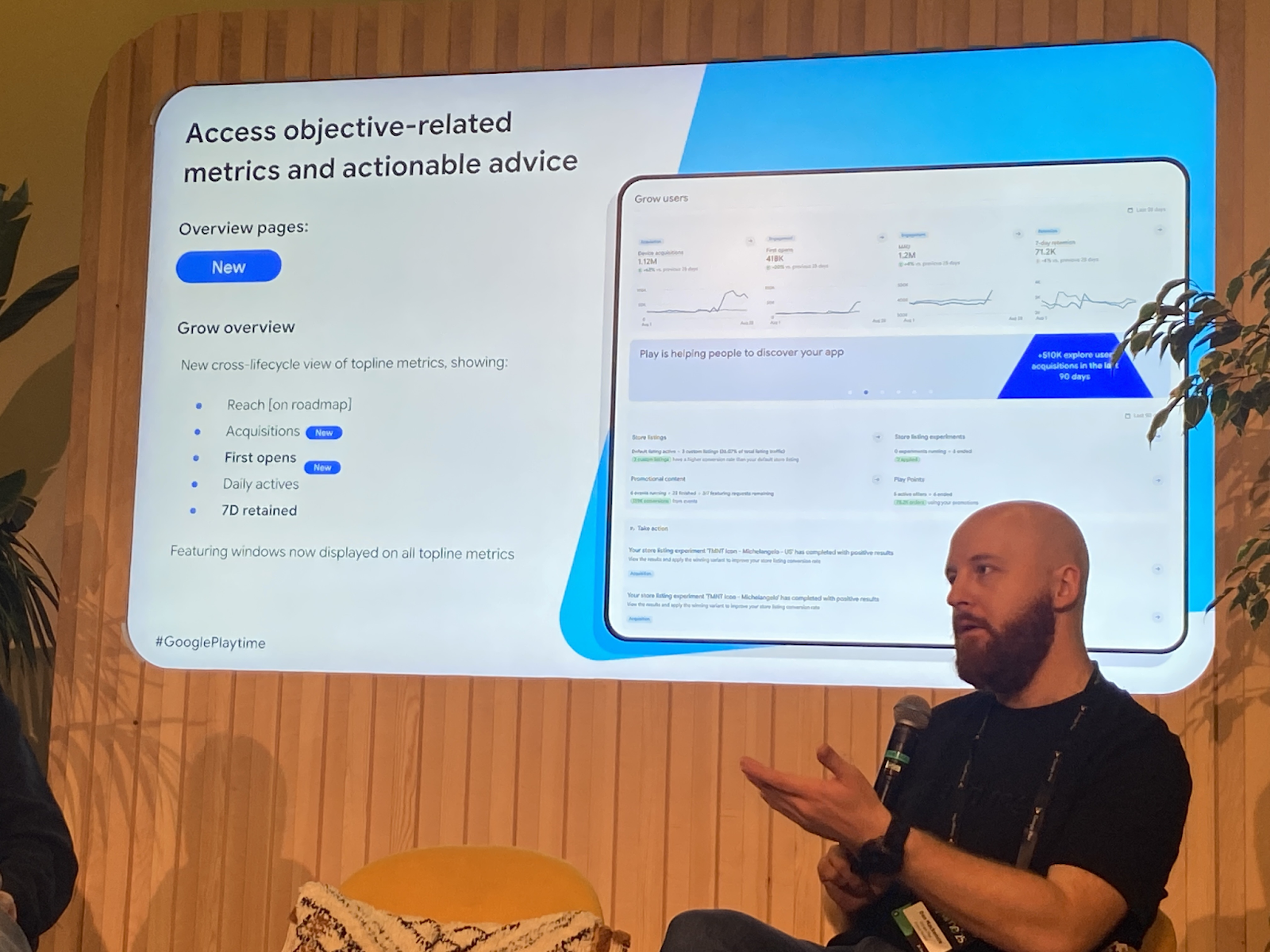
- Changes to store listing experiments are apparently on the roadmap, and while no timeline was shared, app marketers may see an overhaul for how data is shown for default and custom store listing performances as well as store listing experiments.
- As many developers have apparently signaled that animated creatives are of interest but the restriction to lottie images as the only supported format limits their usage of the feature, the Play Console team is reportedly planning to add .mp4 file support in the future
Concluding thoughts
Though I could not attend all sessions organized during the event and avoided mentioning it too much in this recap, Artificial Intelligence was of course another big topic throughout the day, and it is clear Google is investing heavily into AI features, with more tools for app developers including multiple models for language, image and video generation.
With that being said, AI is more poised to power upcoming features of Google Play than deliver a complete change in apps and games distribution. For the immediate future, the Google Play team is clearly doubling down on efforts to assist app & game developers increase user engagement, and not limiting its vision of Google Play to only the Play Store, as a lot of identified opportunities relate to already installed apps, rather than merely the discovery of new apps. This trend will likely impact the next iteration of App Store Optimisation as a discipline, and require its practitioners look for reliable data and cross-reference multiple sources more than ever.

More articles in Google Play

 Simon Thillay

 Sukanya Sur

 Nisrine Khafif