In the ever-changing app store landscape (algorithm changes, tool updates, new store guidelines, …), keeping up with the most important changes can be difficult.
To help you stay up to date with the main developments occurring in the ASO community, we’ve created this blog. Each month, we will provide a recap of the most important ASO and app store updates we have taken note of in a succinct and digestible way.
September 2026
August and early September brought two shifts on the App Store: new creative assets that make the results page more visual, and Siri gaining the ability to act inside third-party apps. Apple also replaces its EU fee structure with a single commission formula on October 1, and Google Play expanded custom store listing targeting to purchase history.
App Store updates
New creative assets on the App Store
Announced at WWDC in June and detailed over the summer, Apple’s new App Store creative assets roll out this fall alongside iOS 27. They add product page headers and search result assets, within an asset system that also covers screenshots, app previews and in-app events, and are intended to let apps show brand, seasonal offerings and new content rather than only in-use visuals. Apple is providing design guidance and templates for Figma, Photoshop and Pixelmator, and a product page preview tool in App Store Connect is coming soon.
The practical effect is that organic search results become a more visual comparison, which raises the weight of store creative alongside keyword coverage.
Siri can take actions inside third-party apps
Apple Intelligence and the new Siri were announced at WWDC and ship with iOS 27. Through App Intents, Siri can find personal context across apps and take actions inside third-party apps. Apple states that Siri works across more than 300,000 apps with more than 2.5 billion requests per day, and demoed integrations including WhatsApp, Audible, Outlook, Notability, Tripsy and Stocks.
The rollout is in beta in English first, with French, Japanese, Korean, Portuguese and Spanish following in October, and Apple Intelligence shipping in 16 languages with the OS releases. Siri AI is not available in the EU at launch.
Apple overhauls its EU business terms from October 1
Announced on August 18 and effective October 1, 2026, Apple is replacing its EU fee structure (commission on in-app purchase revenue plus a per-install Core Technology Fee for large-audience apps) with a single commission formula.
Developers staying on the App Store choose a payment path: 26% on Apple’s in-app purchase system, 20% on an alternative in-app payment provider, or 15% on an out-of-app purchase link when the sale occurs within 7 days of the tap. Reduced rates of 15%, 10% and 10% respectively apply to Small Business Program, Mini Apps Partner Program and Video Partner Program members, and to auto-renewing subscriptions after year one. All three paths can be combined within the same app.
Developers distributing through an alternative marketplace or the web instead pay a flat 5% Core Technology Commission on covered digital transactions, with no install threshold and no reduced tier. The two tracks do not stack. The payment configuration a developer chooses is locked for 12 months across every EU country or region.
Korea-specific age rating override
Effective August 12, developers can submit an official GRAC rating number in App Store Connect to override an app’s default Korean age rating. From October 2026, “infrequent profanity or crude humor” and “infrequent mature or suggestive themes” move from an All-ages rating to 12+ on the App Store in South Korea.
Tax and price adjustments
New VAT applies in Morocco and the Republic of the Congo, and a higher digital sales tax in Tanzania, all effective August 27. From September 14, automatic price equalization applies in Israel, Indonesia, Morocco and the Republic of the Congo, excluding auto-renewing subscriptions.
Apple Ads launches on Apple Maps
Apple Ads is now available on Apple Maps in the US and Canada, with placements in “Suggested Places” and in search results. A launch promotion offers 15% credit back, on up to $1,000 per month of spend, for a year.
Algorithm monitoring
AppTweak detected no App Store algorithm change between August 9 and September 7.
Google Play updates
Custom store listings can be targeted by buyer state
Google is expanding custom store listing targeting to monetization-based audiences: non-buyers, one-time buyers, repeat buyers and lapsed buyers. A follow-up Play Console update makes this targeting testable through custom store listing experiments, currently limited to select developers.
Custom store listings have historically been targeted by acquisition source: territory, ad campaign or keyword. Targeting by purchase history lets developers serve a distinct listing based on what a user has already done in the app, which extends store listing optimization from downloads into engagement and revenue. Google is expected to release monetization metrics per store listing as part of the Play Console overhaul rolled out in August, though no date has been announced.
Larger short description and portrait screenshots in testing
Multiple sources report Google testing a larger short description and portrait screenshots on Google Play listings, showing only the first 2 screenshots at first glance instead of 3 or more. It is not confirmed whether this is a permanent change or an A/B test.
New discovery surfaces in v52.7 to v53.0
Google Play versions v52.7 to v53.0 introduced an interest-based navigation bar, a “quality app” highlight chip, video previews inside Ask Play, and photo-based search.
Aptoide Games distributed inside Google Play
Aptoide Games became the first third-party Android store distributed directly through Google Play, presented in a dedicated landing page and in Google Play’s account menu. Listing metadata is shared between Google Play and Aptoide, while downloads, updates and billing remain with Google Play unless a developer opts out.
Algorithm monitoring
AppTweak detected a global Google Play search algorithm change on August 21, with the highest anomaly scores in Japan, South Korea, Germany, Denmark and the US.
Other ASO updates
- Apple’s September 9 event was a consumer hardware event and produced no App Store announcements. It introduced the iPhone Duo, a foldable with a 7.6 inch inner display and a 5.4 inch outer display, available October 23, which adds a new form factor to plan for in screenshots and app previews.
- Germany’s Federal Cartel Office found that Apple’s App Tracking Transparency prompts gave Apple’s own apps more favorable consent flows than third-party developers’. Apple has four months from August 17 to redesign the prompt EU-wide, removing discouraging language and symbols.
- ChatGPT Ads expanded self-serve access to 31 European countries in late August. Ads appear only on free and low-cost plans.
- From August 17, Google Ads began strictly enforcing Target CPA and Target ROAS on budget-limited campaigns, steering previously over-delivering campaigns back toward their stated targets.
July 2026
This edition covers Apple’s WWDC announcements for ASO teams, new social media and quality policies on the App Store, and the concrete rollout of AI-driven discovery and third-party distribution on Google Play.
App Store updates
WWDC introduces new creative surfaces for ASO teams
Apple announced two new creative assets coming with iOS 27: a Product Page Header and a Search Results Visual, both in a 3:2 landscape ratio. These give app marketers room to experiment with less product-oriented visuals at the first moment a user encounters their app, organically or through Apple Ads Search Results and Today Tab campaigns.
Apple has not yet published guidelines for these assets. Those guidelines will determine how much creative freedom teams actually get, and the value will likely vary by category.
Three supporting announcements complete the picture:
- A new Creative Asset library will let marketers upload and manage store creatives independently from app build updates, removing a long-standing operational bottleneck.
- “Personalized collections”: AI-generated app recommendations, likely built on behavioral signals and app store tags. Worth watching for Browse conversion impact once live.
- Publishers can now create IAP bundles and suites across developer accounts, and a new retention messaging interface lets developers show custom messages or switching options to users about to cancel.
Apple’s new “Social Media” label reaches beyond the Social category
Apple has started asking developers to disclose whether their apps have social media capabilities, defined as the ability to redistribute, amplify, or interact with user-generated content through a social feed or similar discovery method. The disclosure is part of the age rating questionnaire and becomes mandatory for new submissions and updates in September 2026.
Any app with a feed-like feature can qualify, even outside the Social category. Flagged apps will display a Social Media content descriptor on their product page, receive a 13+ age rating (unless social features are disabled for users under 13), and fall under Apple’s new parental Time Allowances feature.
If your app has any social component, review how you will answer the new age rating questions before September.
Quality enforcement is tightening
Apple has reportedly started rejecting apps that prompt users for a rating on first launch or during onboarding, based on Guideline 5.6.3. If your review prompt fires early in the user journey, revisit that flow.
Apple also announced a crackdown on low-quality apps in categories it considers saturated (dating, flashlight, sound effects, wallpaper, simple timers, fortune telling). New submissions will be rejected unless they offer a meaningfully different experience, and existing apps may be removed if they are not updated or fail to attract users.
Third-party distribution arrives in Brazil
Following an agreement with competition regulator CADE, Apple now allows third-party app distribution on iOS in Brazil. Developers can distribute through alternative marketplaces, operate their own, and process payments for digital goods outside Apple’s In-App Purchase, subject to the Core Technology Commission.
Apple Ads terms change worth monitoring
Apple Ads’ terms of service appear to have been modified to allow potential ad distribution beyond Apple-owned properties. Apple has not confirmed anything, so treat this as a soft signal to monitor, not a planned inventory expansion.
Google Play updates
Gemini can now recommend and install Android apps directly
Google’s standalone Gemini app can now answer app-recommendation questions with an embedded Play Store card, showing the listing preview, rating, and download count, with a direct Install button. This is the concrete rollout of the Gemini and Play Store interconnection previewed at I/O.
Inside the Play Store, the June update (v51.8) added an “Ask Play” button to the search suggestion bar, opening a full-screen conversational AI search experience as an alternative to regular results.
Your Play Store listing is now source material for an AI assistant deciding which app to surface as an answer. Store search remains foundational, and these AI surfaces are built on top of the same listing you already optimize.
External payments and third-party distribution open up on Play
Since June 30, Google has opened the Play Store to external payments in the US, UK, and Europe, with adjusted fees. Developers looking to reduce their fee burden can enlist in the Apps Experience program (for apps) or Level Up (for games).
Starting July 22, apps on Google Play in the US may be distributed via third-party Android stores under a court ruling and the Google Play Catalog Access Program. Key points:
- Only your Play listing metadata is shared with third-party stores; downloads, updates, and billing stay on Google Play.
- You can opt out entirely, or manage distribution store by store in the Play Console.
- Worth an audit for reputation management: decide which storefronts you want listing your app before the default kicks in.
Google has also started labeling AI-generated images in the Play Store.
Other ASO updates
- AppTweak detected an App Store algorithm update in English-speaking countries (US, UK, Canada, Ireland, Australia, South Africa) between May 30 and June 2.
- AppTweak detected a global Google Play algorithm change on June 19, with smaller anomalies observed on July 7 and 10.
- The UK government announced its intent to ban social media for under-16s. Which apps end up legally defined as “social media” is exactly the question Apple’s new label is trying to get ahead of, and the answer will matter beyond the App Store.
June 2026
This combined edition covers Google I/O’s AI discovery announcements, Apple Ads inventory changes, new analytics tooling, and several industry moves worth tracking.
App Store updates
App Store Connect Analytics gets a major upgrade
Apple released a revamped version of App Store Connect Analytics, adding more flexible reporting and new performance views.
Teams can now combine multiple filters simultaneously, including country, device, and source type, to get a clearer picture of where installs and engagement come from.
Apple also added new monetization cohorts: download-to-paid conversion, accumulated proceeds, and updated benchmarks.
For growth and ASO teams, this makes App Store Connect meaningfully more useful for acquisition quality and monetization analysis. Review existing dashboards and reporting workflows to take advantage of the new data.
New subscription option: annual commitment, monthly payments
Apple introduced a subscription model that lets developers offer a 12-month commitment paid in monthly installments, creating a middle ground between monthly and annual plans.
For users, it lowers the upfront cost of committing annually. For developers, it may improve retention compared to standard monthly plans.
Subscription apps should consider testing this if annual plans currently face upfront-price resistance.
Key areas to monitor:
- conversion from monthly to committed plans
- retention impact
- ROAS measurement windows
- cash flow timing
The App Store now supports 11 new languages
Apple added support for 11 new localization languages: Bangla, Gujarati, Kannada, Malayalam, Marathi, Odia, Punjabi, Slovenian, Tamil, Telugu, and Urdu.
Most are relevant to India. While India remains heavily Android-dominated, the scale of the market makes this update relevant for apps with iOS traction or Apple Ads activity in the region.
Apps already active in India should reassess their localization roadmap, especially if running paid campaigns where localized pages can improve conversion rates.
Apple Ads: second ad placement expands across markets
Apple’s second ad placement in search results is now appearing across more markets, increasing paid visibility inventory.
For advertisers, budget pacing and campaign monitoring become more important as additional inventory can increase spend, impressions, and installs without proportional conversion gains.
App marketers should:
- monitor daily budgets and spend caps
- review automation rules after the rollout
- track branded search performance
- watch how organic visibility shifts as more ads appear above it
As more competitors can now appear on branded queries, teams should check whether their combined paid and organic strategy still protects high-intent traffic.
Apple opens the Brazilian market to fixed-odds betting apps
As of May 8, apps with fixed-odds betting features can now be distributed on the App Store in Brazil, provided developers hold a valid license from Brazil’s Secretariat of Prizes and Bets (SPA).
For sports betting apps with international reach, this is a meaningful opening. Brazil is one of the largest mobile markets in Latin America, and the timing is relevant ahead of the FIFA World Cup. Apps active in other regulated betting markets should evaluate whether a Brazilian App Store presence is now viable.
Apple adjusts localized pricing for South Korea
As of May 28, Apple is applying price adjustments for South Korea for developers using another storefront as their base for in-app purchase pricing. This is consistent with Apple’s standard practice of recalibrating localized prices in response to tax or foreign exchange rate changes.
If South Korea is a meaningful market for your app, review your pricing tiers to confirm they reflect the adjustment.
Apple reportedly exploring agentic apps on the App Store
Apple is reportedly exploring how agentic apps could be distributed through the App Store. Current signals point to a new generation of apps rather than any change to App Store search mechanics or ASO fundamentals.
No official announcement has been made. WWDC in June may address this, but no action is required yet.
Google Play updates
Google I/O confirms AI as an official app discovery layer
Google I/O was the most significant platform moment for app marketers across both months. Google formally confirmed Ask Play, an AI assistant embedded in the Play Store that answers user queries with app recommendations. Google stated that 95% of user questions are handled comprehensively, though the full range of surfaces where Gemini appears in the Play Store was not disclosed.
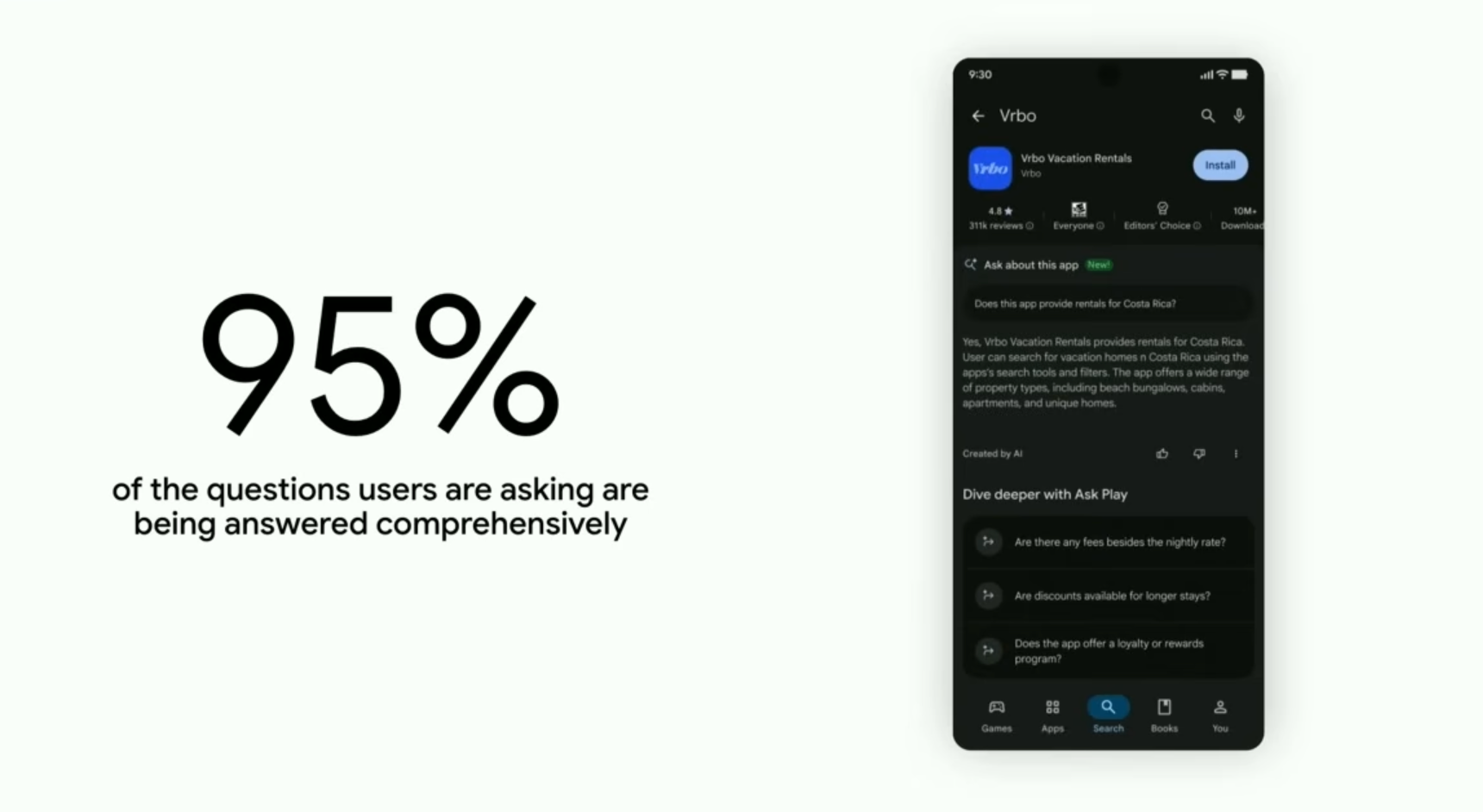
Beyond the Play Store, Google confirmed that the Gemini app itself can now recommend apps and initiate downloads directly in conversation. In its current form, this is triggered when users explicitly ask for app recommendations. Google also announced an upcoming expansion that would allow Gemini to proactively suggest apps when users ask about media or entertainment content, with broader vertical expansion expected as developers integrate AppFunctions into their builds.
For app marketers, the implication is direct: app discovery is no longer contained within the Play Store’s traditional search interface. A user asking Gemini “what should I use to edit videos on Android” is a discovery moment that standard ASO workflows were not designed to capture.
The current rollout is limited to English-language users in markets outside the European Economic Area. Standard ASO remains the right foundation, not least because AI visibility signals appear largely driven by ASO fundamentals. But the direction is clear.
Key areas to monitor:
- whether your app’s metadata communicates specific use cases, not just features
- how your app is described in reviews, editorial copy, and third-party sources that AI systems draw from
- developments around AppFunctions as the ecosystem matures
Google Play search becomes more AI-powered
Alongside the I/O announcements, Google Play rolled out two Gemini-powered search formats now visible to US users.
Guided Search suggests more specific queries when users enter broad searches like “action games.” Ask Play generates AI-powered app recommendations for longer, conversational queries.
In some cases, these AI-generated results appear below ads but above traditional organic results, pushing standard rankings further down the page. Strong keyword rankings still matter, but metadata now needs to communicate use cases, audience, and intent relevance clearly enough for AI-generated recommendations to surface the right apps.
ASO teams should move beyond pure keyword coverage toward semantic coverage: metadata that is specific, clear, and useful for AI systems interpreting user intent.
Google Play developer tooling: a meaningful update cycle
Google announced several Play developer console updates relevant to ASO and performance teams.
Metadata can now be updated via Google Sheet or CSV upload, with an improved automatic translation system. Keyword-level Custom Store Listing recommendations with one-click generation are also available, giving teams a faster starting point for variant testing.
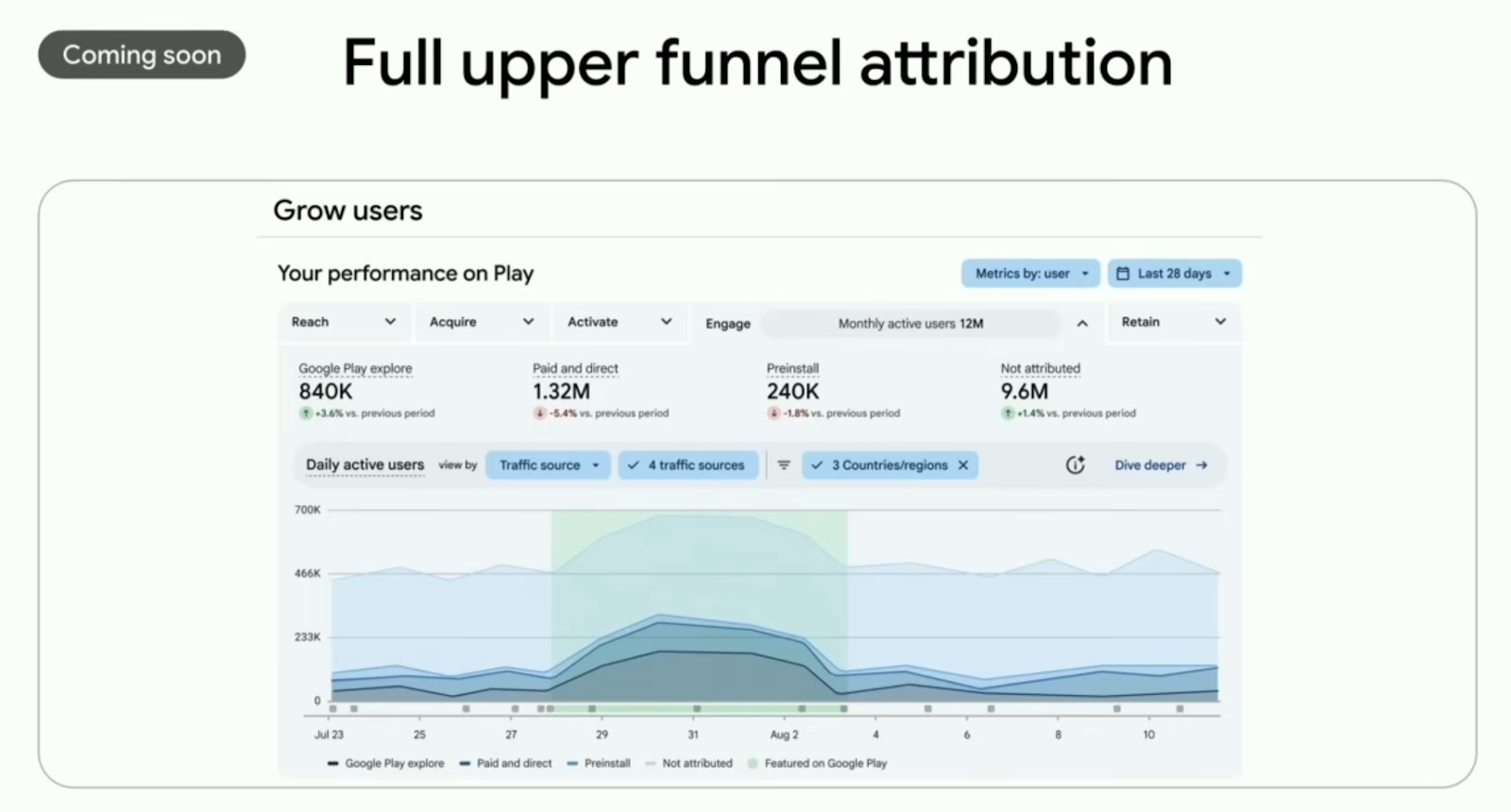
The analytics overhaul is the most substantial change. Google is introducing new reach metrics (impressions), new ROI measurement, and new attribution methods capturing multi-touchpoint user journeys before install. A new reporting API and MCP connector are in the pipeline, making it easier to pull Play performance data into external analytics stacks. Teams should plan to review their current reporting setup once these roll out.
Google Play expands game discovery features
Google Play continues to invest in gaming-specific discovery. Recent additions include game trials for paid games, “buy once, play anywhere” cross-platform pricing, community posts, game subcategories users can follow, and notifications for new releases and events.
The Play Store is becoming a more active discovery and engagement surface for games, not just a download destination. Gaming studios should pay closer attention to category positioning, LiveOps, and community signals inside Google Play as these surfaces mature.
New discovery surfaces to watch
Google highlighted three additional discovery surfaces at I/O. Spotlight is a new featuring type on the Apps tab. Play Shorts, a short-form video format for app discovery, is officially launching in the US in June. YouTab is a dedicated tab focused primarily on surfacing installed apps, powered via the ContextSDK.
For teams focused on organic visibility, category positioning and creative assets are becoming more relevant inputs alongside keyword coverage.
Google Play changes install measurement
Google Play moved from device-based to account-based install counting. This can affect performance reporting for apps where users install across multiple devices.
Some apps may see unusual movements in conversion rate or install metrics as a result. Before drawing conclusions from recent performance changes, check whether the measurement methodology shift is contributing. Adding chart annotations around the change date will help avoid misreading the data.
Google Play revenue share updates
Developers in the Games (LevelUp) and Apps programs may receive an additional discount on Google’s IAP revenue share starting September 30, 2025, across the US, UK, EEA, and Australia. If your app monetizes primarily through IAPs and you are eligible for these programs, it is worth confirming participation ahead of that date.
More Google Play discovery updates
Google Play also introduced or expanded several smaller features: trending searches in selected markets, searchable reviews, and filters for Health Connect-integrated apps.
Searchable reviews are worth watching. They make user language more visible inside the store experience and could influence how users evaluate apps. Teams should continue monitoring review themes for conversion and positioning insights, not only product feedback.
Other ASO updates
No algorithm update was detected on the App Store in April or May. Google Play saw search result re-indexations on May 2 and May 21, recorded as minor fluctuations below the threshold for a full update. No changes to ranking workflows are warranted.
Apple is reportedly asking more developers to provide screen recordings during app review, potentially covering the full user journey including onboarding, account creation, account deletion, and paid features. If this becomes more common, teams should make sure their core flows are easy to review and clearly compliant.
Google Play developers reported issues with the In-App Reviews API, where the SDK may return a success callback even when the review dialog does not appear. If ratings or review volume recently dropped, this is worth checking before assuming a user sentiment issue.
InMobi acquired MobileAction on May 7. MobileAction will continue operating as a dedicated ASO and Apple Ads platform, with an announced focus on AI for its next growth phase. The deal strengthens InMobi’s iOS tooling as Apple Search Ads matures as a performance channel.
Sensor Tower acquired AppMagic on May 12, framing it as an expansion into the SMB segment. AppMagic has been widely used for mobile game market intelligence. Teams relying on AppMagic should monitor product roadmap communication from Sensor Tower in the coming months.
March 2026
Below, we’ve gathered the latest App Store and Google Play updates relevant to ASO, app discovery, and mobile growth teams.
App Store updates
These App Store updates focus on Apple Ads changes and evolving search result dynamics that directly influence app visibility and paid acquisition performance.
Apple Ads expands ads in search results
Apple Ads introduced additional ads in search results, increasing the number of placements available during user queries in the App Store. Early data observations from AppTweak show higher impressions and spend while conversion rates remain stable, indicating increased inventory participation.
- More ads can appear for the same search queries.
- Competition for visibility within search results increases.
- Performance metrics may shift with expanded inventory.
Apple introduces “Maximize Conversions” bid strategy
Apple Ads replaced the CPA cap setting with “Maximize Conversions,” an automated bid strategy that optimizes bids toward a defined CPA goal within campaigns.
- Campaign bidding shifts toward automation around CPA goals.
- Advertisers no longer use manual CPA caps.
- Optimization shifts toward conversion-based automation.
Google Play updates
The latest Google Play updates introduce new app discovery formats and features that reshape how users find and engage with apps on the Play Store.
Google Play introduces Play Shorts
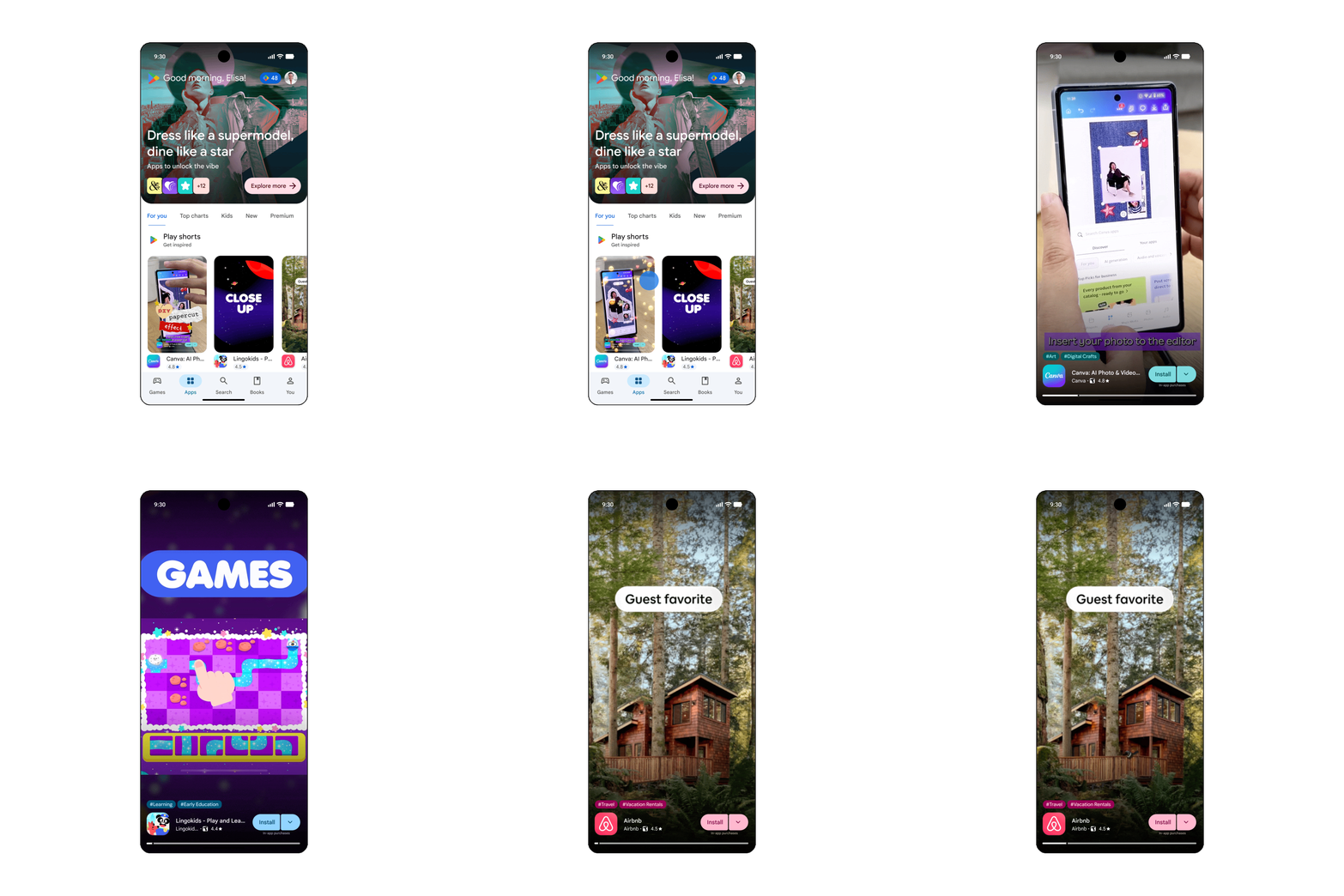
Google Play launched Play Shorts, a short-form video format displayed in the Apps tab to support app discovery through video content rather than store listings.
- Apps can be discovered outside traditional listings.
- Video content becomes a discovery surface.
- Creative formats expand within the store environment.
Google updates billing model and service fees
Google announced changes to its billing model, including adjusted service fees and increased flexibility for handling in-app purchases across supported markets.
- Revenue structures may change across apps.
- Developers gain more flexibility in purchase handling.
- Monetization models may adjust across markets.
Other ASO updates
Additional ASO updates this month cover technical app performance signals, AI integrations, and new store features that may influence app rankings and user perception.
- Google Play displays warnings on store listings for apps exceeding thresholds in the Excessive Partial Wake Lock metric.
- These warnings appear directly on listings and may affect user perception and install behavior.
- Google introduced AppFunctions to enable app interactions with external tools, including AI assistants.
- Google Play added a PC section, cross-platform badges, unified pricing, and game trials for games.
January 2026
This January 2026 ASO update covers the latest App Store and Google Play changes impacting app discovery, Apple Ads performance, and AI-driven search experiences.
App Store updates
These App Store updates focus on Apple Ads search result changes and expanded ad inventory, reshaping how apps compete for visibility and paid acquisition in the App Store.
Expanded search ad inventory is coming
Apple has officially confirmed that additional ads will appear in App Store search results starting in March 2026.
While Apple hasn’t shared an official rollout timeline, early signals from the ASO community suggest a phased launch, potentially starting in the UK in early March, followed by Japan, and then rolling out globally in the second half of the month.
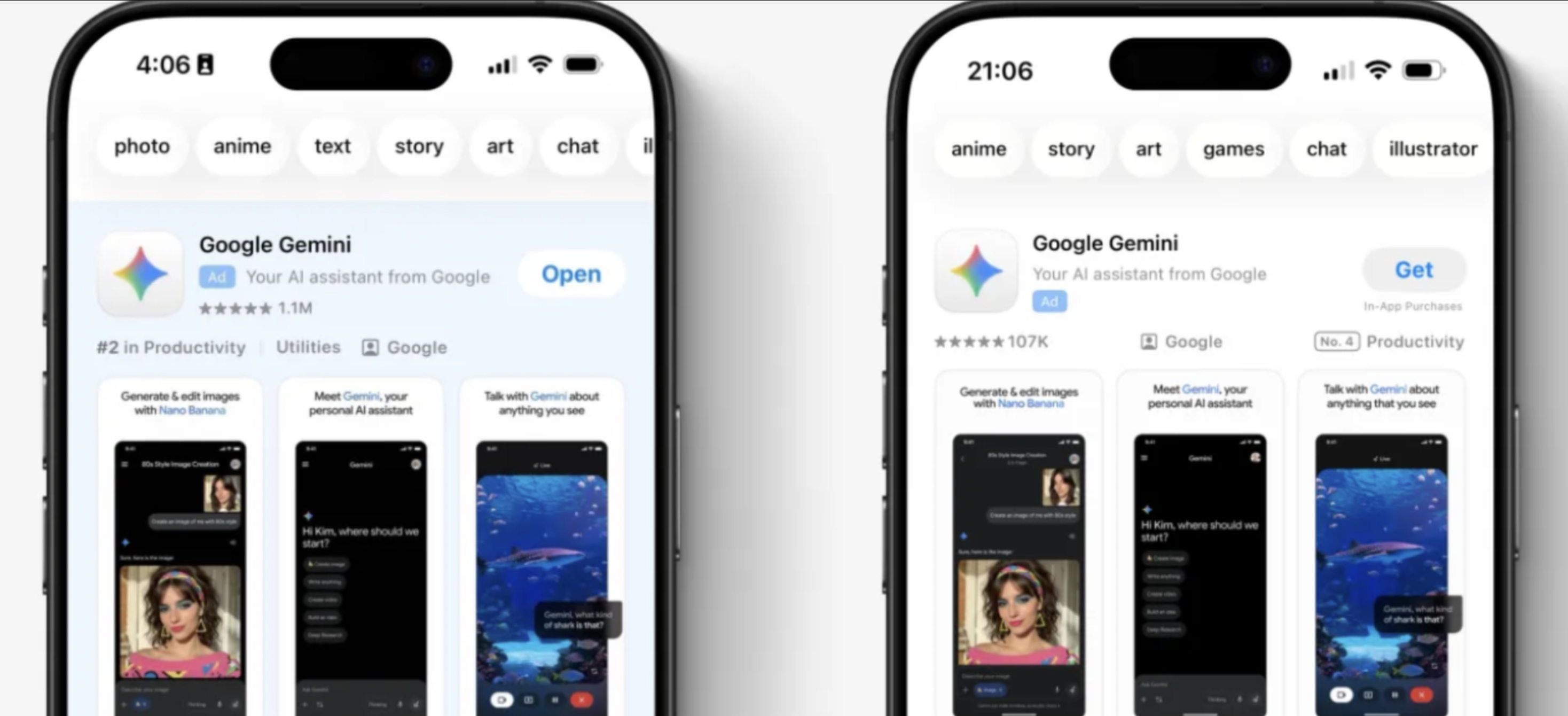
Apple has clarified several key points about how these new ads will work:
-
Ads may appear beyond the top position in search results
-
Advertisers don’t need to modify existing campaigns
-
Ads will automatically be eligible for all available ad positions
-
Ad formats remain unchanged, whether using a default product page, a custom product page (CPP), or an optional deep link
This rollout follows recent App Store UI changes that reduce the visual distinction between sponsored and organic results. Paid placements are likely to blend more closely into organic rankings, increasing competitive pressure on top organic positions.
This change has several concrete implications:
1. A wider gap between the 1st and 2nd organic results
Competition for high-intent keywords is likely to intensify, especially as Apple continues shifting from strict keyword matching toward more intent-based logic.
2. Potential increase in Apple Ads spend
A second ad position will generate additional paid taps, but those taps may not convert as efficiently as the top ad placement, affecting ROAS calculations.
3. More complex campaign optimization
Marketers relying heavily on Impression Share to evaluate bid strength may face ambiguity if multiple ads are competing for visibility on the same query.
App marketers should closely monitor campaign performance throughout Q1 and be ready to recalibrate both ASO priorities and paid search strategies as the rollout progresses.
Google Play updates
The latest Google Play updates introduce AI-powered features like Ask Play, transforming app discovery and requiring new ASO strategies optimized for AI-generated answers.
Ask Play: Gemini enters app discovery
With Play Store version 49.3, Google has introduced Ask Play, a Gemini-powered chatbot embedded directly on app listings.
Ask Play appears directly on app store listings (for installed and non-installed users) and:
-
Suggests common questions users might ask about an app
-
Generates answers using app metadata, user reviews, and inferred context
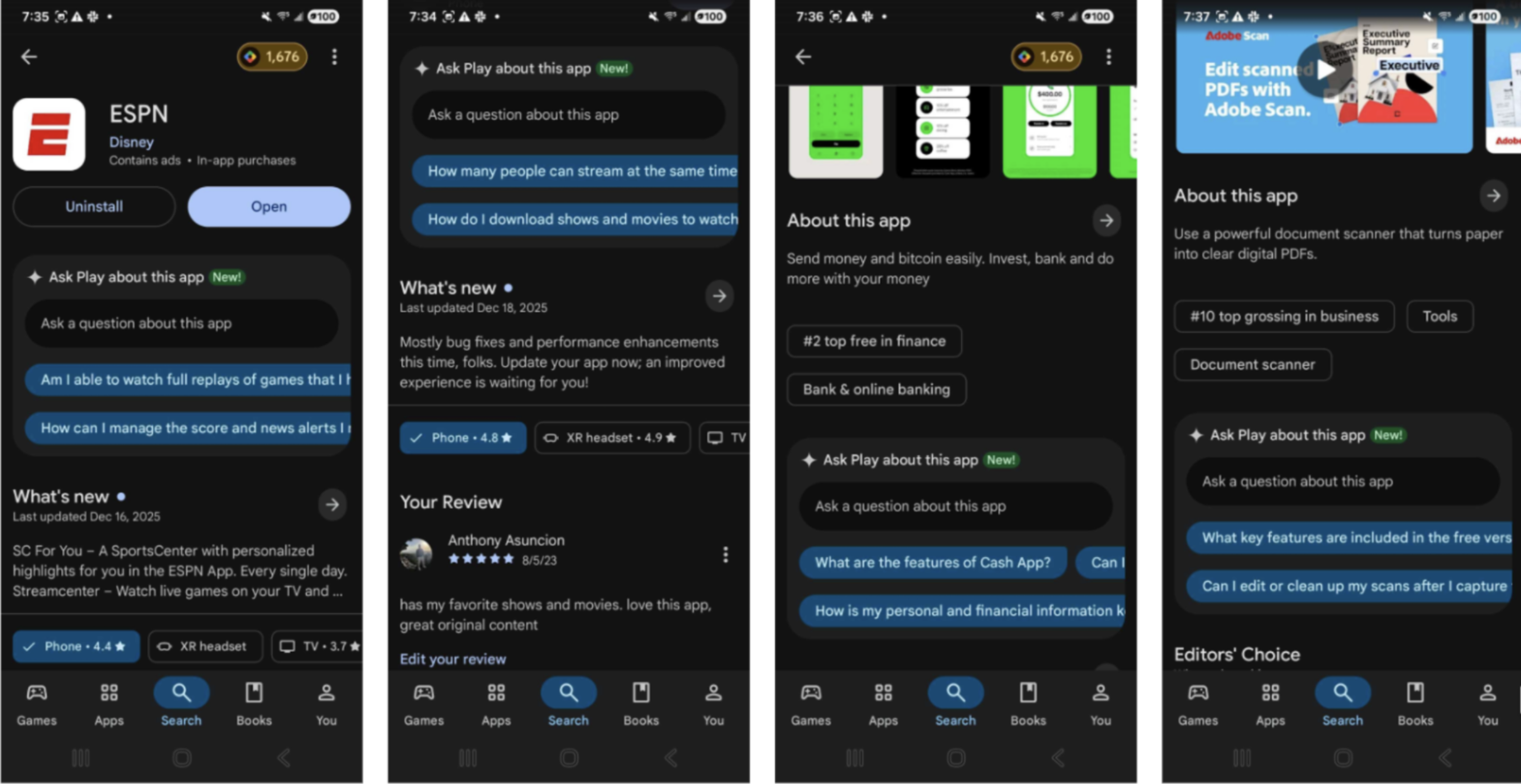
The rollout will be gradual and territory-dependent, and its impact will vary based on Play Store update adoption across users.
How does the introduction of Ask Play impact ASO:
- App pages need to be optimized for AI systems, not just human readability.
- Long descriptions, review content, and consistency across assets matter more.
- Clarity in messaging becomes fundamental as vague messaging increases the risk of incorrect or vague AI-generated answers.
November 2025
This November 2025 ASO update highlights key App Store and Google Play changes affecting app personalization, store listing assets, and technical performance signals.
App Store updates
These App Store updates focus on custom product page expansion, enabling more advanced ASO strategies through personalization and keyword-level targeting.
Create double the number of custom product pages
Apple has doubled the maximum number of custom product pages mobile marketers can create, from 35 to 70 active custom pages!
You will be able to manually assign keywords to each CPP, so they become eligible to appear in App Store search results for those terms—replacing your default product page when triggered.
This expands targeting possibilities dramatically:
- Feature-focused custom product pages
- Seasonal variants
- Persona-based experiences
- Geo-specific content
With this update, Apple is clearly highlighting the importance of bringing personalized experiences to its users! Time to start optimizing your CPPs!
Google Play updates
The latest Google Play updates introduce new store listing assets and app quality signals that influence app visibility, user engagement, and ranking performance.
New app store asset
Earlier this year, Google announced the release of a new Hero content carousel, and it has started rolling out!
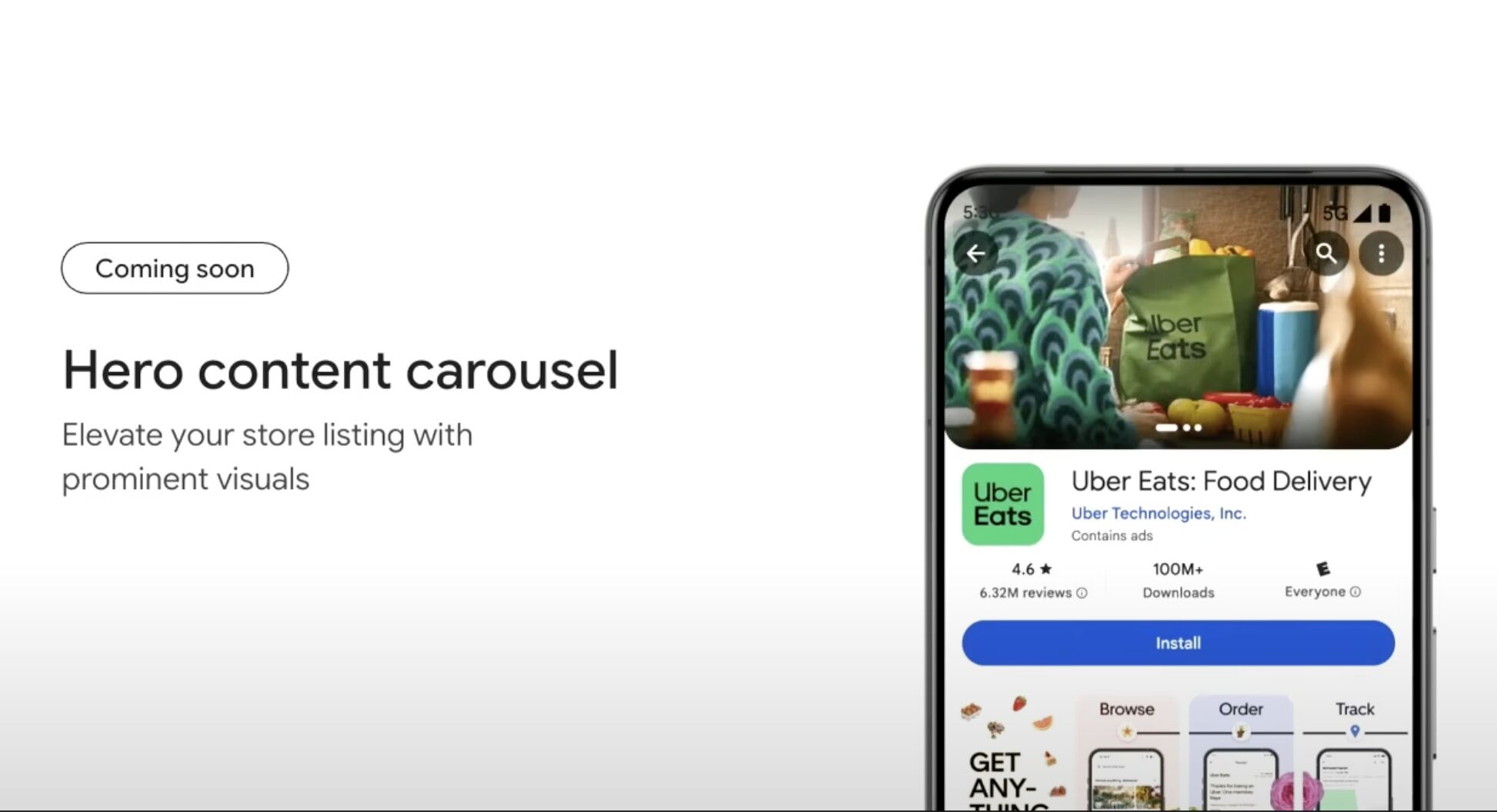
This new store asset:
- Is only shown to users who already have the app installed
- Appears above the regular screenshot gallery
- Pushes the screenshots further down the store page
- Is in limited rollout — not available to all apps yet
The feature is already available to some. Go to the Play Store Console under: Store Presence → Store Listings → Phone immersive header.
YouTube videos on store listings
Google now allows apps that are eligible to publish Promotional Content the option to list multiple YouTube videos on their store listings for apps.
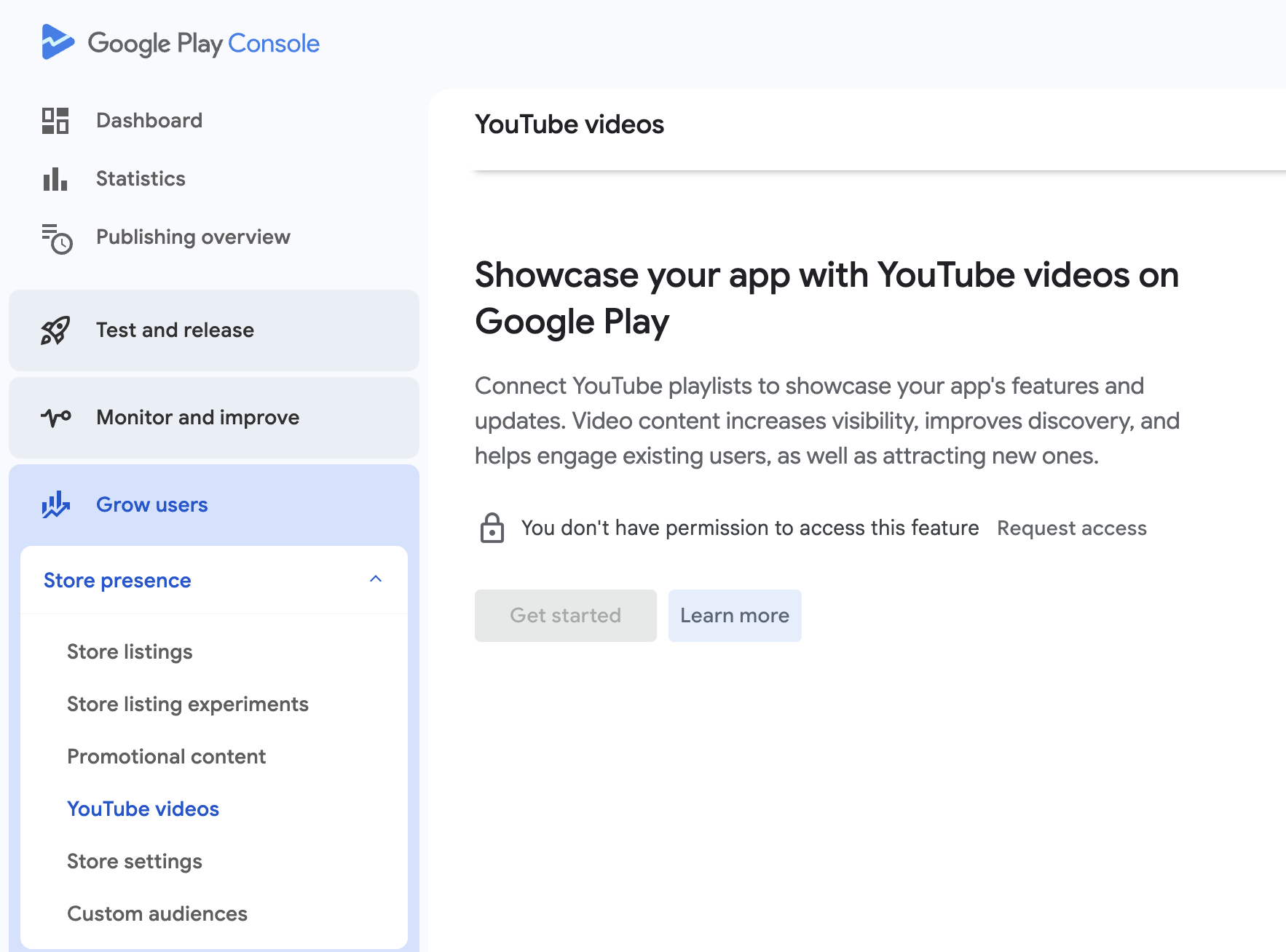
This feature is currently only targeted at users who have already installed your app. New users will therefore not be able to see the extra videos. Installed users will see these videos above promotional content and even before their default screenshots.
New app vital
Google Play is officially adding “excessive partial wake locks” as a core app vital. “Excessive partial wake locks” indicates a battery-drain behavior for which Google set a strict 5% threshold.
If your app exceeds it:
- The Google Play Store may display a warning on your listing
- Starting March 1, 2026, non-compliant apps may be excluded from prominent discovery surfaces (recommendations, curated placements, etc.)
ASO and tech teams should treat battery optimization as a ranking factor from now on.
Conclusion
At AppTweak, we will continue to monitor ASO news and trends and report them here. Make sure to check out this monthly blog to stay up to date on the recent developments in the App Store Optimization landscape. Subscribe to our newsletter to make sure don’t miss out on the latest updates. See you next month!


 Sukanya Sur
More articles in App Market Insights

 Micah Motta

 Nathalie